Toyota's $30 Billion Toyota Industries Bid: What the Largest OEM Vertical Integration Move of 2026 Means for Supply Chain Outsourcing

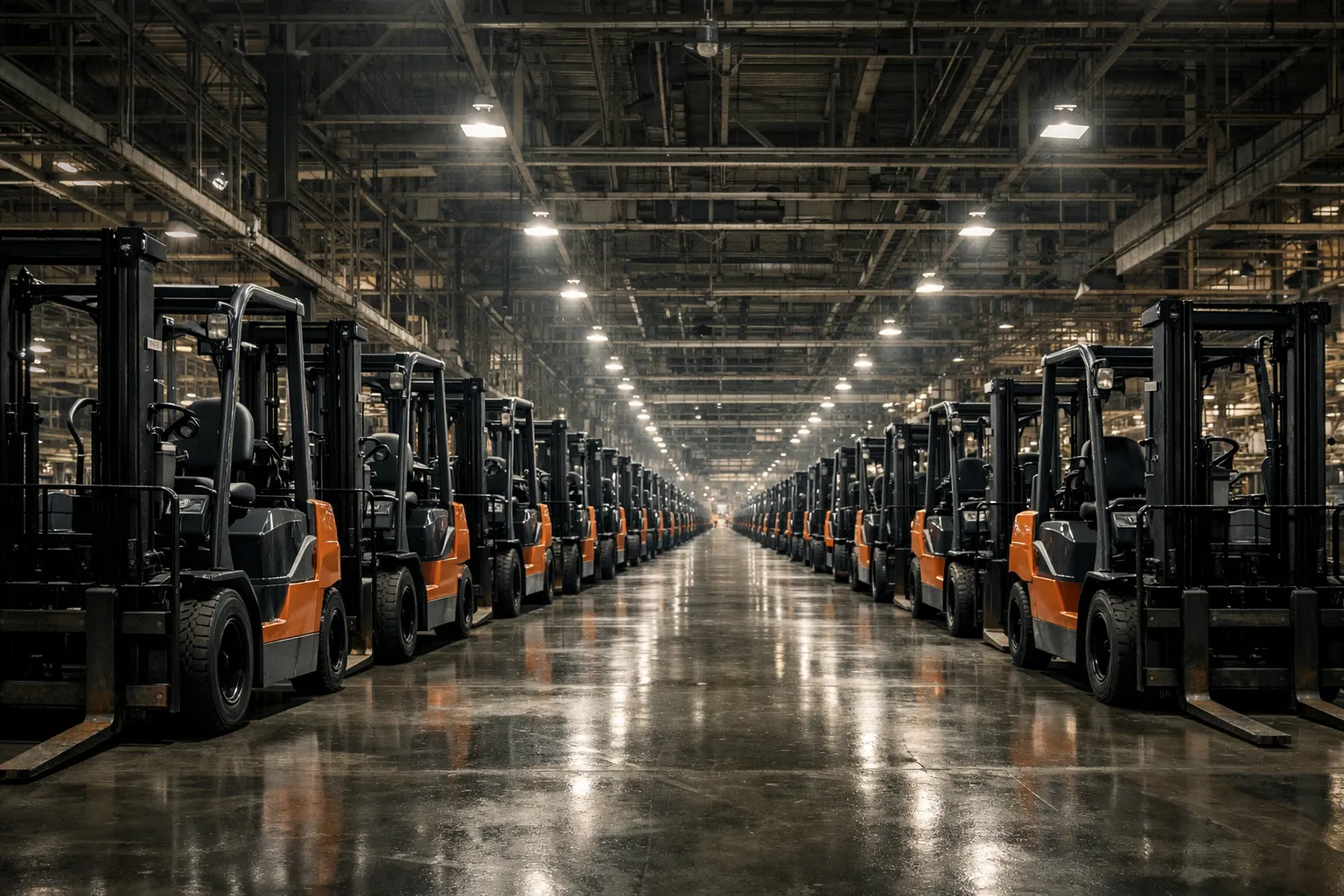
On March 2, 2026, Toyota Motor Corporation raised its offer for supplier Toyota Industries—known as TICO—to 20,600 yen ($132) per share, valuing the deal at approximately $30 billion and ending a months-long standoff with activist fund Elliott Investment Management. Elliott, led by billionaire Paul Singer, had rejected two prior bids as undervaluing the forklift and logistics equipment maker before agreeing to tender its shares and calling the raised offer an "improved outcome" for minority shareholders.
The deal isn't just a corporate governance story. It's the clearest signal yet that the world's largest manufacturers are reversing decades of outsourcing strategy and pulling critical supply chain capabilities back in-house. For logistics providers, 3PLs, and every shipper managing outsourced relationships, the implications run deep.
The Deal: From ¥16,300 to ¥20,600 in Nine Months
Toyota originally offered 16,300 yen per share in June 2025, then raised to 18,800 yen in January 2026. Elliott rejected both, arguing shares were worth more than 26,000 yen. The final price of 20,600 yen—nearly 10% above the second offer and 26% above the original—represents a significant premium extracted by activist pressure.
Founded in 1926 as Toyoda Automatic Loom Works, TICO later spun off its automobile division as Toyota Motor in 1937. The company evolved into a diversified industrial manufacturer producing forklifts, logistics systems, textile machinery, and automotive components. Toyota has stated it wants to take TICO private to remove the burden of short-term profit targets as the group pivots toward connected vehicles and advanced software platforms.
As part of the deal, TICO will unwind its cross-shareholdings in other Toyota group companies—a practice long criticized for insulating management from investor accountability. Toyota's incoming CEO Kenta Kon called the cross-shareholding resolution "an extremely significant development for the market."
Why OEMs Are Bringing Suppliers In-House
Toyota's move doesn't exist in isolation. It reflects a fundamental strategic shift across global manufacturing. The outsourcing wave that defined supply chain strategy from the 1990s through the 2010s—driven by cost arbitrage, capital efficiency, and the belief that lean inventories would always outperform vertical control—has collided with a decade of disruptions that exposed its fragility.
COVID-19 shattered just-in-time assumptions. The semiconductor shortage froze production lines worldwide. Geopolitical fragmentation from U.S.-China tensions to Red Sea shipping disruptions demonstrated that relying on extended, multi-tier supplier networks creates compounding vulnerability at every node.
McKinsey's January 2026 analysis of global manufacturing footprints found that leading companies are now approaching supply chain design through a "dual lens"—optimizing near-term performance within existing networks while designing longer-term pathways to insource critical capabilities. The emphasis has shifted from cost efficiency to resilience, control, and speed of response.
Toyota's $30 billion bet is the most dramatic expression of this shift. By bringing TICO's forklift manufacturing, logistics systems, and component production under full ownership, Toyota gains direct control over material handling equipment that moves parts through its own factories—eliminating a layer of negotiation, misaligned incentives, and information latency.
The De-Verticalization Reversal
The irony is thick. For two decades, business schools and consulting firms preached the gospel of core competency focus. OEMs were told to shed non-core assets, outsource manufacturing, and become "asset-light" orchestrators of supplier networks. The Toyota Production System itself—the very model that inspired lean manufacturing globally—was built on deep supplier relationships rather than outright ownership.
Now the pendulum is swinging back. Supply Chain Dive's analysis of vertical and horizontal integration strategies highlights how companies are increasingly combining both approaches to achieve a balance between control and flexibility, helping them adapt to rapid market shifts.
The reversal isn't limited to automotive. Semiconductor companies are investing hundreds of billions in captive fabrication capacity. Pharmaceutical firms are insourcing API manufacturing previously concentrated in India and China. Consumer electronics giants are securing battery supply chains through direct mining investments. The common thread: industries burned by supply disruptions are deciding that ownership beats partnership when resilience is the priority.
What This Means for 3PLs and Logistics Providers
For third-party logistics providers serving OEM supply chains, Toyota's move raises uncomfortable strategic questions.
Fewer outsourced touchpoints mean fewer contracts. When an OEM brings supplier operations in-house, the logistics connecting those suppliers to assembly plants often follows. Internal material handling—exactly what TICO produces—gets optimized for the parent company's production system rather than offered as a general-purpose service.
Vertical integration shifts power dynamics. Outsourced logistics providers derive leverage from serving multiple clients and aggregating volume. As major OEMs consolidate suppliers, the remaining outsourced freight becomes more concentrated among fewer decision-makers with more bargaining power.
But complexity creates opportunity. Even vertically integrated companies can't internalize everything. The more an OEM absorbs upstream, the more complex its internal logistics network becomes. Specialized 3PLs that can manage the interfaces—cross-border compliance, last-mile distribution, seasonal surge capacity—may find their services more valuable, not less.
The net effect is a polarization of the logistics market. Generic freight brokerage and warehousing faces margin compression as OEMs internalize commodity logistics. Specialized, technology-enabled providers that solve complexity problems will command premium positioning.
Which Industries Will Follow
The automotive sector is the bellwether, but the vertical integration impulse is spreading. Industries with high supply chain complexity, concentrated supplier bases, and recent disruption trauma are most likely to follow Toyota's playbook:
- Aerospace and defense: Already heavily vertically integrated, with further consolidation accelerating as governments demand domestic production capability
- Pharmaceuticals: Post-pandemic insourcing of active pharmaceutical ingredients and critical drug manufacturing
- Semiconductors: The CHIPS Act and equivalent programs globally are financing massive insourcing of fabrication capacity
- Food and agriculture: Major CPG companies acquiring upstream processing and cold chain capabilities
- Energy: Battery manufacturers securing mining, refining, and cell production under single ownership
For each industry, the trigger is the same: a supply disruption that revealed fatal dependency on external partners, followed by a strategic decision that control justifies the capital cost.
Navigating the Shift With CXTMS
Whether your organization is vertically integrating or managing an outsourced supply chain alongside OEMs that are, the challenge is the same: visibility, optimization, and agility across increasingly complex networks.
CXTMS provides the technology layer that both models require. For vertically integrated operations, our platform optimizes internal logistics flows across owned facilities, managing the complexity that comes with bringing suppliers in-house. For companies maintaining outsourced relationships, CXTMS delivers the carrier management, rate optimization, and real-time visibility tools that ensure your 3PL partnerships perform at the level your supply chain demands.
The Toyota-TICO deal signals that the rules of supply chain architecture are being rewritten. The companies that thrive won't be the ones that simply choose vertical or outsourced—they'll be the ones with technology platforms flexible enough to adapt as the landscape shifts.
Request a CXTMS demo → to see how our platform supports both integrated and outsourced supply chain models with unified visibility and optimization.