Supply Chain Control Towers 2.0: From Passive Dashboards to Predictive Command Centers

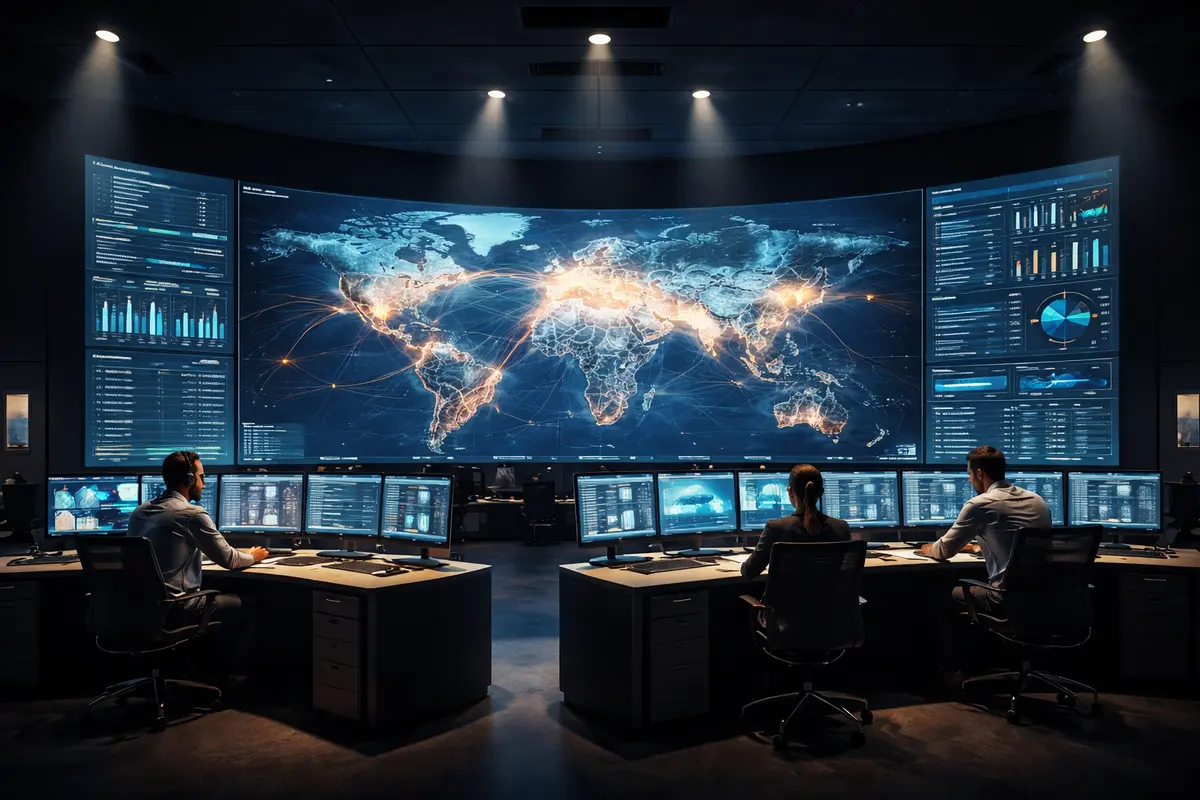
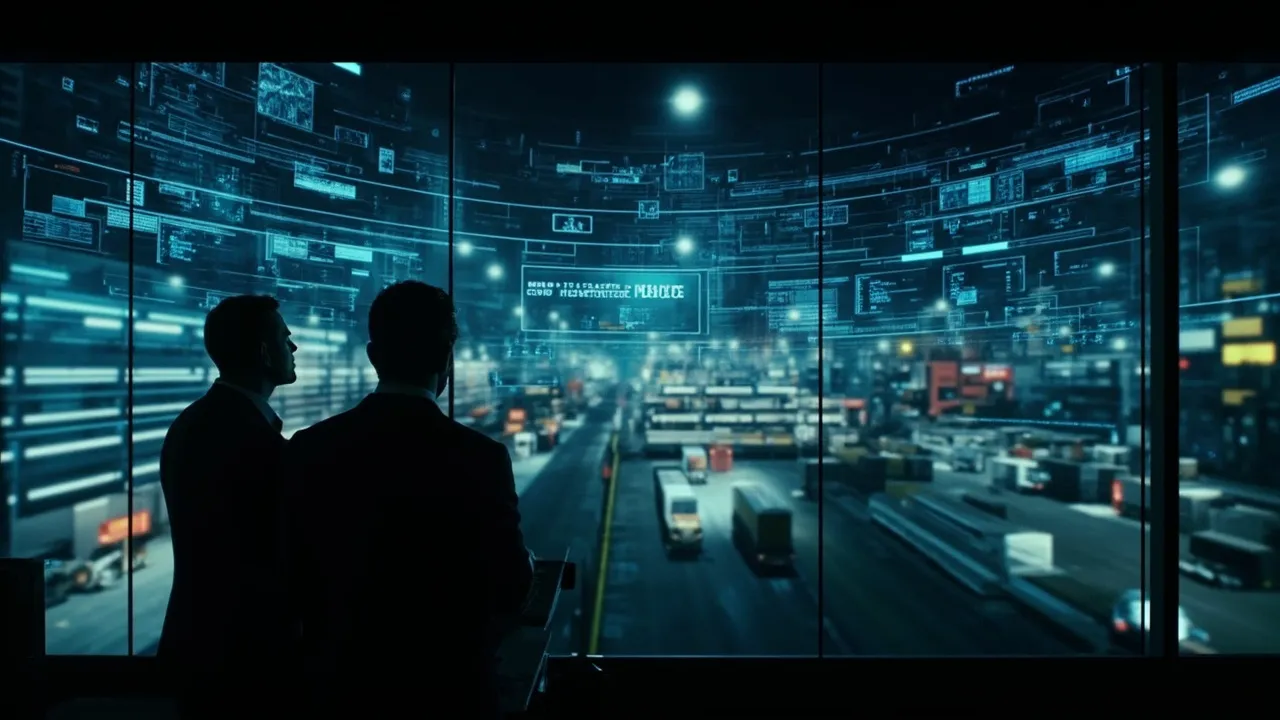
The supply chain control tower is no longer a glorified dashboard. In 2026, it's becoming a predictive command center—an intelligent nerve system that doesn't just show you what's happening, but tells you what's about to go wrong and how to fix it before it does.
The Evolution: From Visibility to Predictive Orchestration
First-generation control towers were essentially reporting tools. They pulled data from disparate systems—your TMS, WMS, ERP—and displayed it on screens. Useful? Sure. Transformative? Not even close.
The problem was reactive thinking. By the time a shipment delay appeared on your dashboard, the damage was done. Customers were already calling. Penalties were already accruing.
Control Tower 2.0 flips this model entirely. According to Mordor Intelligence, the global control tower market is projected to reach $25.77 billion by 2031, growing at a 17.36% CAGR from 2026. That explosive growth reflects a fundamental shift: companies aren't buying visibility anymore—they're buying predictive orchestration.
What Makes a Control Tower "2.0"?
The leap from dashboard to command center rests on three pillars:
1. Predictive Analytics Over Historical Reporting
Traditional control towers answered the question "What happened?" Control Tower 2.0 answers "What will happen in the next 4–48 hours, and what should we do about it?"
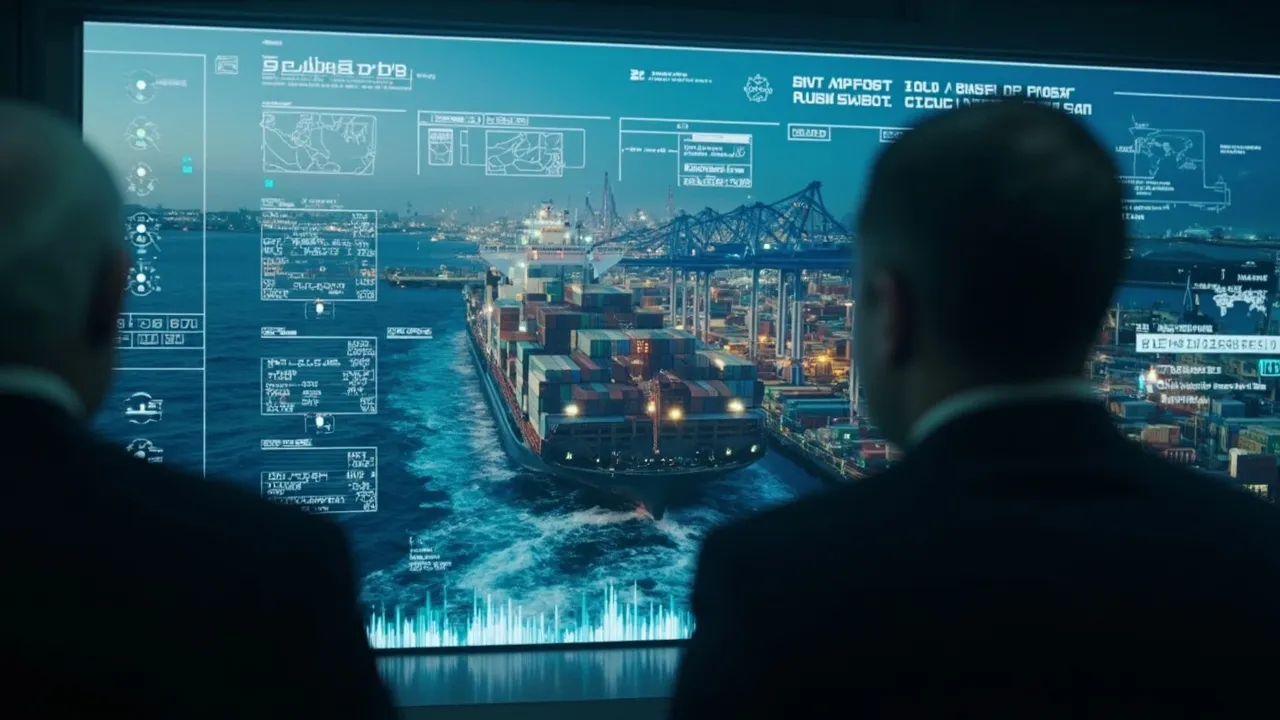
Machine learning models trained on historical shipment data, weather patterns, port congestion metrics, and carrier performance scores can now predict delays with increasing accuracy. When the system detects that a vessel arriving at Long Beach will likely face a 36-hour berthing delay, it doesn't just flag the issue—it automatically evaluates alternative routing options and presents the logistics team with ranked solutions.
2. Multimodal Unification
Most supply chains span multiple modes: ocean, air, truck, rail, and last-mile delivery. Legacy systems treated each mode as a silo. A company might have excellent ocean visibility but zero insight into what happens after the container hits the port.
Control Tower 2.0 stitches these modes together into a single, continuous data stream. Penske Logistics has made this a central priority for 2026, emphasizing what they call "holistic supply chain visibility"—integrated solutions that unite planning with execution and optimization across the entire logistics journey.
3. AI-Powered Decision Automation
The most significant evolution is the shift from human-driven decisions to AI-assisted (and increasingly AI-automated) responses. Maersk predicts that AI-agents and workflow builders will empower businesses to anticipate disruptions, optimize routes, and enhance transparency—moving logistics visibility well beyond basic tracking.
This isn't science fiction. It's happening now. When a control tower detects that a carrier's on-time performance has dropped below threshold for three consecutive weeks, AI agents can automatically trigger rate renegotiations, shift volume to backup carriers, or adjust safety stock levels—all without a human touching a keyboard.
The Integration Challenge: Why Most Companies Are Stuck at 1.0
Despite the market growth, most organizations remain trapped in the dashboard era. The reason is deceptively simple: data fragmentation.
A typical mid-market shipper uses 8–12 different logistics technology platforms. Their ocean carrier portal doesn't talk to their drayage provider's system. Their warehouse management system uses different identifiers than their transportation management system. The result is a patchwork of partial visibility—good enough to generate reports, but nowhere near sufficient for predictive analytics.
Gartner's first-ever 4PL Magic Quadrant, published in late 2025, underscores this shift. The analyst firm found that the industry is moving away from "isolated control-tower visibility toward true orchestration with ownership of outcomes." In other words, seeing your supply chain isn't enough—you need to actively manage it through a unified platform.
The KPIs That Actually Matter
Control Tower 2.0 demands a rethinking of what you measure. Traditional metrics like cost-per-mile and transit time still matter, but predictive command centers introduce a new tier of KPIs:
- Prediction Accuracy Rate: How often does the system correctly forecast delays or disruptions? Leading implementations achieve 85%+ accuracy for 24-hour predictions.
- Mean Time to Resolution (MTTR): When an exception occurs, how quickly does the system identify, evaluate, and resolve it? Control Tower 2.0 targets sub-30-minute MTTR for automated responses.
- OTIF (On-Time, In-Full) Improvement: The ultimate measure. Companies deploying predictive control towers report 5–12% improvements in OTIF scores within the first year.
- Dwell Time Reduction: Monitoring how long shipments sit idle at transfer points. Predictive systems can reduce port and warehouse dwell time by 15–25% through proactive scheduling.
- Cost Avoidance: The value of disruptions prevented, not just costs incurred. This metric captures the true ROI of predictive capabilities.
Building Your Control Tower 2.0: A Practical Roadmap
Transitioning from dashboard to command center doesn't happen overnight. Here's a realistic progression:
Phase 1: Data Foundation (Months 1–3) Consolidate your data sources. Integrate carrier APIs, IoT sensor feeds, port authority data, and weather services into a single data lake. Without clean, unified data, predictive models are worthless.
Phase 2: Predictive Layer (Months 4–6) Deploy machine learning models for your highest-impact use cases first—typically shipment delay prediction and demand forecasting. Start with a narrow scope (one trade lane or one mode) and expand as accuracy improves.
Phase 3: Automated Response (Months 7–12) Build decision trees and AI agents that can execute predefined responses to common exceptions. Begin with low-risk automations (sending alerts, updating ETAs) and gradually expand to higher-stakes actions (carrier switching, inventory rebalancing).
How CXTMS Powers the Predictive Control Tower
CXTMS was built for this evolution. Our platform unifies air, ocean, truck, and rail visibility into a single predictive command center, eliminating the data silos that keep most shippers stuck at Control Tower 1.0.
With real-time exception management, AI-driven ETA predictions, and automated carrier performance scoring, CXTMS transforms raw logistics data into actionable intelligence. Our multimodal tracking engine doesn't just show you where your freight is—it tells you where it will be and what could go wrong along the way.
The result: faster decisions, fewer disruptions, and measurably better supply chain performance.
Ready to upgrade from dashboard to command center? Contact CXTMS for a demo of our predictive control tower platform.