The Self Drive Act of 2026: What Autonomous Trucking Legislation Means for Freight Shippers

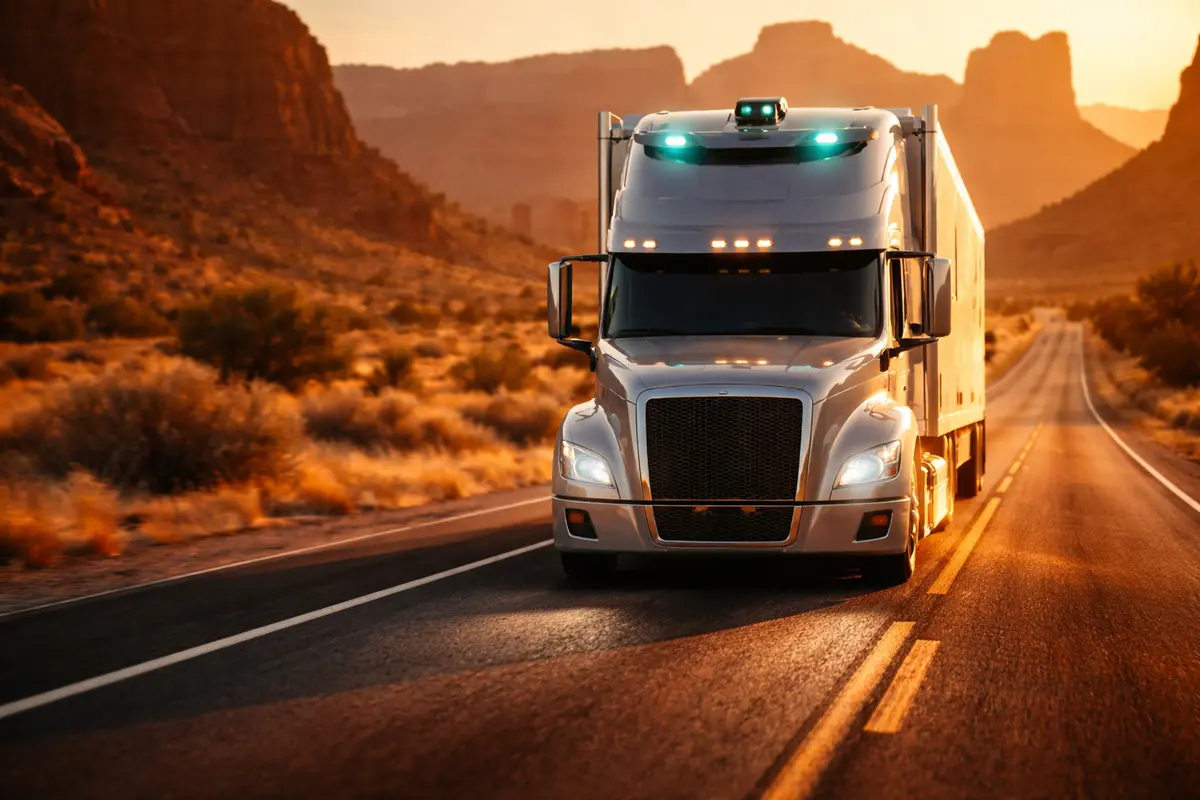
On February 5, 2026, U.S. Rep. Bob Latta introduced HR 7390—the Self Drive Act of 2026—marking the first time federal legislation has created a clear path for autonomous trucks to haul freight and generate revenue while still in the testing phase. For freight shippers, this isn't a distant headline. It's the beginning of a fundamental shift in how carriers operate, how capacity is priced, and how your TMS needs to evolve.
What the Self Drive Act Actually Does
Previous autonomous vehicle legislation stalled in Congress for years, leaving a patchwork of state-by-state regulations that made interstate autonomous trucking nearly impossible. The Self Drive Act changes that in three critical ways.
First, it authorizes revenue-generating autonomous freight operations. For the first time, manufacturers and carriers can haul paying freight during their evaluation programs. This transforms pilot programs from pure cost centers into revenue streams—a distinction that will accelerate investment and deployment timelines dramatically.
Second, it establishes federal preemption over state laws. The bill explicitly prohibits any state or local government from enacting laws that "prohibit in whole or in part" the manufacture, sale, or introduction of automated driving systems into interstate commerce. This eliminates the regulatory patchwork that has been the single biggest barrier to scaling autonomous trucking across state lines.
Third, it creates a national safety data repository with industry-friendly reporting requirements. Carriers get 30 days after a crash—or 10 days after receiving notice—to file reports. Data triggers are limited to serious outcomes like fatalities, hospital-transported injuries, and airbag deployments, not minor fender benders. States cannot require duplicate reporting if data is already filed federally.
The Market Context: Why This Matters Now
The timing of this legislation isn't coincidental. The autonomous truck market, valued at $39.5 billion in 2025, is projected to reach $65.7 billion by 2030 at a 10.7% CAGR, according to Mordor Intelligence. Meanwhile, the American Trucking Associations estimates a driver shortage exceeding 80,000—a number projected to grow as an aging workforce continues to retire faster than new drivers enter the industry.
The freight recession has only intensified the economic case. Carriers like STG Logistics have filed for bankruptcy, and operating margins remain razor-thin across the industry. Autonomous trucking promises to fundamentally change the cost equation: no hours-of-service limits, no driver retention costs, and the ability to run trucks 20+ hours per day on long-haul corridors.
Companies like Aurora Innovation, Kodiak Robotics, and Gatik are already running commercial autonomous operations on limited routes. The Self Drive Act gives them—and their carrier partners—the federal framework to scale beyond isolated corridors into a true interstate network.
What Changes for Freight Shippers
If you're managing freight, here's what demands your attention:
Mixed Fleet Complexity
The transition to autonomous trucking won't happen overnight. For the next 5-10 years, carriers will operate mixed fleets—some trucks with drivers, some without. Your TMS needs to handle both seamlessly. That means tracking different operational parameters: autonomous trucks don't need HOS compliance but require different safety monitoring, route restrictions, and maintenance schedules tied to sensor systems rather than traditional mechanical components.
Capacity and Pricing Shifts
As autonomous trucks enter revenue service, capacity on key long-haul lanes will increase. Early adopters among carriers will likely offer competitive rates to fill autonomous truck capacity and prove reliability. Shippers who can identify and partner with these carriers early will gain pricing advantages—but they'll need rate benchmarking tools sophisticated enough to compare autonomous vs. traditional carrier pricing.
Route and Lane Optimization
Autonomous trucks will initially operate on specific highway corridors—think I-10 from Los Angeles to Houston, or I-45 from Dallas to Houston. Shippers whose freight flows align with these early corridors can capture significant cost savings. But this requires visibility into which lanes have autonomous capacity and the ability to dynamically route freight to take advantage of it.
Insurance and Liability
The Self Drive Act shifts much of the liability framework, but questions remain. Who's responsible when an autonomous truck damages your freight? How do cargo insurance policies change when there's no driver? Shippers need to understand these evolving liability structures and ensure their contracts with carriers address autonomous operations explicitly.
FMCSA Framework: What's Coming
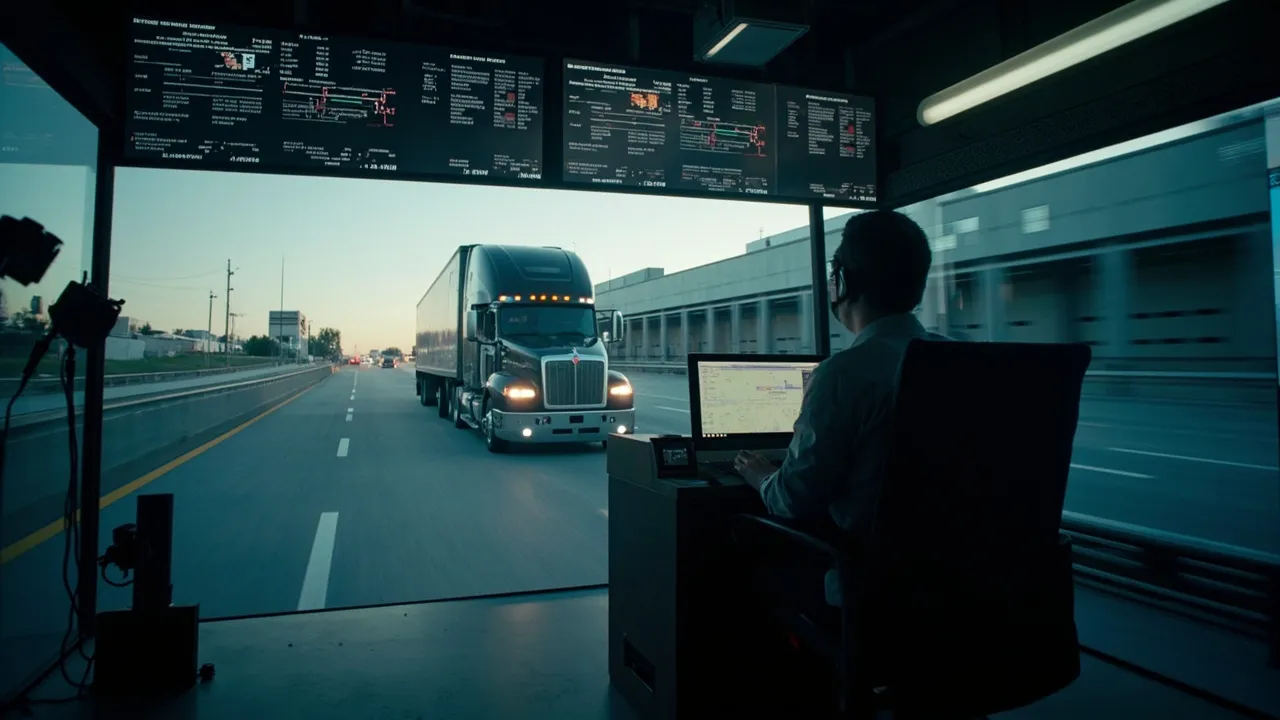
The FMCSA is expected to propose new rules by May 2026 addressing inspection, repair, and maintenance standards specifically for automated driving systems. This will include requirements for remote monitoring, software update protocols, and new categories of pre-trip inspection that replace the traditional driver walkaround.
For shippers, this means your carrier qualification processes need updating. Asking whether a carrier has a good CSA score won't be enough—you'll need to evaluate their autonomous vehicle safety management systems, remote monitoring capabilities, and software maintenance protocols.
Preparing Your TMS for the Autonomous Era
The shippers who benefit most from this transition will be those whose technology platforms can adapt. A modern TMS needs to:
- Track mixed fleet assets with different operational parameters for human-driven and autonomous vehicles
- Benchmark rates across traditional and autonomous carriers on the same lanes
- Monitor carrier safety using both traditional metrics and new autonomous vehicle performance data
- Optimize routing to leverage autonomous corridors where cost advantages exist
- Manage documentation that reflects evolving liability and insurance requirements
At CXTMS, we're building these capabilities into our platform now—because the Self Drive Act isn't a signal that autonomous trucking is coming someday. It's confirmation that it's arriving on a defined timeline, with federal backing, and shippers need to be ready.
The Bottom Line
The Self Drive Act of 2026 removes the biggest regulatory barrier to interstate autonomous trucking. Revenue-generating autonomous freight is now a matter of when, not if—and "when" is measured in months, not years. Shippers who start preparing their operations, contracts, and technology platforms today will be positioned to capture the cost and capacity advantages that autonomous trucking delivers.
Those who wait will find themselves scrambling to adapt after their competitors have already locked in partnerships with the carriers leading this transition.
Ready to future-proof your freight operations? Contact CXTMS to see how our platform handles the complexity of mixed autonomous and traditional fleets.