Suez Canal Return Begins: How Carriers' Gradual Red Sea Comeback Will Reshape Freight Rates in 2026


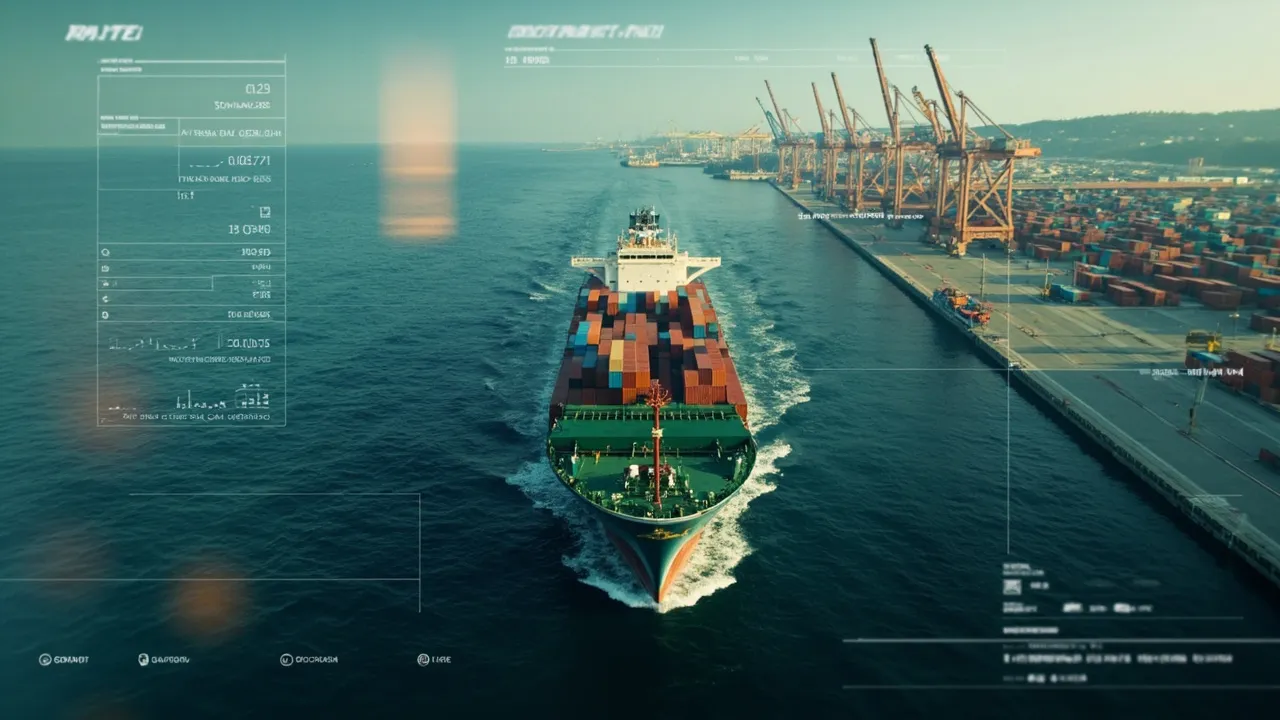
After two years of rerouting around the Cape of Good Hope due to Houthi militant attacks in the Red Sea, the world's largest ocean carriers are cautiously steering back toward the Suez Canal. For shippers, this is the most consequential shift in ocean freight since the disruptions began in late 2023 — and it could create the most favorable rate environment in years.
The Return Is Underway
In January 2026, Maersk made the first structural move back to the trans-Suez corridor, returning its MECL service (Middle East–India to US East Coast) to the shorter Suez route. The Maersk Denver completed an early trans-Suez sailing in mid-January, marking a significant milestone after months of test transits under heightened security protocols.
CMA CGM followed with its own moves, restarting the Indamex service from India to the US East Coast via the Suez Canal. By shortening the full-loop transit, CMA CGM was able to drop two vessels from the rotation — a telling preview of what a broader Suez return will mean for global capacity.
Hapag-Lloyd, the world's fifth-largest container carrier, has signaled that any return would be gradual, with no firm timeline. But the direction of travel is clear: the industry is moving back to Suez.
Vincent Clerc's $2.5 Billion Warning
Maersk CEO Vincent Clerc was unusually direct about what this means. Speaking at the company's Q4 earnings press conference in February 2026, he warned that "new ships are coming in, and at the same time, shipping through the Red Sea is likely to reopen, which will free up ship capacity. All of this will put pressure on freight rates this year," according to Reuters.
The numbers tell the story. Maersk's 2026 EBITDA guidance ranges from $4.5 billion to $7 billion — a steep decline from $9.53 billion in 2025. The Ocean division actually swung to a loss in Q4 2025. Maersk's shares fell 5.5% on the earnings report, despite an 80% rally over the prior year.
The difference between the top and bottom of that guidance? Roughly $2.5 billion — and it hinges almost entirely on how fast the Suez return happens. A slow, gradual return gives carriers time to manage capacity. A fast, full return floods the market.
The Overcapacity Perfect Storm
The Suez return doesn't happen in isolation. It collides with a massive wave of newbuild vessels entering the global fleet. During the two years of Red Sea disruptions, carriers ordered aggressively, and those ships are now arriving into service.
Here's the math that matters: returning to the Suez Canal shortens Asia-to-Europe voyages by roughly 10–14 days compared to the Cape of Good Hope route. That reduction releases approximately 6% of global vessel capacity back into an already oversupplied market. When you combine that freed capacity with the newbuilds, the supply-demand equation tilts dramatically in shippers' favor.
HSBC analysts initially projected freight rate declines of 9% to 16% under a scenario where Red Sea disruptions persisted into mid-2026. With Maersk's accelerated return, those projections may prove conservative. Maersk itself is forecasting global container volume growth of just 2% to 4% in 2026, down from 5% in 2025, citing recession risks — meaning demand growth won't absorb the capacity surge.
What the CMA CGM Indamex Revival Tells Us
The CMA CGM Indamex service restart is a case study in what happens when ships return to Suez. By cutting transit times on the India-to-US East Coast route, CMA CGM eliminated two vessels from the service rotation. Those ships don't disappear — they become available capacity that either cascades to other trades or sits idle.
Multiply this effect across dozens of services and multiple carriers, and you begin to see the scale of the capacity release. According to FreightWaves analysis, the industry could see effective capacity increases of 8–12% on major East-West lanes once carriers fully transition back to Suez routing.
The Shipper Playbook: Leveraging the Rate Environment
For freight decision-makers, this convergence of Suez return and overcapacity creates a window of negotiating leverage that hasn't existed since before the pandemic. Here's how to capitalize:
1. Renegotiate Contracts Now
If your ocean contracts were set during the disruption period, you're likely paying rates that assumed Cape routing and tight capacity. The fundamentals have shifted. Approach carriers with data on the capacity release and push for mid-year rate reviews.
2. Lock in Long-Term Rates Strategically
Carriers are desperate for volume commitments to fill capacity. This is a moment where long-term contract rates could be secured at levels well below current spot indices. But be selective — lock favorable rates on your highest-volume lanes while keeping flexibility on secondary routes.
3. Diversify Your Carrier Portfolio
The financial pressure isn't equal across all carriers. Some — particularly mid-tier carriers with heavy debt loads — may offer aggressive pricing to maintain volume. Use this competitive dynamic to diversify away from sole-source carrier relationships.
4. Monitor the Transition Timeline
The Suez return is gradual, not a light switch. Track which services have moved back to Suez routing versus which remain on Cape of Good Hope. The rate differential between transitioned and non-transitioned services will be significant.
5. Build Transit Time Savings Into Planning
Shorter Suez routing means 10–14 fewer days on the water for Asia-to-Europe and Asia-to-US East Coast cargo. Factor these transit time improvements into your inventory planning, safety stock calculations, and customer delivery commitments.
How CXTMS Helps You Navigate the Shift
The Suez Canal return creates opportunity — but only for shippers who can see the full picture in real time. CXTMS gives freight teams the visibility and benchmarking tools to capitalize on this market shift:
- Real-time rate benchmarking across carriers and lanes, so you know exactly where market rates are trending as capacity releases hit specific trades
- Contract vs. spot analysis to identify when locking in rates makes sense and when riding the spot market delivers better value
- Multi-carrier comparison to evaluate which carriers are offering the most competitive rates as they compete for volume in an oversupplied market
- Transit time tracking to measure the actual service improvements as routes shift from Cape to Suez
The ocean freight market is entering its most dynamic phase in years. The carriers that rerouted around Africa are coming home — and they're bringing a wave of capacity with them.
Ready to turn market intelligence into rate savings? Request a CXTMS demo today and see how real-time freight benchmarking puts you in control of your ocean spend.