Omnichannel Fulfillment Orchestration: Why Unified Order Management Is the Warehouse Imperative of 2026

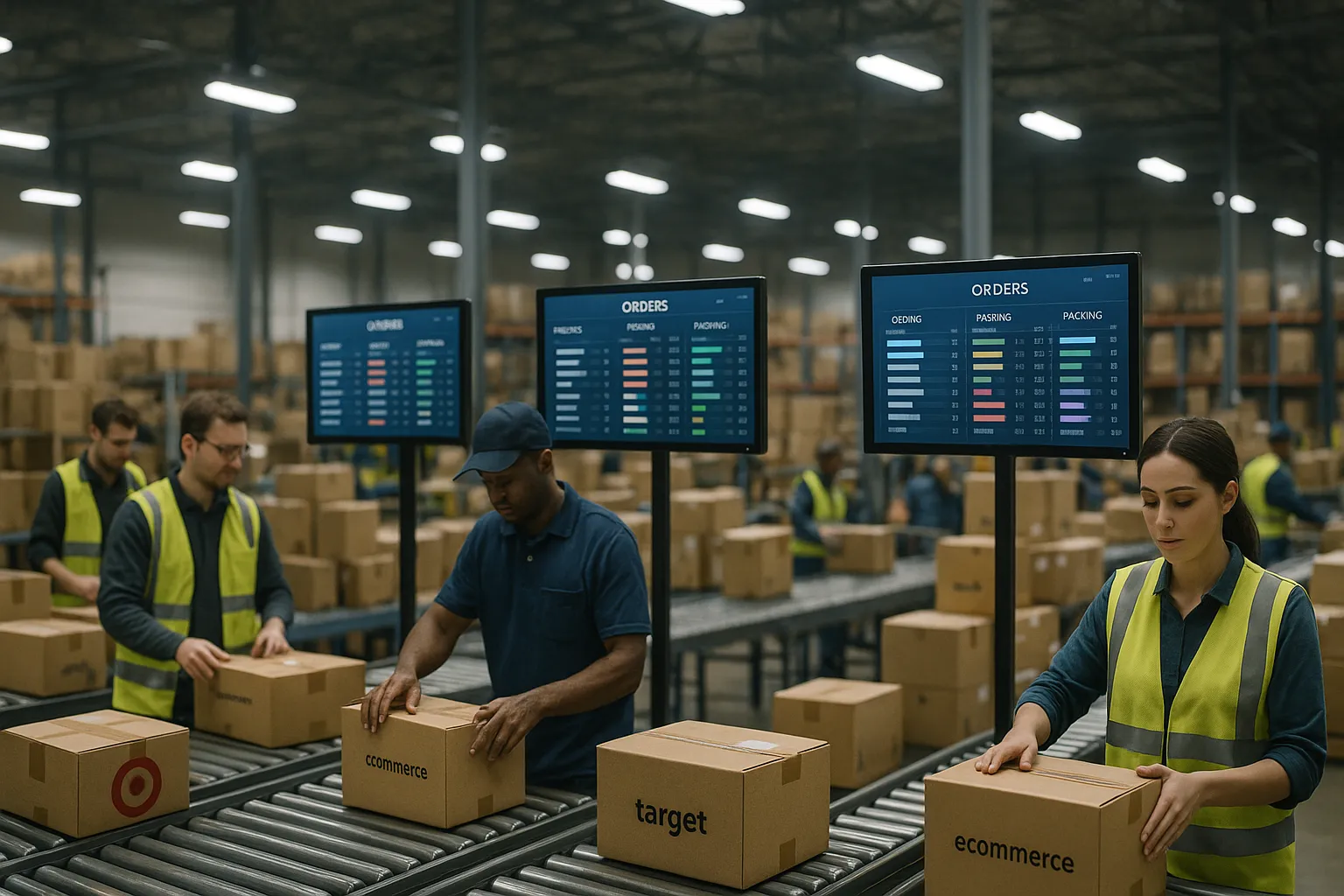
The modern warehouse doesn't just ship orders anymore. It routes them. A single facility might fulfill a direct-to-consumer ecommerce order, a wholesale pallet for a retail partner, a buy-online-pick-up-in-store (BOPIS) request, and a marketplace shipment for Amazon or Walmart—all from the same inventory pool, all within the same shift. The complexity isn't theoretical. It's the daily reality for any brand selling through more than one channel, and in 2026, that means virtually everyone.
The problem is that most fulfillment operations weren't built for this. They were designed around a single dominant channel—typically wholesale or ecommerce—and bolted on additional channels as afterthoughts. The result is siloed inventory, fragmented order routing, and fulfillment costs that quietly eat margins from the inside.
The Omnichannel Complexity Explosion
The number of fulfillment channels has multiplied dramatically. Beyond traditional wholesale and ecommerce, brands now manage DTC websites, third-party marketplaces (Amazon, Walmart, Target Plus, TikTok Shop), social commerce, subscription fulfillment, BOPIS, curbside pickup, and ship-from-store. Each channel carries its own service level agreements, packaging requirements, labeling standards, and delivery expectations.
According to a McKinsey report on omnichannel retail, omnichannel capability is no longer a competitive advantage—it's "a requirement for survival." The research found that two-thirds of retail executives cite the growth of omnichannel and digital shopping as the most significant trend affecting their industry.
The challenge isn't just selling across channels. It's fulfilling across them efficiently. When each channel operates its own inventory silo, the waste compounds quickly. A brand might hold 30 days of safety stock in its ecommerce DC while its wholesale warehouse sits on 45 days of the same SKU. Neither buffer accounts for the other, and when demand shifts between channels—as it inevitably does—one side faces stockouts while the other drowns in excess inventory.
Why Siloed Channel Fulfillment Destroys Margins
The financial impact of siloed fulfillment is staggering. Industry analysis from SupplyChainBrain highlights that disconnected systems lead to duplicate order entries, inventory shortages, and fulfillment delays—with nearly half of omnichannel customers willing to switch to competitors offering faster delivery. Retailers with mature unified commerce capabilities see up to 27% lower fulfillment costs compared to those running siloed operations, according to Manhattan Associates research.
The redundancy manifests in several ways:
- Duplicate safety stock across channel-specific warehouses, tying up 20-35% more working capital than a unified approach requires
- Suboptimal order routing that ships from the wrong node, adding unnecessary transportation costs
- Split shipments that could have been consolidated if inventory visibility spanned the full network
- Manual reconciliation between systems that don't communicate, consuming labor hours that add no customer value
As Supply Chain Dive reported, online sales are "remarkably less profitable than a store sale," making efficient fulfillment orchestration the difference between margin-positive and margin-negative ecommerce growth.
Unified Order Management: The Orchestration Layer
A unified order management system (OMS) serves as the central brain that decides how, where, and when every order gets fulfilled. Rather than letting each channel dictate its own fulfillment path, a unified OMS evaluates all available inventory across every node—DCs, regional warehouses, micro-fulfillment centers, and stores—and routes each order to the optimal fulfillment location based on configurable business rules.
Gartner's 2025 Market Guide for Distributed Order Management Systems identified intelligent order routing as the core capability driving adoption. The key functions include:
- Inventory promising: Real-time available-to-promise (ATP) calculations that account for all channels' committed and uncommitted inventory
- Order routing logic: Rules-based and AI-enhanced algorithms that consider proximity, cost, capacity, and inventory aging when selecting fulfillment nodes
- Split-shipment optimization: Intelligent decisions about when splitting an order across nodes saves cost versus when consolidation is worth the wait
- Channel-specific compliance: Automated application of packaging, labeling, and documentation requirements per channel
The shift from siloed to unified orchestration doesn't just reduce costs—it fundamentally changes inventory economics. When all channels draw from a shared inventory pool, safety stock requirements drop because demand variability across channels partially offsets. A slow week on the DTC site might coincide with a wholesale surge, and unified inventory absorbs both without dedicated buffers for each.
The Role of Distributed Order Management in Intelligent Fulfillment
Distributed Order Management (DOM) takes unified OMS a step further by continuously optimizing fulfillment decisions in real time. Where a basic OMS might route orders based on static rules ("always ship from the nearest warehouse"), DOM evaluates dynamic factors:
- Current labor capacity at each fulfillment node
- Real-time transportation costs based on carrier availability and rates
- Inventory aging to prioritize clearing older stock first
- Margin impact of fulfilling from different nodes (ship-from-store costs vs. DC costs)
- Customer delivery expectations tied to the specific channel and service level
This intelligence is particularly critical for BOPIS and same-day delivery, where the fulfillment window is measured in hours rather than days. DOM systems can dynamically redirect orders from an overwhelmed store to a nearby micro-fulfillment center, or route a marketplace order to a regional DC that has both the inventory and the carrier pickup scheduled for that afternoon.
75% of specialty supply chain retailers are now prioritizing two-day delivery, with 42% working toward same-day fulfillment, according to McKinsey's retail research. Meeting these expectations across every channel simultaneously is impossible without automated orchestration.
Integration Requirements: Connecting the Fulfillment Ecosystem
Unified order management doesn't operate in isolation. Its effectiveness depends on deep integration with the surrounding technology ecosystem:
Warehouse Management System (WMS): Real-time inventory positions, pick/pack status, and capacity data flow from WMS to OMS to enable accurate promising and routing.
Transportation Management System (TMS): Carrier rates, transit times, and pickup schedules inform fulfillment node selection. A DOM system might route an order to a farther warehouse if a carrier already has a scheduled pickup there, avoiding an expensive ad-hoc shipment from the nearest node.
Enterprise Resource Planning (ERP): Financial data, procurement schedules, and supplier lead times feed into inventory positioning decisions across the network.
Marketplace APIs: Direct connections to Amazon Seller Central, Walmart Marketplace, and other platforms enable automated order ingestion, inventory synchronization, and tracking updates without manual intervention.
Point of Sale (POS): For ship-from-store and BOPIS, real-time POS integration ensures store inventory accuracy and prevents promising items that have already been sold on the floor.
The integration challenge is why many brands stall on omnichannel fulfillment. According to Modern Materials Handling, CEOs consistently cite enterprise inventory visibility and flexible fulfillment execution as organizational priorities they "could not currently deliver"—not because the technology doesn't exist, but because siloed systems resist integration.
How CXTMS Enables Omnichannel Transportation Orchestration
Fulfillment orchestration only works when the transportation layer keeps pace. CXTMS connects directly into omnichannel fulfillment workflows, providing the transportation intelligence that DOM systems need to make optimal routing decisions.
With CXTMS, brands can:
- Compare real-time carrier rates across parcel, LTL, and truckload modes for every fulfillment node, ensuring order routing accounts for actual shipping costs rather than static estimates
- Consolidate shipments across channels when orders from different streams can share a truck or pallet, reducing per-unit transportation costs
- Automate carrier selection based on channel-specific SLAs—priority parcel for same-day marketplace orders, cost-optimized ground for wholesale replenishment
- Track fulfillment performance across channels with unified dashboards that surface which nodes and carriers deliver on-time across DTC, wholesale, and marketplace streams
The warehouse imperative of 2026 isn't just about picking and packing faster. It's about orchestrating the entire order-to-delivery pipeline across every channel, every node, and every carrier—from a single, intelligent platform.
Ready to unify your omnichannel fulfillment transportation? Request a CXTMS demo and see how intelligent transportation orchestration connects your fulfillment nodes to the optimal carrier for every order, every channel, every time.