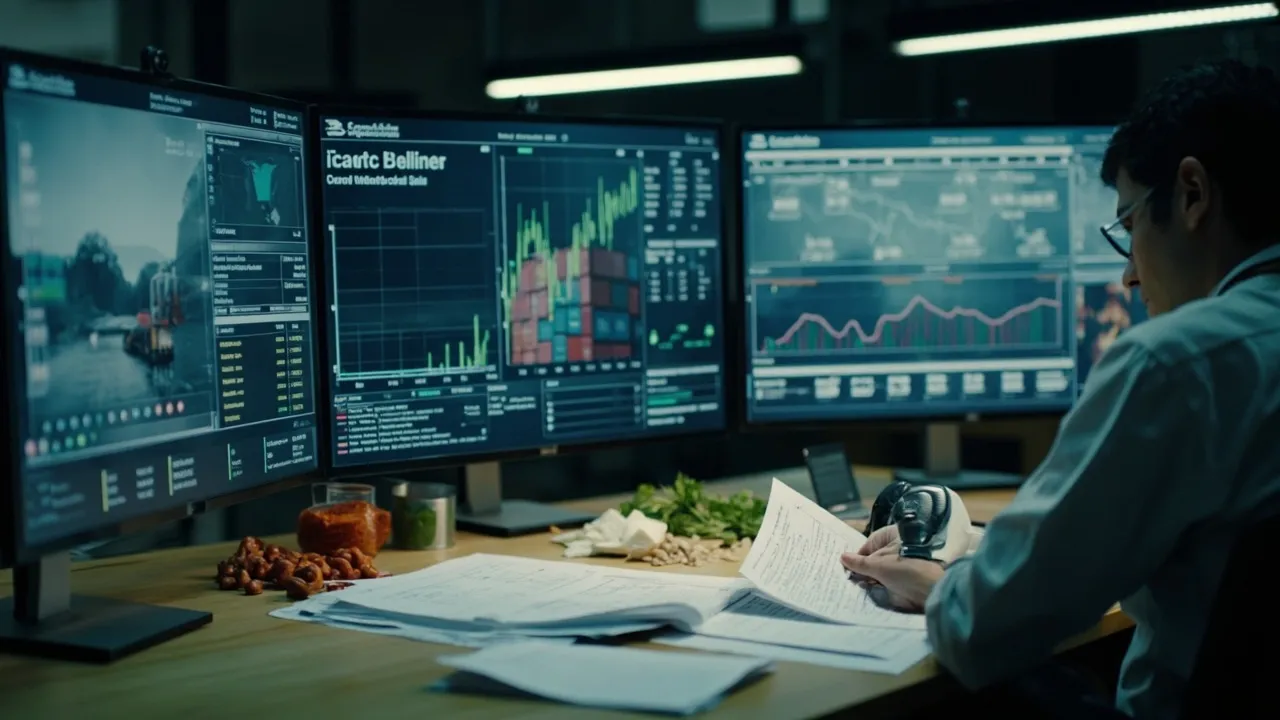
India's Contract-Manufacturing Tax Break Would Shift Apple's Landed-Cost Math


India's proposed extension of tax relief for contract manufacturing could make the country more attractive as an electronics production base. But the operational decision is not as simple as subtracting a tax rate from a factory quote. For Apple and the wider supplier ecosystem, the real question is how tax treatment changes the combined cost of equipment, imported components, inventory ownership, production yield, customs clearance, and export transport.
That distinction matters because India's role in the iPhone network is already expanding quickly. Reuters reported that made-in-India iPhones were expected to represent 25% to 30% of global shipments in 2025, up from 18% in 2024. The policy under discussion could support further investment, but procurement and logistics leaders should treat it as a scenario-model input—not an automatic signal to move volume.
What the proposed relief changes
The central issue is the tax exposure created when a foreign company owns expensive production equipment used by an Indian contract manufacturer. India granted a five-year safe harbor in specified sectors in February 2026, allowing foreign companies to provide machinery to local manufacturers without automatically creating a taxable business presence. The newer proposal would extend that treatment and therefore reduce uncertainty around long-lived tooling and production assets.
For electronics networks, the benefit is potentially significant. A brand owner can retain control of specialized machinery, deploy it at a contract manufacturer's facility, and avoid forcing the supplier to finance every asset through its own balance sheet. That can improve production flexibility and lower the capital charge embedded in the unit price.
Yet the policy does not erase every tax or customs cost. It changes one part of a larger landed-cost equation. Teams still need to classify imported machinery and components correctly, document who owns each asset and inventory lot, and establish whether a particular production arrangement satisfies the final rules.
Build a full landed-cost model
A useful comparison begins with four cost layers.
First, model equipment economics. Include machinery purchase price, useful life, maintenance, calibration, spare parts, installation, and the cost of relocating equipment if the product mix changes. Apply the proposed tax treatment only to qualifying assets and periods. A five-year benefit should not be projected indefinitely.
Second, model component imports. India has already adjusted its tariff structure: in 2024, it cut duties on some mobile-phone parts to 10% from 15%, and in 2025 it removed duties on selected components. Those changes improve local assembly economics, but they also make harmonized-system classification and bill-of-material mapping critical. A model that assigns one duty rate to an entire phone will be misleading.
Third, model domestic value-add. Local labor may be competitive, but buyers must include supplier yield, scrap, rework, utilities, tooling support, quality inspection, packaging, and domestic inbound transport. Ramp-up losses should be modeled separately from steady-state performance. If a supplier requires several quarters to reach target first-pass yield, the transition case may cost more even when the mature case looks attractive.
Fourth, model outbound lanes and inventory. The destination mix determines whether India is economically advantageous. In a striking example, Reuters reported that Foxconn sent 97% of its India iPhone exports to the United States during March-May 2025, up from an average of 50.3% in 2024. Apple also chartered aircraft carrying devices worth roughly $2 billion in March 2025. That protected availability, but premium air capacity can overwhelm factory-level savings.
Inventory ownership can change the answer
Tax and logistics models must use the same ownership assumptions. If the brand owns components while they are held at a supplier, the model should include working capital, insurance, obsolescence, damage risk, and the precise point when custody transfers. If the contract manufacturer owns them, those costs will usually return through the quoted unit price or payment terms.
Teams should map ownership at every milestone: component departure, import clearance, supplier receipt, work in process, finished-goods release, export clearance, and customer delivery. They should also identify which party can claim duty relief or recover indirect taxes. A favorable headline tax rule can lose much of its value when inventory sits longer, requires redundant safety stock, or incurs unrecoverable charges.
Customs performance deserves its own scenario. Reuters reported that Apple sought to reduce Chennai airport clearance time from 30 hours to six hours. That 24-hour difference affects cutoff reliability, buffer inventory, and the probability of buying emergency uplift. The landed-cost model should therefore contain expected, best-case, and disruption clearance times—not a single average.
Milestones before changing sourcing assumptions
Logistics leaders should require evidence in four areas before committing more volume:
- Policy confirmation: final effective dates, eligible sectors, qualifying equipment, duration, and documentation requirements.
- Supplier readiness: installed capacity, approved tooling, production yield, quality audits, labor plans, and business-continuity controls.
- Customs readiness: component classifications, valuation method, duty exemptions, importer-of-record responsibilities, and tested clearance procedures.
- Lane readiness: carrier allocations, airport handling capacity, transit-time performance, security, packaging validation, and contingency routes.
Each milestone should have an owner, evidence attachment, due date, and pass/fail threshold. Until the evidence is complete, India expansion should remain a modeled option rather than a committed baseline.
Compare scenarios, not slogans
CXTMS can bring supplier costs, tariffs, lead times, inventory carrying costs, and transport rates into one scenario view. Teams can compare an incumbent manufacturing lane with an India ramp, then stress-test different duty classifications, yields, customs dwell times, airfreight premiums, and ownership structures. The result is a decision based on total network cost and service risk—not factory price alone.
India's proposed tax extension could materially strengthen its contract-manufacturing proposition. The winners will be companies that translate the policy into auditable assumptions, validate the physical flow, and update the model as milestones clear.
Want to test India sourcing scenarios against your current network? Request a CXTMS demo and see how landed-cost and transportation planning work together.