DSCSA Full Enforcement Hits 2026: What Pharmaceutical Serialization Compliance Means for Every Logistics Provider

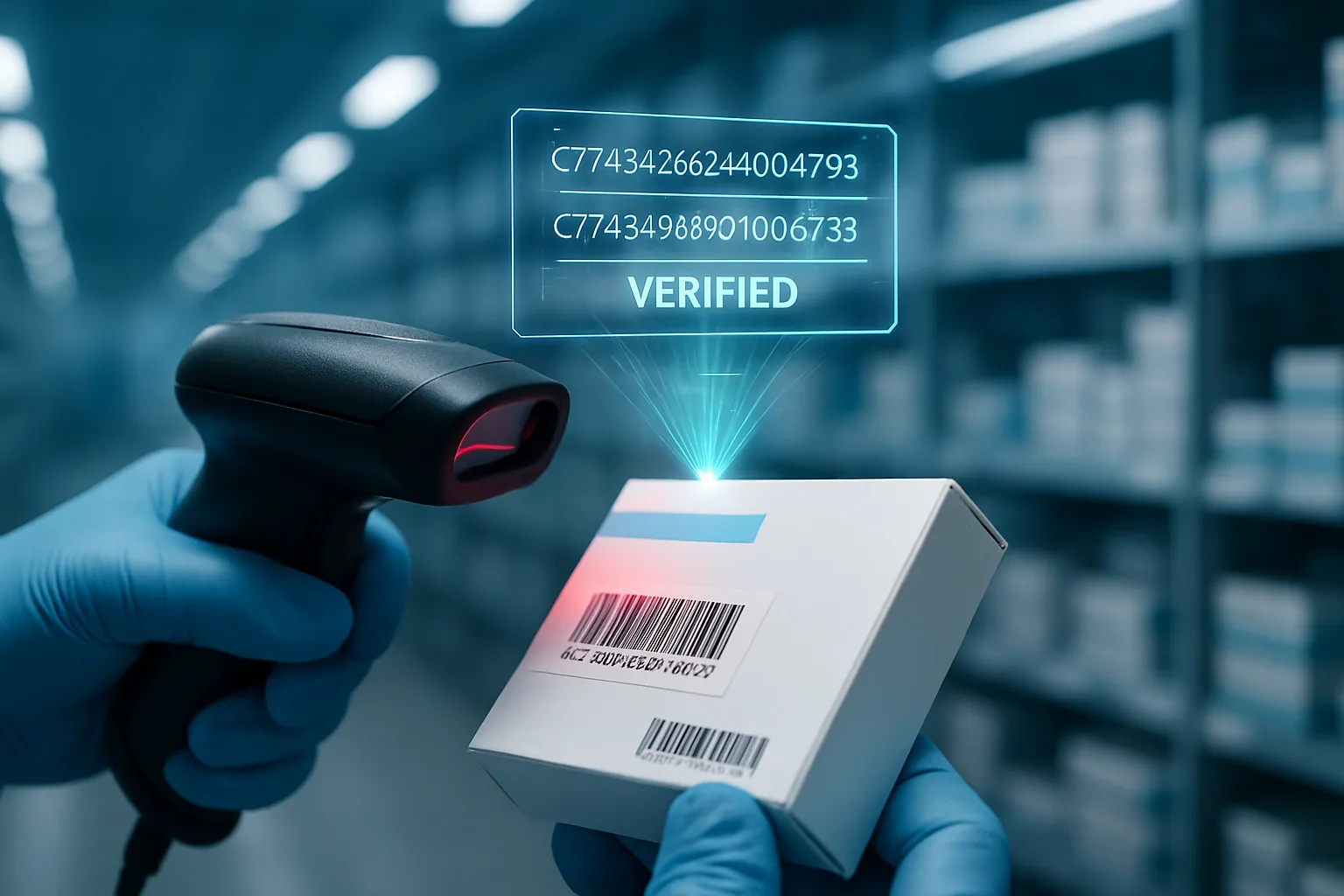
The grace period is over. After more than a decade of phased implementation, the Drug Supply Chain Security Act (DSCSA) has reached full enforcement—and for logistics providers handling pharmaceutical products, the operational implications are massive.
Enacted by Congress in 2013 as Title II of the Drug Quality and Security Act, DSCSA was designed to build an interoperable electronic system capable of tracing every prescription drug package from manufacturer to dispenser. The goal: eliminate counterfeit, stolen, contaminated, and otherwise harmful drugs from the U.S. pharmaceutical supply chain before they reach patients.
With the U.S. pharmaceutical 3PL market now valued at $21.58 billion in 2026 and growing at 5.87% CAGR according to Mordor Intelligence, the stakes for logistics providers couldn't be higher. If you're moving pharmaceutical products and you're not fully compliant, you're not just risking fines—you're risking your ability to operate.
The DSCSA Timeline: From Stabilization to Full Enforcement
Understanding where we are requires understanding how we got here. DSCSA rolled out in phases across four trading partner categories: manufacturers, wholesale distributors, dispensers, and repackagers.
The original November 2023 deadline for full electronic, interoperable traceability proved overly ambitious. The FDA issued a stabilization period, giving the industry breathing room through a series of compliance policies. Manufacturer exemptions expired first. Wholesale distributor enforcement kicked in by August 2025. Large dispensers faced their compliance deadline in November 2025, with smaller dispensers following in early 2026.
Now, in March 2026, there are no more exemptions, no more extensions. Every trading partner in the pharmaceutical supply chain must demonstrate full compliance with unit-level serialized product tracing.
What "Interoperable, Electronic Tracing" Actually Means for Logistics
At its core, DSCSA requires that every prescription drug package carry a unique serialized identifier—a 2D data matrix barcode encoding four critical data elements: the product's National Drug Code (NDC), a unique serial number, the lot number, and the expiration date.
But serialization alone isn't the challenge. The real mandate is interoperability: the ability to electronically exchange transaction data—Transaction Information, Transaction History, and Transaction Statements (collectively known as T3 data)—between every trading partner in the supply chain, in a standardized format.
The industry has converged on GS1 standards as the backbone of this exchange. EPCIS 2.0 (Electronic Product Code Information Services) provides the data format, while the Core Business Vocabulary (CBV) standardizes the terminology. Every logistics provider handling pharmaceutical products must be capable of sending and receiving EPCIS data in compliance with FDA and GS1 US Implementation Guidelines.
This isn't optional infrastructure. It's table stakes for handling pharmaceutical freight in 2026.
Impact on 3PLs: New Technology Requirements at Every Custody Transfer
For third-party logistics providers, DSCSA creates obligations at every point where pharmaceutical product changes hands. Each custody transfer—receiving at a warehouse, moving between facilities, shipping to a distributor or dispenser—triggers verification and documentation requirements.
Here's what that means operationally:
Receiving verification. When a 3PL receives serialized pharmaceutical product, they must verify the product identifier against the manufacturer's data. This requires integration with the Verification Router Service (VRS), a network that enables real-time authentication of serialized product identifiers.
Transaction data exchange. At every custody transfer, 3PLs must electronically send and receive T3 data. This means your warehouse management system needs to generate, store, and transmit EPCIS-formatted transaction records.
Suspect and illegitimate product handling. If a product fails verification—the serial number doesn't match, the NDC is unrecognized, or the lot has been flagged—the 3PL must quarantine the product, investigate, and report to the FDA if the product is determined to be illegitimate.
Returns processing. Wholesale distributors must verify product identifiers before redistributing returned products. For 3PLs handling reverse logistics, this adds a verification step that didn't exist before.
The global pharmaceutical serialization services market reflects this complexity. According to Grand View Research, the market reached $14.78 billion in 2024 and is projected to hit $29.35 billion by 2030, growing at 12.3% CAGR—driven largely by the infrastructure investments that logistics providers must make to remain compliant.
Cold Chain Meets Serialization: The Double Compliance Challenge
Pharmaceutical logistics was already one of the most demanding freight categories, thanks to strict temperature-control requirements for biologics, vaccines, and other temperature-sensitive products. DSCSA adds a second compliance layer on top.
Now, logistics providers must simultaneously maintain validated cold chain integrity and unit-level serialized tracking. That means every temperature-controlled shipment needs both continuous temperature monitoring and serialized product verification at each handling point.
The practical challenges are significant. Scanning 2D data matrix barcodes on frozen product in a -20°C environment isn't straightforward. Condensation, frost, and label adhesion issues in cold storage create barcode readability problems. And the speed requirements of cold chain logistics—minimizing time outside controlled environments—conflict with the time needed for serialized verification.
Leading 3PLs are investing in RFID-enabled solutions that can handle both temperature logging and serialized identification simultaneously, reducing the need for line-of-sight barcode scanning in challenging cold chain environments.
The Technology Stack: What Compliant Logistics Looks Like
Full DSCSA compliance in 2026 requires logistics providers to operate an integrated technology stack that touches nearly every operational system:
EPCIS 2.0-capable systems. Your WMS, TMS, and any system that touches pharmaceutical product data must be able to generate and consume EPCIS events in XML or JSON format.
Verification Router Service integration. Real-time connectivity to VRS networks for product identifier authentication at receiving and returns processing.
Serialized data repositories. Secure, searchable databases that maintain transaction history for every serialized product unit that passes through your facilities—with six-year retention requirements.
Barcode and RFID infrastructure. High-speed scanning systems at receiving docks, pick stations, and shipping areas capable of reading GS1-compliant 2D data matrix barcodes at volume.
Exception management workflows. Automated systems for flagging verification failures, quarantining suspect product, and generating FDA-required reports for illegitimate product.
The pharmaceutical logistics market overall is expected to reach $734 billion by 2030 according to Mordor Intelligence, growing at 5.53% CAGR. Providers who invest in compliant infrastructure now position themselves to capture a growing share of this market.
Penalties and Liability: What's at Risk
DSCSA enforcement carries real consequences. The FDA has the authority to prohibit non-compliant trading partners from handling pharmaceutical products—effectively shutting down a logistics provider's pharma business entirely.
Beyond direct regulatory action, the liability exposure is significant. If a non-compliant logistics provider allows counterfeit or diverted product to enter the legitimate supply chain, the legal and reputational consequences extend far beyond regulatory fines. Product liability, customer contract violations, and loss of pharmaceutical handling certifications can cascade into existential business risks.
For 3PLs that have built significant pharmaceutical logistics businesses, compliance isn't a cost center—it's an existential requirement.
How CXTMS Supports Pharmaceutical Compliance Workflows
Managing pharmaceutical freight requires visibility and documentation capabilities that go beyond standard freight management. CXTMS provides the infrastructure that logistics providers need to maintain compliance across their pharmaceutical operations:
- Serialized shipment tracking with chain-of-custody documentation at every transfer point
- Temperature monitoring integration that links cold chain data to individual serialized product identifiers
- Automated compliance documentation that generates the transaction records required for DSCSA audit trails
- Exception alerting when shipments deviate from pharmaceutical handling protocols
- Carrier compliance verification ensuring that every transportation partner in the pharmaceutical supply chain meets DSCSA requirements
The era of treating pharmaceutical logistics as "just another commodity" is definitively over. DSCSA full enforcement means every touchpoint, every transfer, and every data exchange must meet federal standards for serialized traceability.
Ready to ensure your pharmaceutical logistics operations meet DSCSA compliance standards? Request a CXTMS demo to see how our platform supports serialized shipment tracking, compliance documentation, and cold chain integration for pharmaceutical freight.