Disposable IoT Sensors Are Enabling Pallet-Level Supply Chain Visibility for Under $1 Per Shipment

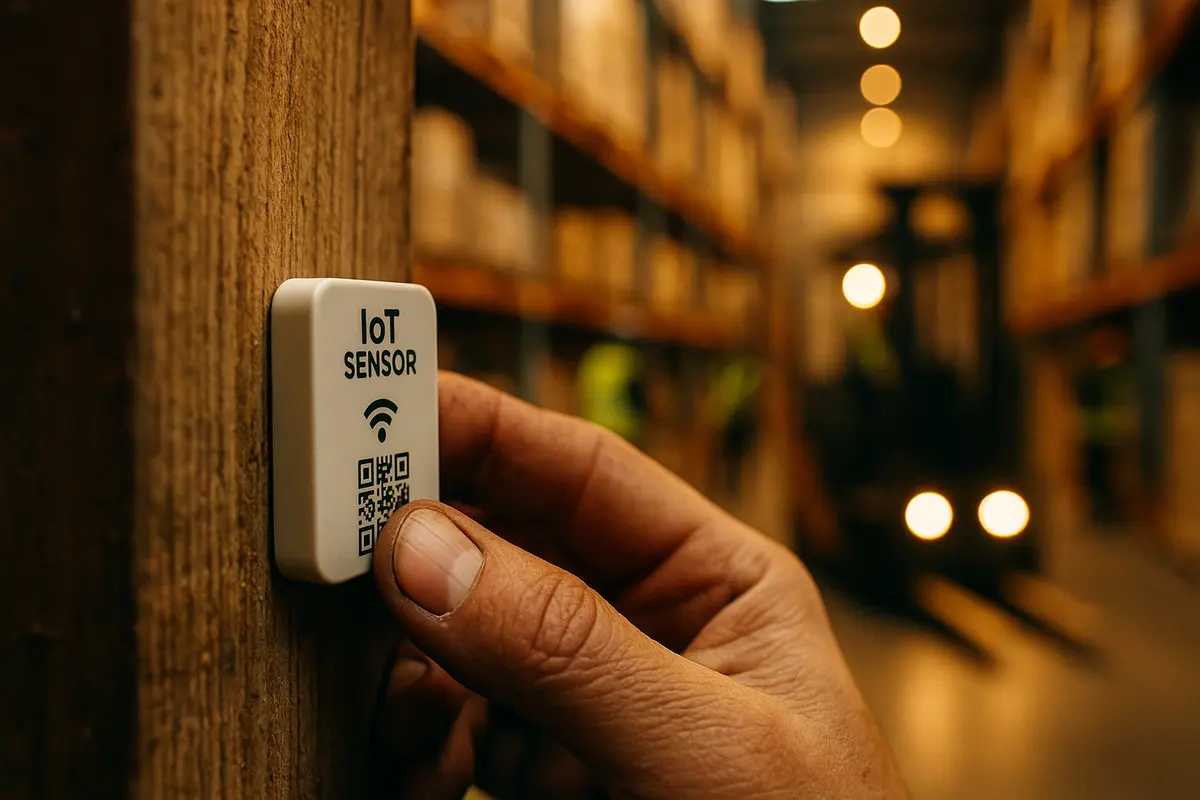
The global IoT sensors market is projected to grow from $23.9 billion in 2025 to $99.2 billion by 2030, according to GM Insights — a staggering 36% compound annual growth rate. A major driver of that growth? Disposable, sub-dollar sensors that are finally making pallet-level and even item-level supply chain visibility economically viable for mainstream shippers.
The Cost Breakthrough That Changes Everything
For years, real-time supply chain tracking was reserved for high-value shipments. Traditional GPS trackers cost $50–$300 per device, with annual connectivity fees of $120–$240 per unit. That math only worked for containers carrying $20,000+ in goods.
In 2026, the economics have fundamentally shifted. Disposable IoT sensors — thin, battery-powered tags using Bluetooth Low Energy (BLE), NB-IoT, and LPWAN protocols — now cost less than $1 per unit at scale. Companies like Moeco are advertising 80% cost reductions compared to traditional tracking hardware, enabling shippers to tag every pallet rather than just every container. Walmart's partnership with Wiliot to deploy up to 90 million IoT sensors across its supply chain by 2026 underscores how seriously major retailers are taking pallet-level visibility.
This isn't incremental improvement. It's a shift from sampling to census — from knowing where your container is to knowing where every pallet inside it is, in real time.
From Container-Level to Pallet-Level: What Granular Visibility Unlocks
The difference between container-level and pallet-level visibility is the difference between knowing your shipment is "somewhere in the Port of Los Angeles" and knowing exactly which pallets have cleared customs, which are still on the vessel, and which have already been loaded onto outbound trucks.
Granular visibility unlocks capabilities that were previously impossible:
- Precise ETA calculations. Instead of estimating when a container arrives, logistics teams know when specific pallets will reach specific dock doors — enabling true just-in-time receiving.
- Targeted exception management. When a temperature excursion occurs, you know which pallets were affected rather than quarantining an entire container.
- Inventory accuracy. RFID-tagged pallets have been shown to reduce shipping rack inventory requirements from 5.8 days of production to 2.7 days in automotive supply chains, according to the Reusable Packaging Association.
- Shrinkage reduction. When every pallet is tracked, pilferage and misrouting become immediately visible rather than discovered days or weeks later during reconciliation.
The supply chain visibility software market, valued at $3.08 billion in 2026, is projected to reach $25.47 billion by 2035 — and disposable sensors are a key enabler of that growth.
The 2026 Tech Stack: Disposable Sensors + Edge Computing + AI
Modern pallet-level visibility isn't just about cheap hardware. It requires a full technology stack working in concert:
Hardware layer: Disposable sensors combine multiple positioning technologies depending on environment. GPS handles outdoor tracking on trucks and in rail yards. BLE beacons provide precise indoor positioning in warehouses and distribution centers. Satellite IoT via Iridium or emerging LEO constellations maintains connectivity during ocean transit. The key innovation is hybrid sensors that automatically switch between protocols as shipments move through different environments.
Edge computing layer: With millions of disposable sensors generating continuous data streams, processing everything in the cloud creates latency and bandwidth costs. Edge computing at warehouses, ports, and distribution centers filters and aggregates sensor data locally, sending only meaningful events — location updates, temperature alerts, shock detections — to central platforms.
AI analytics layer: Machine learning models now predict delays 24–48 hours before they occur by correlating sensor data with external signals like weather patterns, port congestion metrics, and carrier performance histories. Leading platforms don't just show you where things are — they tell you where things will be and flag exceptions before they become problems.
Multi-Modal Tracking: Ocean, Air, Rail, and Road
The hardest problem in supply chain visibility has always been maintaining continuous tracking across mode changes. A shipment might travel by ocean vessel from Shanghai to Long Beach, transfer to rail for the cross-country leg to Chicago, then move to a truck for final delivery to a distribution center in Indianapolis.
Each mode change historically created a visibility gap — a "dark zone" where tracking data went silent until the next carrier's systems picked up the shipment. Multi-modal visibility platforms solve this by combining carrier integration APIs with sensor-level tracking to maintain continuous monitoring.
Modern multi-modal platforms integrate with carrier systems like Maersk and MSC for ocean data, airport WiFi networks for air cargo positioning, cellular geofencing at rail yards, and standard GPS for road transport. The result is a single, continuous tracking record from origin to final destination — regardless of how many carriers or modes are involved.
According to Strategic Tracking, companies shipping 500 or more multi-modal shipments annually typically see a 12–18 month payback period on visibility platform investments, driven by reduced expedited freight costs, lower inventory holding costs, and improved on-time-in-full (OTIF) performance.
Environmental and Sustainability Benefits
Disposable sensors also deliver unexpected sustainability wins. Better pallet-level visibility means tighter inventory management, which reduces overproduction and waste. RFID-tagged pallets in consumer goods supply chains have been shown to improve truck fill rates, reducing empty miles and cutting CO₂ emissions by up to 62% in documented case studies.
The sensors themselves are evolving toward sustainability too. Newer designs use paper-thin biodegradable substrates and printed electronics, moving away from traditional PCB-based designs. Some manufacturers are developing sensors powered entirely by energy harvesting — capturing ambient RF energy or temperature differentials — eliminating batteries entirely.
How CXTMS Ingests IoT Sensor Data for Real-Time Shipment Intelligence
The real value of disposable IoT sensors emerges when sensor data flows directly into your transportation management system. CXTMS is built to ingest high-volume IoT data streams, normalizing sensor events from multiple hardware providers into a unified tracking interface.
Whether your operation uses BLE tags from one vendor for warehouse tracking and NB-IoT devices from another for in-transit monitoring, CXTMS aggregates all sensor data into a single shipment timeline. AI-powered exception management automatically flags temperature excursions, unexpected delays, and route deviations — then recommends corrective actions before problems compound.
For shippers still relying on carrier-provided tracking data alone, the message is clear: pallet-level visibility is no longer a luxury reserved for pharmaceutical cold chains and high-value electronics. At under $1 per sensor, it's becoming the standard for any operation that takes supply chain performance seriously.
Ready to integrate IoT sensor data into your logistics operations? Contact CXTMS for a demo of our real-time visibility platform.