SK Shipping's LNG Carrier Asset Swap: What Fleet Consolidation Changes for Charterers

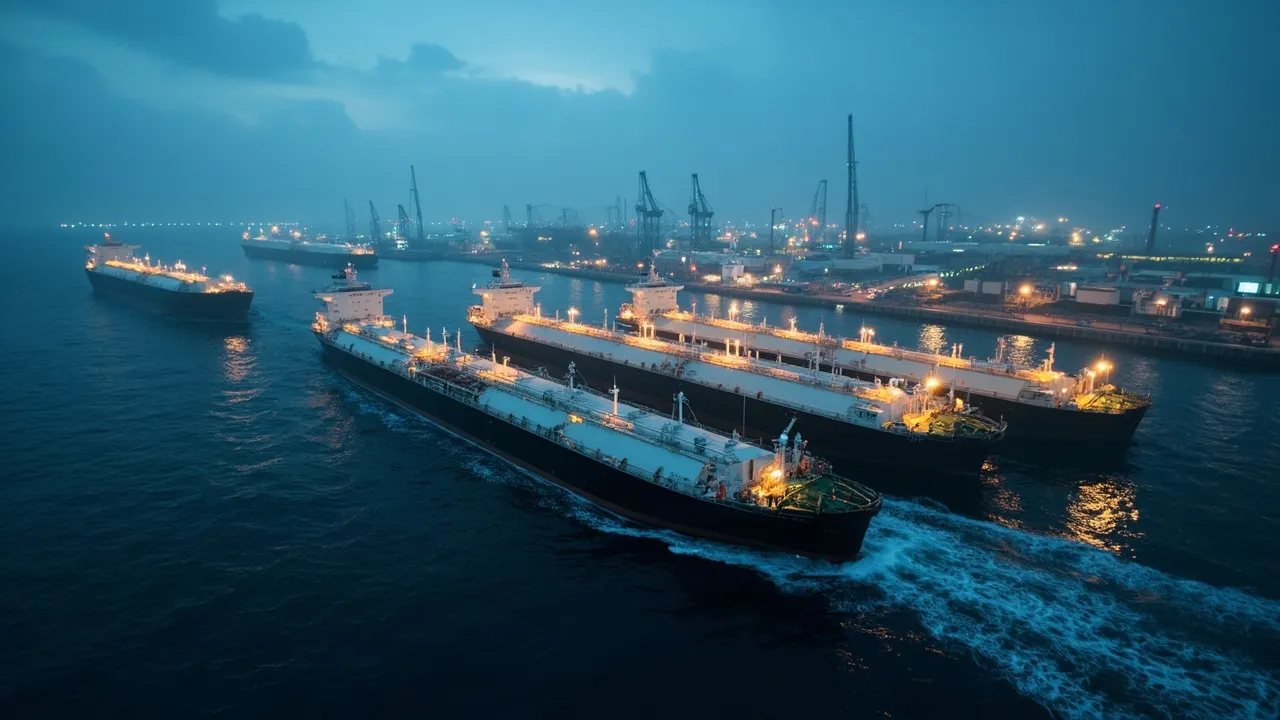
SK Shipping's planned asset swap with H-Line Shipping is more than a fleet transaction. For LNG charterers, it is a live test of whether commercial contracts, vessel records, compliance documents, and day-to-day operating responsibilities can move together without creating gaps.
Reuters reports that the two South Korean operators will exchange vessels and associated long-term contracts. SK Shipping is set to receive 16 LNG carriers, while H-Line will receive 12 tankers and approximately $300 million in cash. After closing, SK Shipping is expected to operate 32 LNG carriers and 14 LPG vessels, making it Asia's largest LNG carrier operator and the third largest globally. The company is also expected to be rebranded as K-LNG.
Those headline numbers describe scale. They do not describe the charterer's transition workload.
Counterparty concentration becomes an operating risk
Fleet consolidation can simplify relationships. A charterer may gain one larger operator, a broader pool of technically similar vessels, and more centralized commercial and operational contacts. Scale can also support common maintenance standards, consolidated crewing practices, and stronger schedule-recovery options.
But concentration changes the risk profile. When 32 LNG carriers sit under one operator, a technical-management failure, sanctions screening issue, insurance dispute, cyber incident, or documentation breakdown can affect more voyages at once. The counterparty may be stronger in absolute terms while representing a larger share of the charterer's transport capacity.
Charterers should therefore recalculate exposure after the swap rather than relying on pre-transaction limits. Useful measures include the percentage of annual liftings assigned to the combined operator, the number of delivery windows with no alternative vessel, and the volume exposed to one technical manager, protection-and-indemnity club, or flag-state regime.
A larger pool does not automatically mean more optionality
Thirty-two vessels sound like ample substitution capacity, but LNG ships are not interchangeable inventory. Compatibility depends on tank technology, cargo capacity, boil-off performance, propulsion, terminal approvals, manifold configuration, vetting status, and charter restrictions. A nominally available ship may still be unusable for a specific loading window.
The distinction matters as LNG contracting becomes more flexible. Deloitte's 2026 oil and gas outlook says spot-based LNG contracting rose from below 10% in the early 2000s to more than 30% by 2024. More flexible trading increases the value of rapid vessel substitution, but only when operators and charterers have current compatibility data.
Before treating the enlarged fleet as a common pool, charterers should request a vessel-by-vessel eligibility matrix. It should identify approved terminals, contractual substitution rights, minimum notice periods, cargo restrictions, inspection status, and any consent required from lenders or long-term customers.
Charter leverage may shift in both directions
Consolidation can improve procurement efficiency because a charterer has fewer negotiations and a larger relationship to manage. It can also reduce competitive tension if fewer operators control suitable tonnage in the relevant trade.
The correct response is not simply to demand lower rates or accept scale as proof of reliability. Charterers should separate price leverage from performance leverage. Rate negotiations belong alongside measurable commitments for nomination response times, substitution decisions, document delivery, off-hire resolution, and recovery plans after delay.
Service-level terms become especially important during the transition. A contract may move legally on one date while operational teams, bank accounts, invoicing entities, and communications channels change on different dates. Clear escalation deadlines protect the charterer when organizational charts are still settling.
Master data is the hidden critical path
Asset swaps fail operationally when records do not move with the ships. Every transferred carrier can touch vessel masters, charter-party references, vendor files, voyage templates, terminal approvals, insurance certificates, emissions records, banking instructions, and contact directories.
The receiving operator's new name creates another source of mismatch. Systems may refer to SK Shipping, K-LNG, an owning special-purpose vehicle, and a separate technical manager for the same voyage. If those identities are not mapped explicitly, teams can issue nominations to the wrong party, reject valid invoices, or overlook expired documents.
A controlled migration should preserve both the former and new identifiers. Each vessel record needs its IMO number as the stable key, plus current and historical names, registered owner, disponent owner, operator, technical manager, charter reference, and effective dates. Changes should be versioned rather than overwritten so teams can reconstruct who held responsibility at any point.
A continuity checklist for charterers
Charterers should establish a joint transition register covering four areas:
- Nominations: Confirm the recipient, required notice, acknowledgment deadline, substitution process, and escalation contact for every open and near-term voyage.
- Compliance: Revalidate class, flag, insurance, sanctions screening, terminal vetting, crew certification, emissions documentation, and safety-management certificates by vessel.
- Port calls: Verify agent appointments, berth compatibility, terminal approvals, towage arrangements, pre-arrival submissions, and payment responsibility at every scheduled port.
- Exception ownership: Assign one named owner for delays, breakdowns, cargo-quality events, document discrepancies, and invoices during the handover period.
The register should include the old state, new state, effective date, evidence, approver, and unresolved exception. High-risk voyages deserve a readiness review several days before nomination deadlines, not after a message bounces or a terminal rejects a vessel.
Turn consolidation into controlled execution
The SK Shipping-H-Line swap could deliver real benefits: a specialized LNG operator with greater scale and a broader fleet. Charterers will capture those benefits only if they treat the transaction as an operational-data migration, not merely a change of commercial counterparty.
CXTMS connects vessel, contract, document, milestone, and exception records in one transportation workflow. Request a CXTMS demo to see how your team can manage carrier transitions without losing control of nominations or voyage execution.