Amazon Business Branded Trucks Turn Consolidated Dock Delivery Into a B2B Service Design

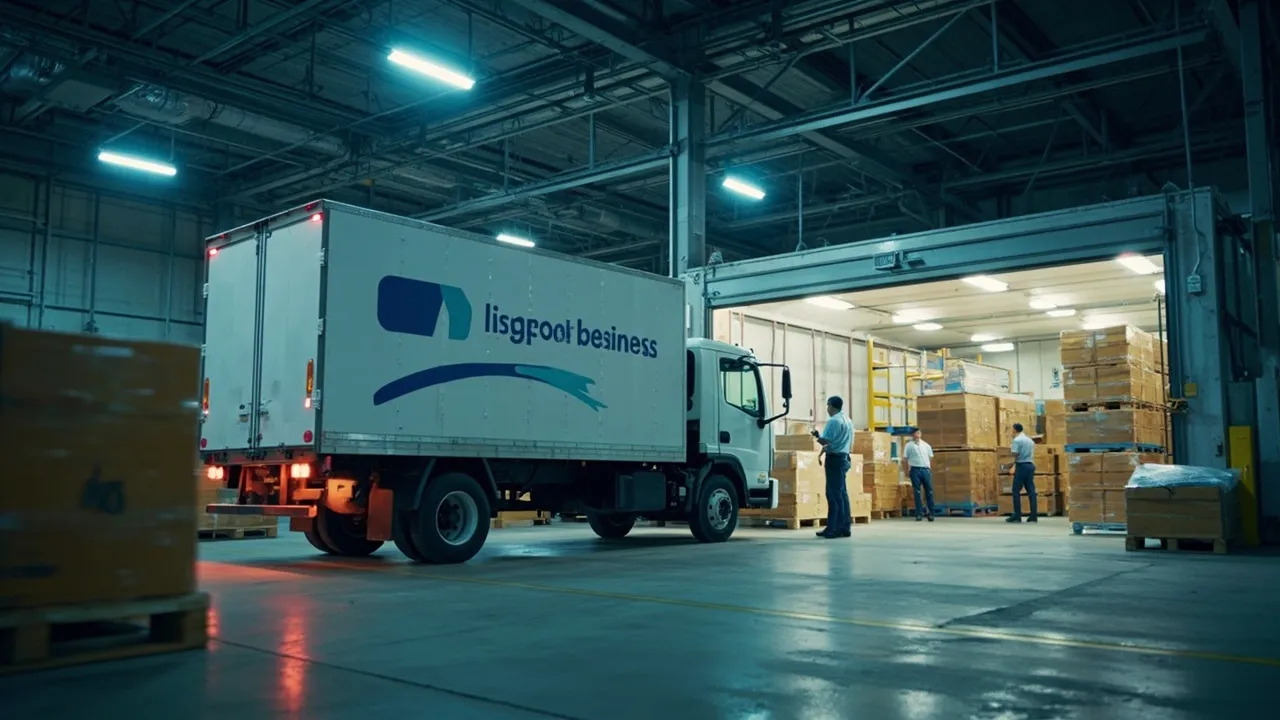
Amazon Business is putting a distinct operating model on the road: dedicated branded trucks built for organizations that want orders consolidated and delivered to a loading dock. The service looks like a fleet announcement, but its more important feature is the delivery promise. Business recipients do not simply need a parcel placed at a door. They may need a pallet, a booked receiving window, one proof-of-delivery record, and fewer interruptions across the workday.
Supply Chain Dive reports that the rollout covers 13 states and supports consolidated drop-offs and palletized loading-dock delivery. That turns order aggregation, route density, warehouse preparation, appointment management, and recipient exceptions into parts of one service design.
B2B delivery is not consumer parcel delivery at greater volume
Consumer parcel networks gain efficiency by sorting individual packages into dense residential routes. A driver can make many short stops, and the delivery event often requires little coordination with the recipient. A commercial dock changes the economics and the workflow.
A business stop may combine multiple purchase orders, departments, cost centers, or delivery dates. The vehicle may need a gate credential, an appointment number, a specific dock door, a pallet count, and equipment compatible with the site. Receiving staff may accept freight only during narrow hours. Proof of delivery may need the receiver's name, seal or pallet condition, quantities, and exception photos rather than a simple doorstep scan.
Consolidation reduces the number of delivery events, but it concentrates the consequence of failure. A missed appointment can delay an entire group of orders. A consumer route can recover from one unsuccessful parcel stop relatively cheaply; a palletized business stop may require redelivery, temporary storage, and a new appointment.
Amazon's scale provides a strong base for testing the model. Supply Chain Dive separately reported that Amazon delivered 6.7 billion packages in 2025, narrowly surpassing the U.S. Postal Service by volume. Yet high network volume alone does not make every dedicated B2B route economical. The relevant question is whether enough compatible business demand can be assembled by geography, receiving window, equipment, and handling profile.
Set a threshold for dedicated-route conversion
Shippers should resist using one crude trigger such as package count. A route can look dense on an order report while remaining operationally sparse because the stops require conflicting appointment windows or long service times.
Evaluate a candidate route with five measures:
- Consolidatable volume: orders and cube that can wait for the same planned departure without breaking customer promises.
- Geographic density: drive time and distance between compatible business stops, not merely shared postal codes.
- Vehicle utilization: pallet positions, weight, and cube after accounting for load sequence and special handling.
- Stop productivity: dock wait, unload, check-in, and proof-of-delivery time for each recipient.
- Avoided parcel cost: parcel injection, accessorials, repeated receiving events, and failed-delivery exposure displaced by the dedicated route.
The conversion threshold is reached when avoided parcel and handling cost exceeds the dedicated vehicle's linehaul, driver, equipment, dock, and exception cost while the route still meets every receiving promise. Calculate this over a representative period rather than one unusually busy day. Include a minimum fill threshold and a maximum wait-to-consolidate rule so savings do not come from holding urgent orders.
For example, ten small shipments to one campus may justify one consolidated stop even if they do not fill a truck. Conversely, a full vehicle split among facilities with incompatible receiving windows may still work better through parcel or LTL channels. Density must be measured in executable stops.
Design the dock event before optimizing the route
Route optimization cannot repair an unbookable arrival. Every business location needs a receiving profile: operating hours, appointment lead time, vehicle restrictions, unload method, security rules, contact hierarchy, expected dwell, and proof-of-delivery requirements.
Then define the consolidation record. It should connect every underlying order and handling unit to the route, stop, pallet, and receiving appointment. When a customer asks about one item, the service team must be able to find its physical shipment without dismantling the consolidated view.
Warehouse performance matters here. Inbound Logistics notes that performance-based warehouse operating models can produce up to 25% lower operating costs while maintaining safety, service, and control. That outcome depends on managing performance as a connected system. For consolidated delivery, useful measures include orders released before cutoff, pallets ready by load time, departure adherence, cube utilization, dwell, appointment compliance, shortages, damages, and first-attempt completion.
Load sequencing should mirror stop order so the driver is not moving pallets at each dock. Labels and manifests should distinguish the consolidated delivery from its component orders. Before departure, the operation should validate that all promised components are physically ready; otherwise, one missing order can force a choice between delaying the route and breaking the consolidation promise.
Treat exceptions as part of the product
Dedicated B2B service needs explicit recovery rules. Common exceptions include a late inventory release, missed cutoff, rejected appointment request, vehicle-capacity conflict, recipient closure, pallet damage, quantity discrepancy, and a customer asking to release one urgent order from the group.
Each exception should have an owner, decision deadline, approved alternatives, and cost authority. The operation might move an urgent component to parcel, rebook the dock, substitute a smaller vehicle, split a pallet, or hold the entire consolidation. The right response depends on the customer's service promise—not on which team notices the problem first.
Customers also need proactive communication at business-relevant milestones: consolidation confirmed, appointment booked, vehicle departed, estimated arrival updated, unloading started, and delivery accepted or disputed. That is more useful than a stream of parcel scans that does not explain whether the complete business order will arrive together.
Manage the service in CXTMS
CXTMS can maintain one operational record across the underlying orders, consolidated load, route, stop, appointment, handling units, and proof of delivery. Planners can compare eligible demand against fill and service thresholds, then build dedicated routes only when the economics and receiving constraints work.
At execution, exception queues can flag unconfirmed appointments, incomplete pallets, late departures, dwell overruns, capacity conflicts, and failed proof-of-delivery requirements. Recipient profiles preserve dock rules for future plans, while stop-level cost and service data show where consolidation creates value and where parcel or LTL remains the better mode.
Amazon Business's rollout signals that commercial delivery is becoming a deliberately engineered service rather than a variation of the consumer last mile. The winners will not be those with the most branded trucks. They will be the operators that can consolidate without hiding orders, schedule without creating dwell, and recover exceptions without losing the receiving promise.
Request a CXTMS demo to see how dock appointments, consolidated routes, and B2B delivery exceptions can be managed in one transportation workflow.