India's 3PL Warehousing Growth Is Moving From Space to Value-Added Control

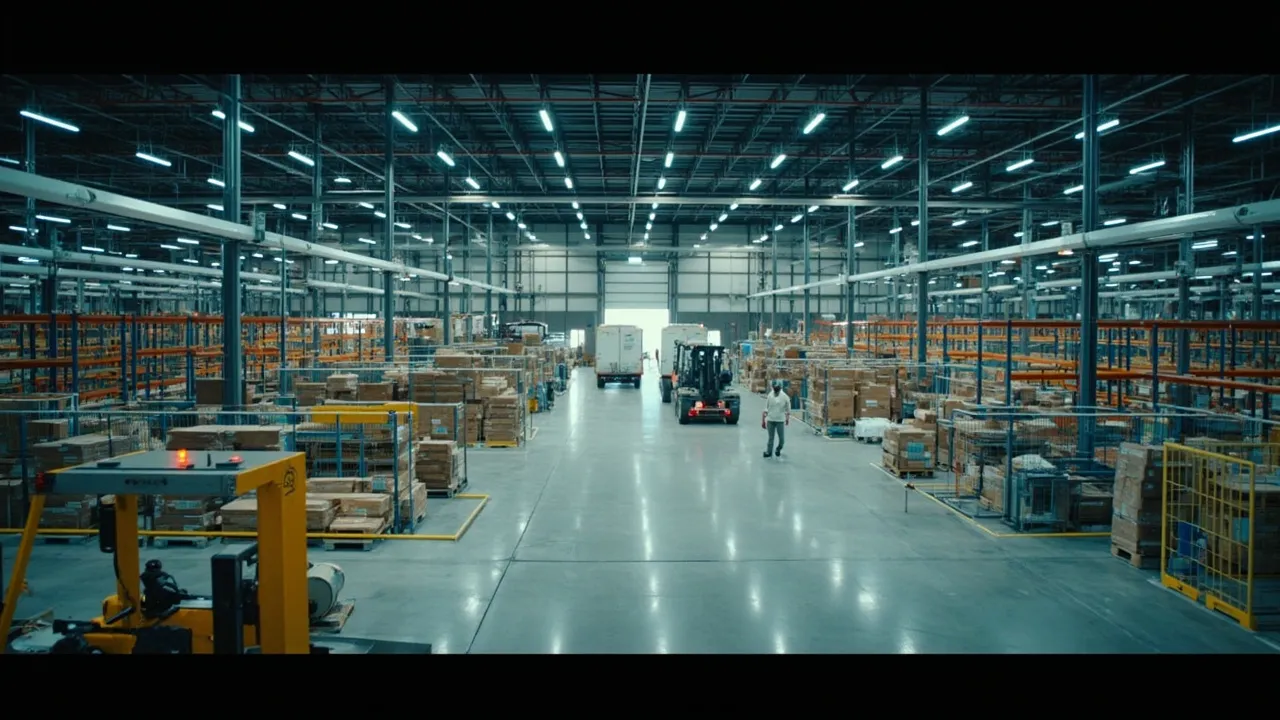
India's 3PL warehousing market is growing, but the more important story is where the value is moving. The market is not just asking for more square feet. It is asking for warehouses that can make inventory usable, traceable, and ready for transport across a wider national network.
Mordor Intelligence sizes India's 3PL warehousing market at $12.04 billion in 2026 and projects it will reach $16.76 billion by 2031, a 6.84% CAGR. The same forecast points to value-added services expanding faster than basic storage, which is the operational clue freight teams should pay attention to.
Basic storage still matters. India needs capacity near consumption centers, industrial corridors, ports, and manufacturing clusters. But the buyer expectation is changing. E-commerce, omnichannel retail, regional manufacturing, bonded warehousing, and higher service promises all turn a warehouse from a static node into an execution control point.
That shift changes how logistics leaders should evaluate 3PL warehousing partners. The question is no longer simply, "Do they have space?" It is, "Can this node control inventory, prepare orders, coordinate transport, and prove service performance?"
Growth Is Spreading Beyond One Metro Playbook
India's logistics geography is becoming more distributed. Large metro warehouses still anchor national networks, but tier 2 and tier 3 city coverage is becoming more important as e-commerce promises shorten and manufacturers push inventory closer to demand.
That creates a more complex operating model. A facility outside Mumbai, Delhi NCR, Bengaluru, Chennai, Hyderabad, or Pune may reduce delivery time into a regional market, but it can also introduce new constraints: fewer premium carriers, different labor availability, limited automation density, weaker dock scheduling discipline, or less mature exception handling.
The result is a network design problem. Shippers need to know which city tier can support which product profile, service promise, and outbound transportation options. A regional warehouse that cannot release accurate inventory into the carrier network on time is not a resilience asset.
Value-Added Services Are Becoming the Real Differentiator
The fastest-growing warehouse work is increasingly the work around storage: labeling, kitting, light assembly, returns processing, quality checks, postponement, bonded handling, temperature-sensitive storage, and order-level preparation for multiple channels.
That is where value-added control becomes strategic. A warehouse that only receives pallets and ships pallets can be managed with relatively simple rules. A warehouse that handles e-commerce units, marketplace labeling, B2B cartons, export documentation, customer-specific packaging, and urgent replenishment needs a much tighter execution layer.
Logistics Management's State of Logistics coverage reported that value-added warehousing and distribution is expected to grow, while the broader 3PL market keeps moving toward more integrated service models. That matters for India because growth is arriving with more channel complexity, not less.
For warehouse buyers, cost-per-square-foot is an incomplete metric. The better question is cost per controlled outcome: accurate inventory, compliant documentation, clean handoffs, fewer rework touches, and reliable release into transport.
Automation Helps, but Only When It Is Connected
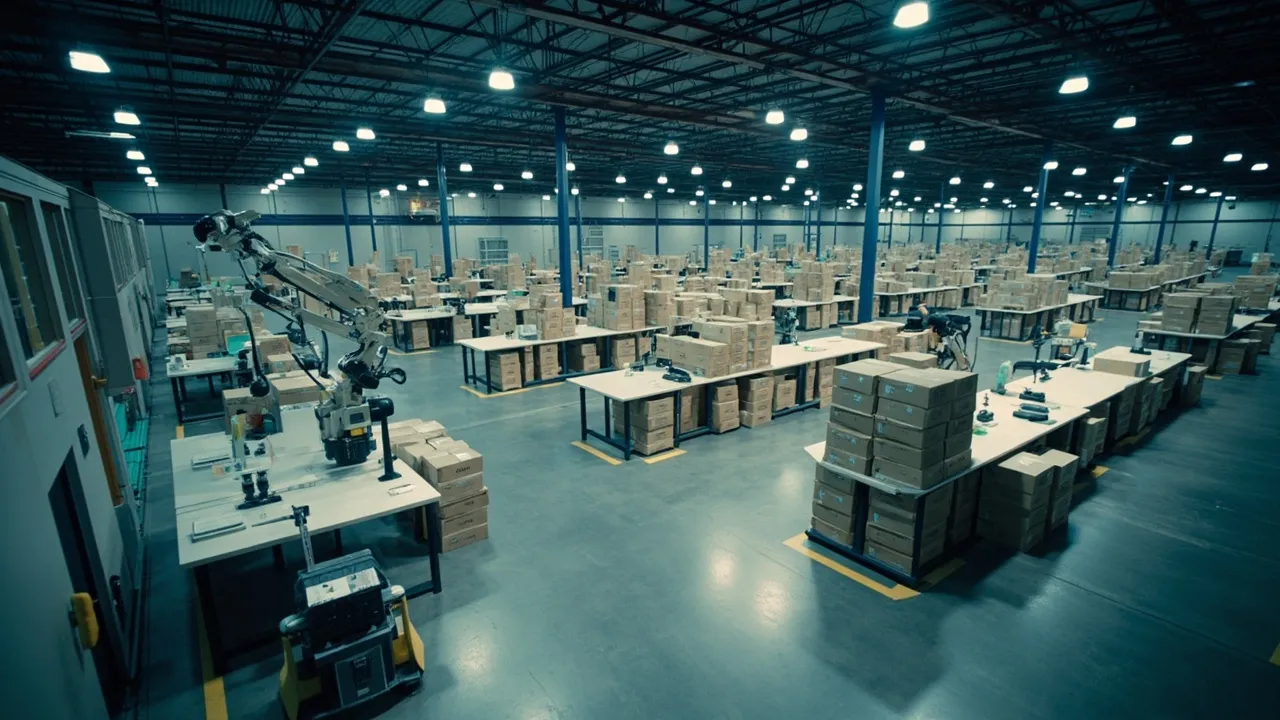
Semi-automation is becoming more common in higher-grade Indian warehouse facilities: conveyors, scanning systems, sortation, handheld workflows, warehouse management integrations, and controlled dock operations. Those tools can improve speed and accuracy, but they do not automatically create network control.
Inbound Logistics describes modern logistics facilities as increasingly dependent on connected technologies such as IoT sensors, robotics, edge computing, and 5G to coordinate decisions in real time across warehouse floors, yards, dock doors, and automation systems.
That point is critical. A conveyor or scanning workflow inside one building does not solve the handoff problem by itself. The warehouse still has to tell transportation what is ready, when it is ready, which carrier should take it, which service rule applies, and what exception should stop release.
Automation without connected transport execution can make a warehouse faster inside its four walls while leaving downstream teams blind. That is a bad bargain. The value of warehouse technology is highest when it turns operational status into usable shipment decisions.
Build the Value-Added Control Layer
The right data model starts with facility grade. A Grade A facility, regional warehouse, bonded site, and overflow location should not be treated as interchangeable capacity. Each node should carry its operating limits, service windows, dock constraints, security profile, and technology maturity.
City tier belongs in the same record. Tier 1, tier 2, and tier 3 nodes may support different service promises, labor models, carrier pools, and inventory strategies. The transportation plan should inherit those assumptions instead of rediscovering them at dispatch time.
Bonded status must be explicit. If a warehouse supports bonded operations, the system should connect customs status, documentation requirements, inventory release rules, and approved movements. Bonded capacity is not just space. It is controlled permission to move or hold goods under specific rules.
Inventory service is the next layer. The record should show whether the site performs storage only, pick-pack, kitting, postponement, returns, quality inspection, labeling, marketplace prep, temperature control, or export staging. Those services change timing, cost, labor planning, and shipment readiness.
Kitting rules need structure. A promotion pack, spare-parts kit, retail bundle, or B2B installation set should have a defined bill of material, substitution rule, quality check, and release trigger. If kitting instructions live in email, the transport promise is already exposed.
Temperature need also belongs in the warehouse-to-transport record. Ambient, chilled, frozen, and controlled-room products require different storage zones, dwell-time limits, handling steps, and carrier handoffs. A temperature rule that disappears at shipment release is an avoidable risk.
Automation state should be visible. Teams should know whether a facility is manual, scan-directed, conveyor-enabled, robotics-supported, or integrated with real-time dock and yard signals. That state affects throughput assumptions and recovery plans when order waves spike.
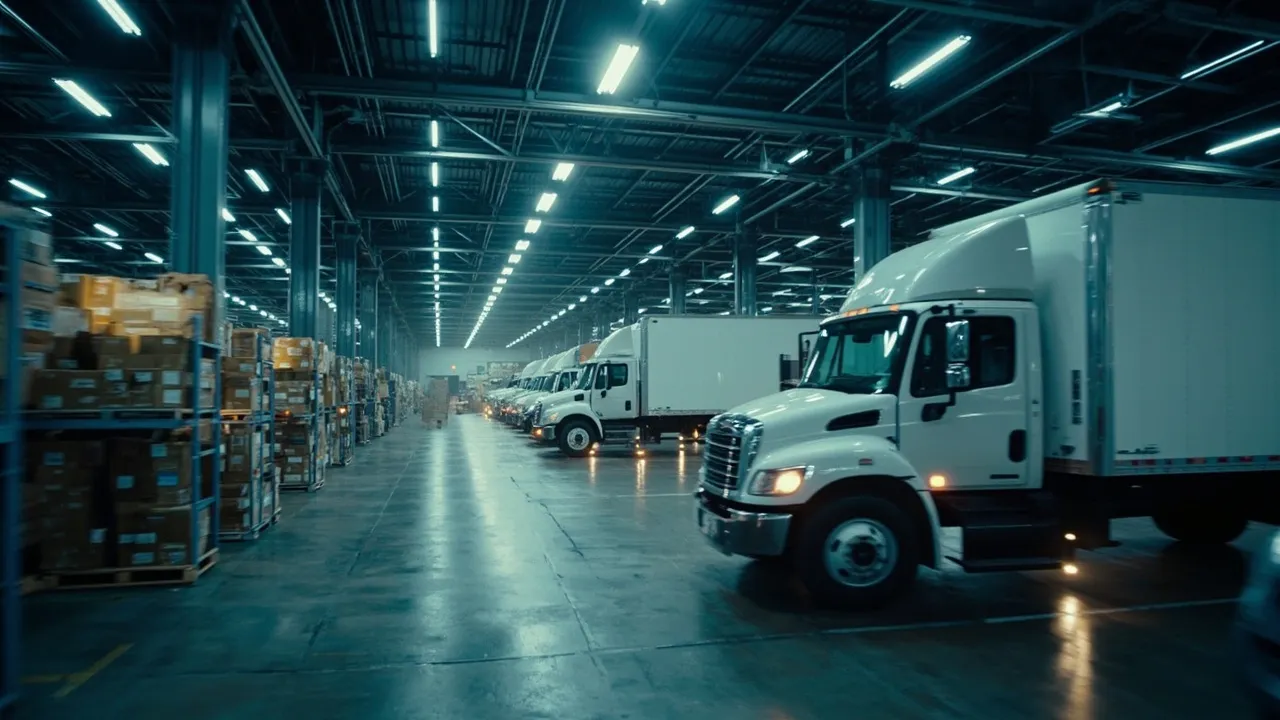
Finally, outbound carrier handoff has to be treated as part of warehouse execution. The record should show carrier cutoff, appointment time, load status, documentation status, seal details, proof of handoff, and exception owner. The warehouse job is not complete when the order is picked. It is complete when the right freight leaves under the right commitment.
Where CXTMS Fits
CXTMS helps logistics teams connect warehouse decisions to transportation execution. That connection matters in India because distributed warehousing, value-added services, and regional fulfillment only create value when inventory can move cleanly into the carrier network.
With CXTMS, teams can coordinate shipment release rules, regional node planning, carrier handoffs, milestone evidence, and service-level exceptions in one execution workflow. That gives freight forwarders and logistics operators a stronger control layer between warehouse activity and customer delivery promises.
As India's 3PL warehousing market grows from $12.04 billion toward $16.76 billion, the winners will not be the providers with space alone. They will be the operators that can turn warehouse activity into visible, auditable, transport-ready execution.
Ready to connect warehousing decisions with transportation control? Request a CXTMS demo to see how CXTMS helps logistics teams manage warehouse-to-carrier execution with better visibility and exception discipline.