India Freight and Logistics Hits $383.77B in 2026. Global Forwarders Should Pay Attention.

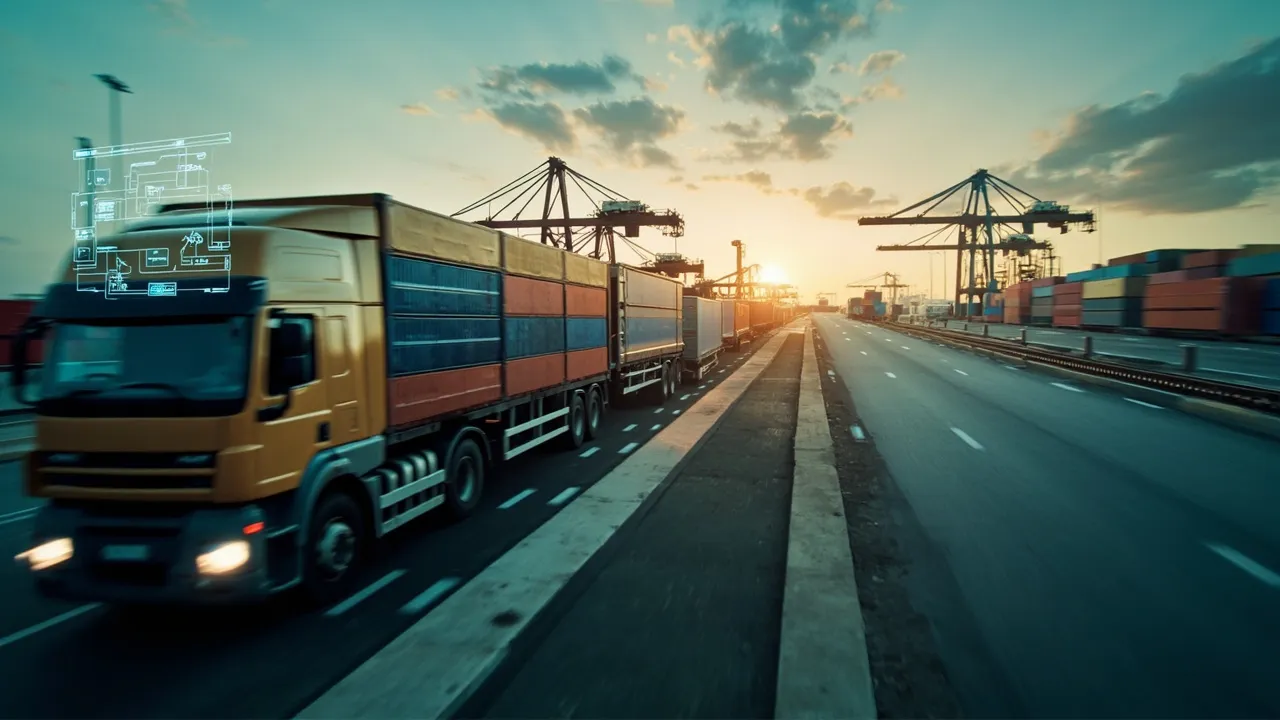
India is no longer a “watch list” market for global freight forwarders. It is a network-design decision.
Mordor Intelligence estimates the India freight and logistics market at $383.77 billion in 2026, with a projected climb to $592.36 billion by 2031. That implies a 9.07% CAGR over 2026-2031 — strong enough to change lane planning, partner strategy, warehouse investment, customs processes, and technology priorities for any forwarder with Asia exposure.
The headline number matters. The operating detail matters more. India’s growth is not coming from one neat source. It is being pulled by domestic consumption, direct-to-consumer fulfillment, manufacturing diversification, infrastructure upgrades, pharma exports, cross-border parcel growth, and a slow but real move toward more digitized freight execution. That mix creates opportunity, but it also punishes generic global templates.
Growth is broad, but execution is local
India’s logistics opportunity sits at the intersection of volume and complexity. Mordor’s market analysis points to several growth engines that are already visible on the ground: omnichannel and D2C fulfillment, real-time visibility expectations, flexible delivery windows, cold-chain compliance, defense and aerospace outsourcing, and higher industrial service levels.
For forwarders, that means India is not simply another origin or destination to bolt onto a global forwarding network. A lane from Chennai to Europe, a parcel export flow through Bengaluru, a pharmaceutical move out of Hyderabad, and a domestic retail replenishment route into a tier-2 city can all require different documentation, carrier pools, handoff logic, and exception rules.
The scale is also shifting fast. Mordor reports that freight transport represented 62.96% of India logistics revenue in 2025, while courier, express, and parcel is expected to grow at a 9.92% CAGR from 2026 to 2031 as e-commerce shipment density rises. International CEP is projected even faster at 10.73% CAGR, reflecting growing cross-border small-parcel trade and airport-linked export flows.
That is exactly the kind of market where forwarders can win — if they can combine global process discipline with local operating flexibility.
Warehousing growth is changing the transport map
India’s logistics story is not only about trucks and ships. Warehousing is becoming a strategic layer in transportation planning.
A separate Mordor Intelligence report on India warehousing projects the market growing from $27.29 billion in 2026 to $40.99 billion by 2031, an 8.48% CAGR. Grade-A warehouses are projected to expand at 13.85% CAGR, while refrigerated warehousing is expected to post 12.94% CAGR through 2031.
Those numbers matter because warehouse placement determines transportation performance. A new Grade-A site near a dedicated freight corridor node can reduce dwell, improve inventory turns, and support multimodal routing. A cold-chain facility in the wrong catchment area can add expensive miles, failed temperature-control handoffs, and customer service risk.
The Indian government’s logistics policy is also pushing network redesign. Mordor notes that India’s National Logistics Policy targets logistics-cost reduction to below 8% of GDP by 2030, while planned multi-modal logistics parks and dedicated freight corridors are intended to compress transit time and make rail-road interfaces more useful for shippers.
Forwarders should treat these infrastructure moves as routing events, not policy headlines. As corridors mature and warehouse nodes shift, carrier contracts, drayage partners, consolidation points, and customer transit commitments need to be recalibrated.
Technology expectations are rising with the market
Fast growth does not automatically create efficient logistics. In India, fragmentation remains a serious operational constraint.
Mordor reports that more than 75% of India’s 3.5 million trucks are run by single-vehicle owners. That fragmentation can limit telematics investment, pricing discipline, service consistency, and digital integration. The same report cites a 22% gap between required and available commercial drivers in 2024, with long-haul driver attrition rising to 38%.
This is where forwarders need to be realistic. A modern India strategy cannot depend on perfect digital maturity across every local carrier. It needs a transportation platform that can support mixed connectivity: API where available, portal workflows for smaller partners, mobile updates for field teams, document capture for customs and proof-of-delivery, and exception workflows when a handoff fails.
Inbound Logistics’ 2026 technology coverage frames the broader industry shift well: visibility is evolving into actionable intelligence, and companies are favoring smaller, adaptable network designs over consolidated, one-size-fits-all footprints. That is especially relevant in India, where metro density, regional infrastructure quality, state-level processes, and local carrier ecosystems can vary sharply.
For global forwarders, the question is not “Do we have India coverage?” It is “Can our systems handle India’s lane-by-lane variation without forcing every operation into the same process?”
Customs and compliance need discipline early
As India’s role in manufacturing and export flows grows, documentation discipline becomes a competitive advantage. Forwarders moving into India-linked lanes need to be sharp on commercial invoices, HS classifications, valuation, tax documentation, e-way bills, permits, pharma GDP requirements, and customer-specific compliance steps.
The danger is treating documentation as a back-office clean-up task. In high-growth, high-variation markets, paperwork defects become transport defects. A missing document creates dwell. A classification issue delays customs clearance. A temperature record gap can put a pharma shipment at risk. A disconnected partner update turns into a customer escalation.
The stronger model is to make compliance part of the shipment workflow from booking onward: required-document checklists by lane and commodity, milestone-driven alerts, digital document repositories, automated customer notifications, and exception queues that identify what is blocking release.
What forwarders should do now
India’s $383.77 billion logistics market is big enough to justify attention. Its projected $592.36 billion 2031 size is big enough to justify operating change.
Forwarders should prioritize four moves:
- Map India lanes by operating model, not just geography. Domestic parcel, export air, ocean forwarding, cold chain, project cargo, and warehouse replenishment need different workflows.
- Build local carrier connectivity without assuming API maturity. Use flexible onboarding, mobile-friendly updates, and structured exception capture for smaller partners.
- Tie warehouse strategy to transportation planning. New nodes should be modeled against drayage, parcel zones, rail access, labor, returns, and customs handoffs.
- Standardize compliance without flattening local variation. The goal is consistent control, not rigid sameness.
CXTMS is built for exactly this kind of freight environment: fast-moving, partner-heavy, documentation-sensitive, and too regional for a one-size-fits-all TMS template. If your forwarding network is expanding across India or serving India-linked trade lanes, the right system should help you configure workflows by lane, automate milestones, connect local partners, and keep customers informed before exceptions become escalations.
Schedule a CXTMS demo to see how configurable transportation workflows can support India growth without adding operational chaos.