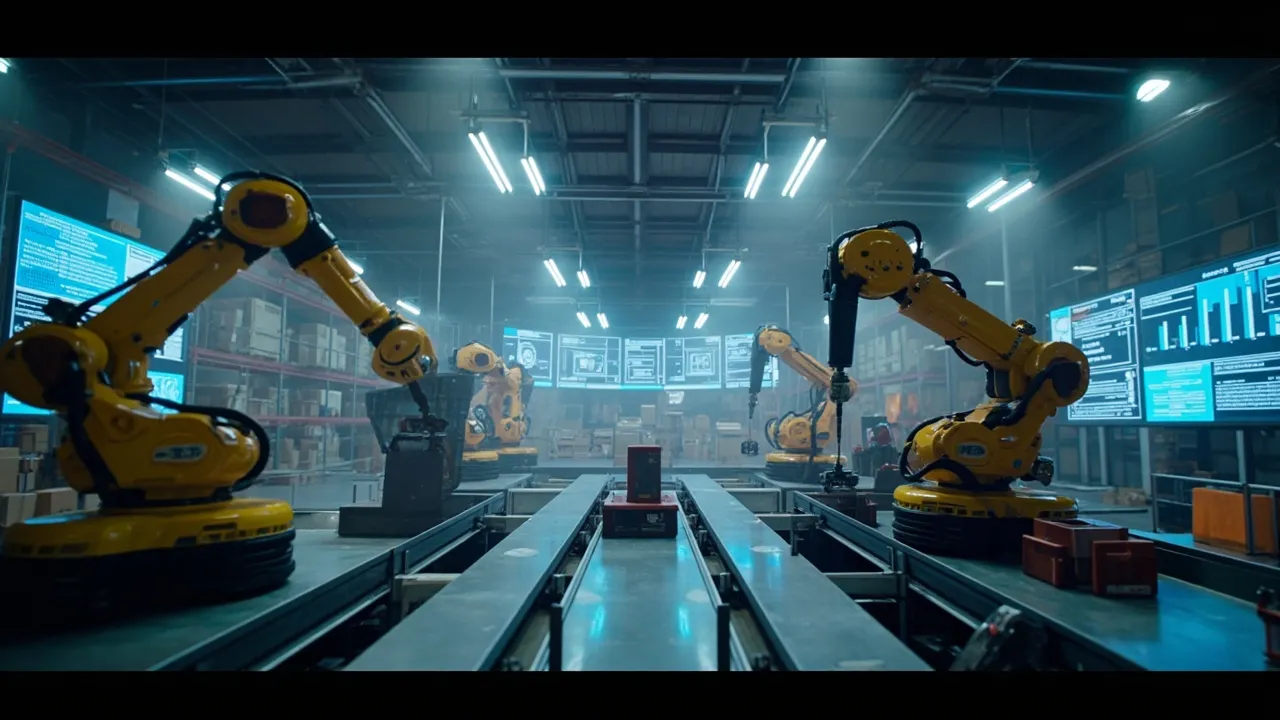
Yard Management Systems Are Becoming Strategic Ground: Test Integration Before Vendor Selection

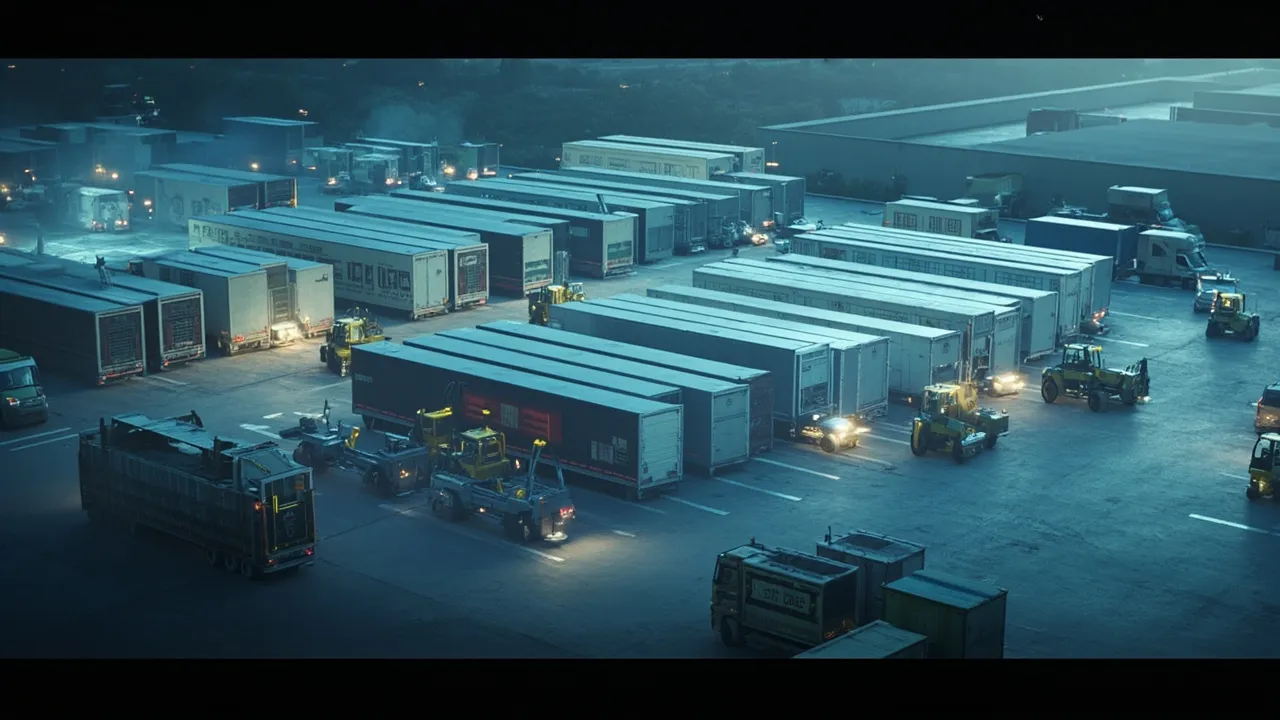
The yard is no longer a blind strip of pavement between transportation and warehousing. It is where appointment promises, trailer inventory, dock capacity, labor availability, and shipment priorities collide. When those signals remain disconnected, teams compensate with radios, spreadsheets, physical searches, and repeated status calls. A yard management system (YMS) can remove that friction—but only if it exchanges reliable events with the systems already running the operation.
That makes integration proof more important than a polished vendor demonstration. Buyers should test a YMS with their own appointment, trailer, door, shipment, and exception data before committing to a network rollout.
The Yard Has Become a Service-Control Point
A delay inside the fence does not stay there. A trailer waiting for a door can consume carrier capacity, trigger detention, delay replenishment, leave warehouse labor idle, and jeopardize the next outbound appointment. Conversely, better control of yard moves can increase door utilization and help supervisors sequence work by customer priority rather than by whichever trailer is easiest to find.
Recent results illustrate the opportunity. Inbound Logistics reports that one manufacturer increased trailer moves per hour by 60% and reduced dwell time by 15% after centralizing yard visibility and coordinating inbound materials, production, and outbound shipping. Another case described by the publication eliminated nearly all of $2.69 million in detention costs and achieved payback within months.
Adoption, however, still trails interest. Logistics Management reported that 63% of organizations shopping for yard technology wanted real-time visibility, while 45% wanted integration with existing WMS and TMS platforms. Those figures expose the central purchasing issue: visibility without connected execution risks becoming another screen for operators to monitor.
Prove Five Critical Data Exchanges
A vendor test should follow the life of actual freight through the yard. At minimum, require the candidate platform to exchange these five objects with production-like TMS and WMS environments.
1. Appointments
Create, modify, cancel, and reschedule inbound and outbound appointments. Confirm that changes propagate in both directions without creating duplicate records. Test early arrivals, late arrivals, no-shows, multi-stop loads, and appointments that contain multiple purchase orders or shipments.
2. Trailer status and location
Capture gate arrival, check-in, yard position, loaded or empty status, seal information, and gate departure. Then deliberately introduce imperfect inputs: a trailer number entered with a space, a swapped tractor, an unreadable tag, or a trailer moved without a scanner. The system should identify ambiguity and route it for resolution instead of quietly creating a second asset.
3. Door moves
Issue move requests, assign yard tractors, acknowledge acceptance, record arrival at the door, and close the move. Verify that priorities from the WMS—such as a production shortage or a wave cutoff—can reorder the queue and that completed moves update dock and trailer availability everywhere.
4. Shipment identifiers
Match appointments and equipment to shipment, order, purchase-order, container, and carrier identifiers. A YMS that cannot preserve these relationships will force employees to reconcile records manually, weakening both traceability and performance reporting.
5. Exceptions
Send alerts for late arrivals, excessive dwell, temperature risk, missing paperwork, rejected loads, unavailable doors, and overdue moves. Every exception needs an owner, timestamp, response target, and closure code. Test whether a resolved exception closes across systems or continues generating noise.
Score Performance, Not Feature Claims
Use a weighted scorecard so a compelling interface cannot outweigh operational weaknesses.
- Event latency: Measure the median and 95th-percentile time from a physical event to its availability in connected systems. Define acceptable limits for normal and peak volume.
- Data integrity and portability: Reconcile record counts, identifiers, timestamps, and status histories. Require export of complete operational and audit data in usable formats, plus documented APIs and retention rules.
- Mobile resilience: Test handhelds and tablets at gates, remote parking rows, and dock aprons. Operators should be able to continue essential work through weak connectivity and synchronize safely when service returns.
- Implementation effort: Count interfaces, custom mappings, master-data dependencies, user roles, devices, training hours, and support requirements. A low subscription price can be overwhelmed by fragile customization.
- Operator adoption: Observe clicks, keystrokes, scan success, workarounds, and time per task. Interview guards, spotters, clerks, supervisors, warehouse leads, and dispatchers—not only project managers.
Weight the categories against the site's actual constraints. A sprawling outdoor yard may place more weight on connectivity and trailer-location accuracy; a high-volume cross-dock may emphasize event latency and door sequencing.
Run a Live-Site Pilot With a Baseline
A credible pilot needs enough time and volume to include normal operations, peak periods, shift changes, late carriers, system outages, and exception handling. Select one representative facility rather than the easiest facility, and establish a baseline before switching on the candidate platform.
Track at least trailer dwell time, gate transaction time, moves per spotter hour, move-request response time, door utilization, detention cost, trailer-search incidents, manual reconciliations, and outbound service performance. Report medians and upper percentiles; averages alone can hide the long delays that generate cost and carrier frustration.
Define success before the pilot starts. Examples might include a 10% reduction in median dwell, a 25% reduction in manual status reconciliations, or 99% of required events reaching the TMS and WMS within the agreed latency. These are illustrative targets, not industry benchmarks. Each buyer should set thresholds from its baseline and business case.
The older adoption gap shows why this discipline matters. Logistics Management found in 2022 that 56% of surveyed companies used WMS or inventory systems and 26% used TMS, but only 7% had deployed YMS. A yard platform must bridge established warehouse and transportation workflows; it cannot assume a clean slate.
Make the Rollout Decision From Evidence
At the pilot's end, reconcile the scorecard, operational results, employee feedback, implementation effort, and total cost. Do not approve a network rollout on projected savings alone. Require evidence that the platform reduced dwell or manual work, maintained clean data under real operating pressure, and earned consistent use across shifts.
Also document the exit path. The organization should retain its event history, configuration data, interface documentation, and a practical method to export them. Data portability is leverage during the relationship and insurance after it.
The best YMS is not the one with the longest feature list. It is the one that turns yard events into dependable actions across transportation and warehouse operations—with latency, adoption, and business impact proven on a live site.
Ready to connect transportation plans with yard and dock execution? Request a CXTMS demo to see how your team can coordinate shipment milestones, appointments, exceptions, and operational decisions in one workflow.