Walmart and Zipline Go Nationwide: The Drone Delivery Unit-Economics Test

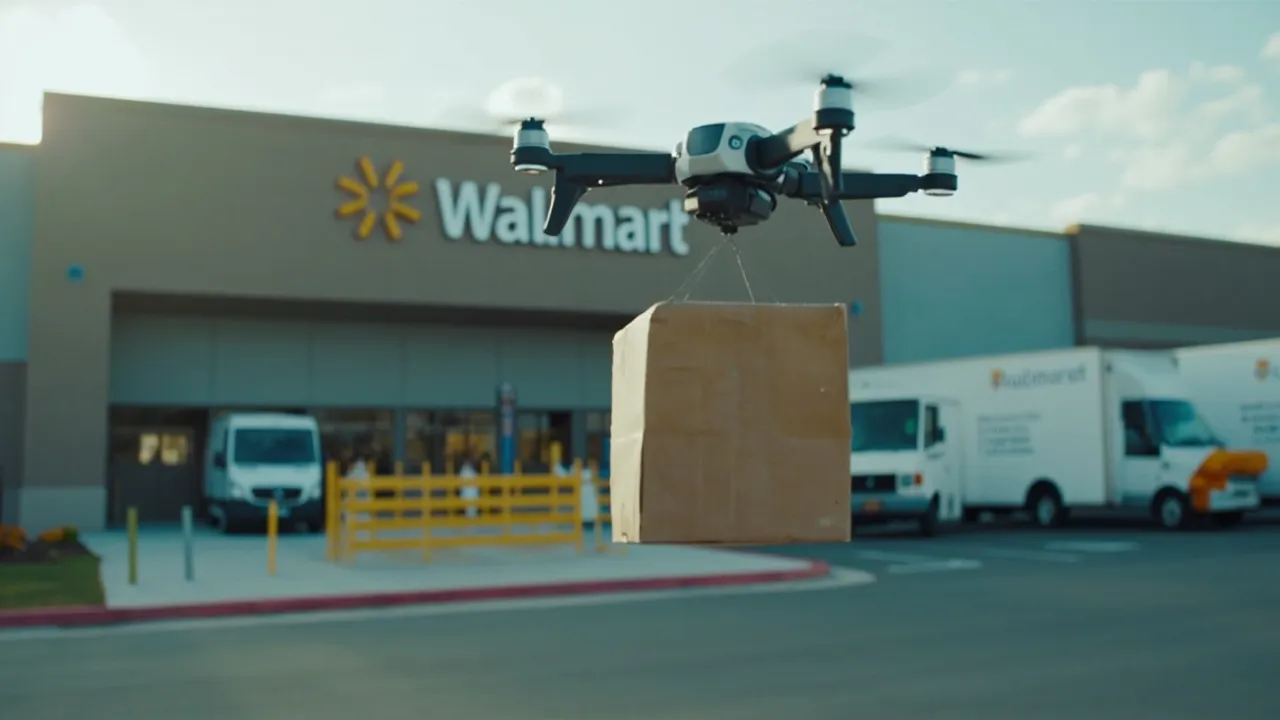
Walmart and Zipline are turning drone delivery from a novelty into a network-design question. Zipline has raised $1.5 billion to build nationwide capacity, while Walmart plans to add the service at 300 stores. That scale changes the conversation: the relevant test is no longer whether a drone can complete a flight, but whether each store can produce enough eligible, reliable, revenue-supporting deliveries to justify the operating system around it.
The demand foundation is real. FreightWaves reports that Walmart's U.S. e-commerce sales grew 24% in its second quarter, while deliveries fulfilled from local stores rose 43%. Walmart currently operates 21 sites with Zipline. The retailer therefore brings both order density and a large store network to the experiment.
Yet national availability does not automatically produce national profitability. Operators need a unit-economics model built around successful customer deliveries—not flights, miles or demonstrations.
Start with the eligible order, not the aircraft
A drone network cannot serve the entire digital basket. Its addressable volume should be segmented along five practical dimensions:
- Weight: Aircraft payload limits exclude bulky or heavy baskets. Small grocery replenishment, medicine, electronics accessories and urgent household items are stronger candidates.
- Radius: A customer may be geographically close yet outside a safe or approved route. Zipline's P2 system has a 10-mile service radius, according to FreightWaves' report on its Texas launch.
- Urgency: A forgotten ingredient or infant-care item carries more time value than a routine weekly stock-up.
- Weather tolerance: Wind, precipitation and extreme temperatures can reduce service availability. Those cancellations must be included in cost and promise calculations.
- Customer density: More eligible households around a store improve infrastructure utilization, but only if customers order at useful frequency.
This segmentation should happen before a retailer forecasts volume. Counting every e-commerce order inside a map radius will overstate utilization and understate cost.
Measure cost per successful delivery
Cost per flight is an incomplete metric. It ignores picking, staging, loading, customer support, failed attempts, weather diversions and the backup delivery required when an airborne promise cannot be completed.
A better calculation is:
Total store-level drone program cost ÷ successfully completed customer deliveries
The numerator should include fixed launch and site costs, aircraft and docking capacity, software, regulatory compliance, maintenance, labor at handoff points, insurance, exception handling and any subsidized customer fee. The denominator should exclude tests and repositioning flights.
That result should be compared with three alternatives:
- Store-based van routes. Vans consolidate many orders, so they remain powerful when stops cluster and delivery windows are flexible. Their economics weaken for an urgent single stop that pulls a driver away from a dense route.
- Gig delivery. A driver offers payload flexibility and fewer site constraints, but prices can rise at peaks and a one-order trip still carries labor and vehicle cost.
- Curbside pickup. Pickup shifts the last mile to the customer and may be the lowest-cost channel, but it does not solve urgent demand for customers unable or unwilling to drive.
Drone delivery wins only where speed has enough customer value and the aerial trip avoids a more expensive marginal ground movement. It should not be forced into baskets already served efficiently by consolidated routes.
Store-level gates separate a network from a press release
Before launch, each store should pass four gates.
1. Airspace and service-area viability
The mapped radius must be adjusted for airports, restricted areas, obstacles, landing constraints and local operating approvals. The resulting serviceable households—not the theoretical circle—form the true demand pool.
2. Staging capacity
Fast flight is irrelevant if an order waits in the store. Dedicated pick queues, temperature controls, secure handoff space and clear responsibility for loading must fit into daily operations without disrupting curbside and in-store fulfillment.
3. Reliability
Retailers should set thresholds for on-time completion, cancellation rate, damage, wrong-item exceptions and recovery time. Zipline had completed nearly 1.5 million deliveries by April 2025, while its aircraft had flown more than 100 million miles, FreightWaves reported. Those figures demonstrate operating maturity, but every new store still has its own weather, layout and demand profile.
The customer promise is also becoming demanding. SupplyChainBrain reported that select Dallas-Fort Worth customers could receive Zipline orders within 30 minutes. A later market report put average drone fulfillment below 19 minutes in the same metro. Reliability against that promise matters more than maximum aircraft speed.
4. Adoption and repeat use
Free introductory delivery can reveal interest, but not willingness to pay. Track the share of eligible customers who try the service, reorder within 30 or 60 days, accept a fee and shift an order from another channel. Retailers must also distinguish incremental demand from orders merely transferred from curbside pickup.
Build a decision dashboard
The right dashboard connects operational events with order economics. At minimum, track eligible orders, offered orders, customer acceptance, successful completion, delivery time, weather downtime, cost per success, avoided ground miles, repeat usage and incremental gross margin.
Transportation management data is especially valuable when a drone failure triggers another mode. Without one view of the order and its recovery movement, the apparent drone cost can look attractive while the replacement driver expense disappears into a separate system.
Walmart's store footprint gives it an unusual opportunity to test drone delivery at network scale. The winners, however, will not be the retailers with the most launch sites. They will be the ones that rigorously match orders to modes, price service reliability honestly and close underperforming service areas quickly.
Ready to manage last-mile choices and exceptions from one operational view? Request a CXTMS demo and see how better transportation data supports smarter delivery decisions.