Vision-Guided Robots Raised $12.5M: Measure Recovery Time Before Buying the Demo

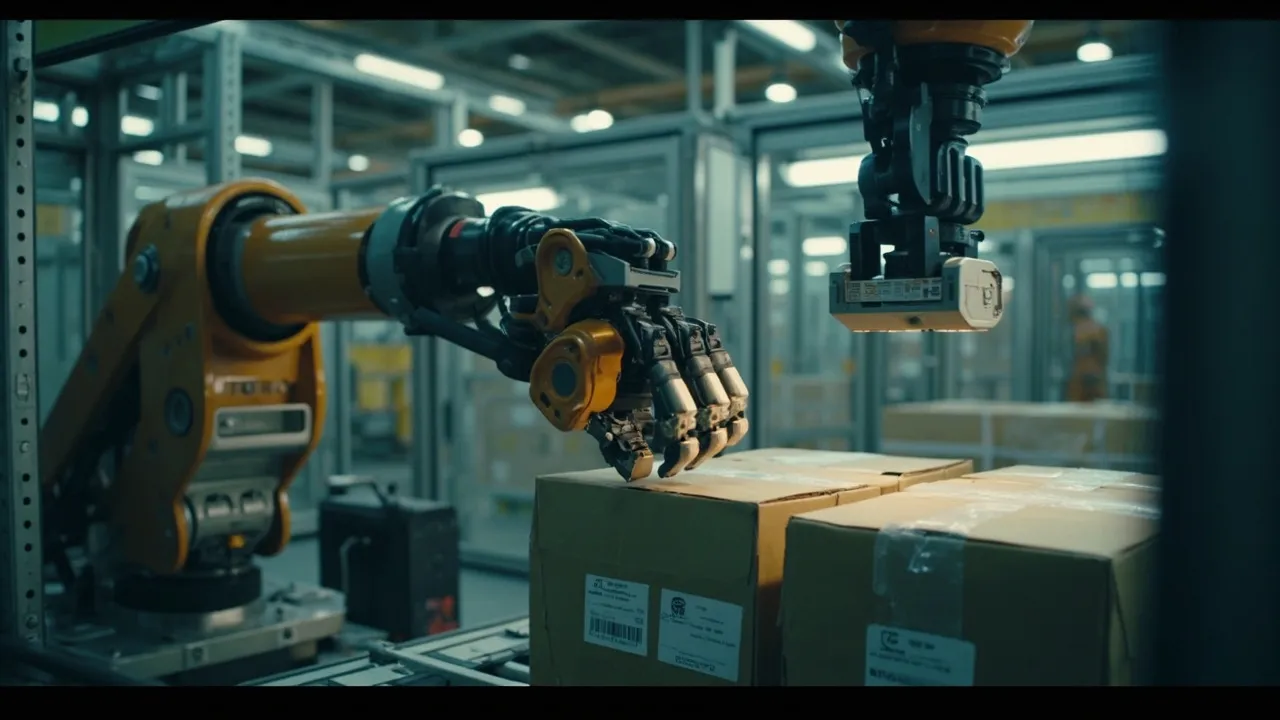
A flawless robot demo proves that a machine can complete a task under prepared conditions. It does not prove that the operation can recover when a carton shifts, glare obscures an edge, a new SKU arrives, or the robot loses its reference halfway through a pick.
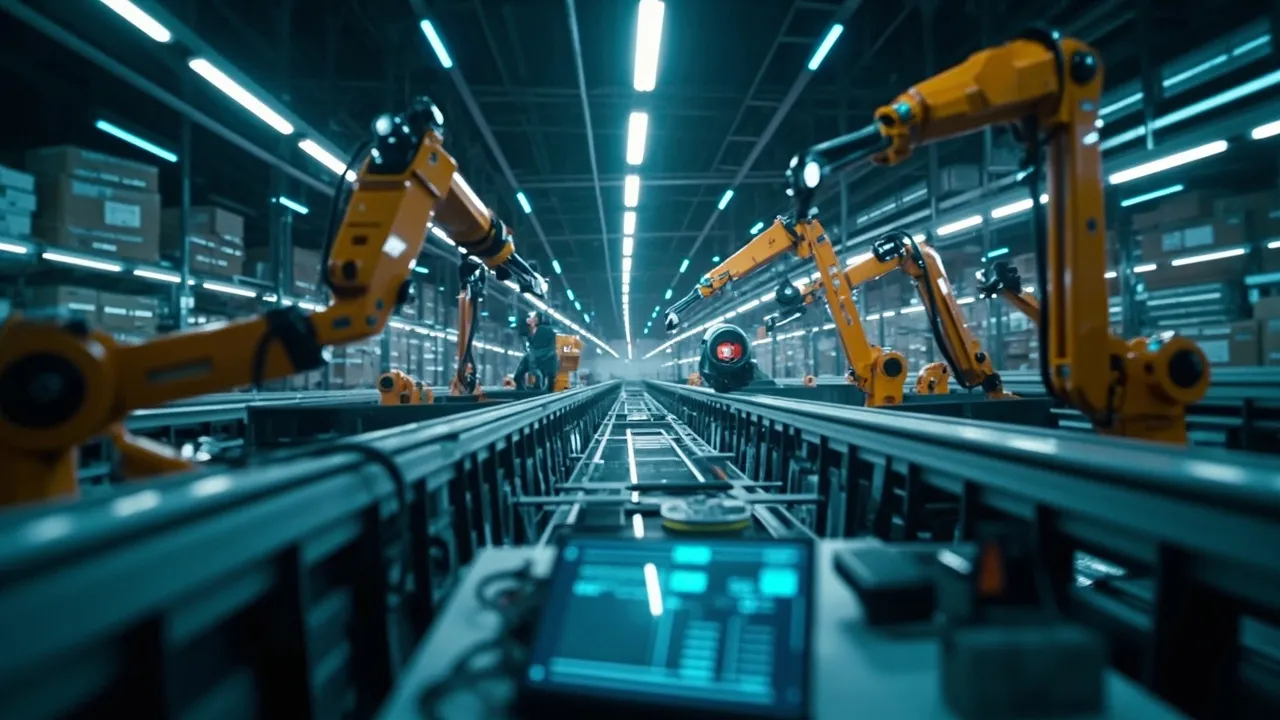
That distinction matters as more capital moves into adaptive robotics. Modern Materials Handling reports that vision and AI robotics provider Inbolt raised $12.5 million in new funding. The investment reflects a broader shift: robots are moving beyond rigid, repeatable cells toward environments where parts, packaging, people, and conditions vary.
The buying test must move with them. Throughput in the happy path still matters, but mean time to recover from a failed pick or lost visual reference should become a primary acceptance metric.
Adaptive Vision Changes the Automation Case
Traditional industrial automation earns its keep by repeating a tightly defined motion. Fixtures, guards, conveyors, and programming make the environment predictable. Vision-guided systems promise to relax some of those constraints by locating objects and correcting the robot's pose in real time.
That capability can reduce custom fixturing, support more product variants, and make changeovers faster. It can also extend automation into depalletizing, mixed-case handling, machine tending, kitting, inspection, and other work where objects rarely arrive in exactly the same position.
The market tailwind is substantial. McKinsey says some forecasts expect robot shipments to grow by as much as 50% annually through 2030, while warehouse automation may grow by more than 10% a year. Yet growth does not eliminate operational friction. It makes disciplined acceptance testing more important because a weak cell can scale its exceptions as quickly as its picks.
Make Recovery Time a Contractual Metric
Mean time to recover, or MTTR, should start when the cell can no longer complete the commanded action and end when it resumes verified production. The clock must include detection, diagnosis, operator travel, safety access, reset, re-localization, inventory reconciliation, and the first successful post-recovery cycle.
Buyers should separate recovery paths rather than averaging everything into one flattering number:
- Automatic recovery, when the system retries or selects another valid grasp without human help
- Guided recovery, when an operator follows a clear prompt and restores production
- Technical recovery, when maintenance or vendor support must intervene
- Business recovery, when the WMS, inventory record, and downstream order state are reconciled
For each path, record the failure frequency as well as duration. A 30-second recovery is not impressive if it happens every 20 cycles. Conversely, a rare ten-minute intervention may have little economic impact. Lost productive minutes per thousand picks creates a more useful comparison across vendors and tasks.
Acceptance terms should define the sample size, SKU mix, operating hours, staffing assumptions, allowable exclusions, and percentile targets. Median recovery can hide damaging tail events, so report the 90th and 95th percentiles too.
Test Variability, Not the Showroom
A credible trial uses the operation's real exception mix. Change object position and orientation. Introduce glossy film, dark packaging, damaged corners, partial occlusion, label clutter, and changing daylight. Vary tote fill, conveyor presentation, and background contrast. Run the cell after a camera bump, network interruption, emergency stop, and software restart.
Then measure five dimensions:
- Pose correction: How far can the object move or rotate before the system needs a new scan or manual reset?
- Cycle-time variance: Does the robot preserve takt time across easy and difficult objects, or does perception latency create an unstable queue?
- Lighting sensitivity: What happens during glare, shadows, lamp aging, and seasonal changes in ambient light?
- SKU changeover: How much engineering work and production downtime are required to introduce a new package or grasp strategy?
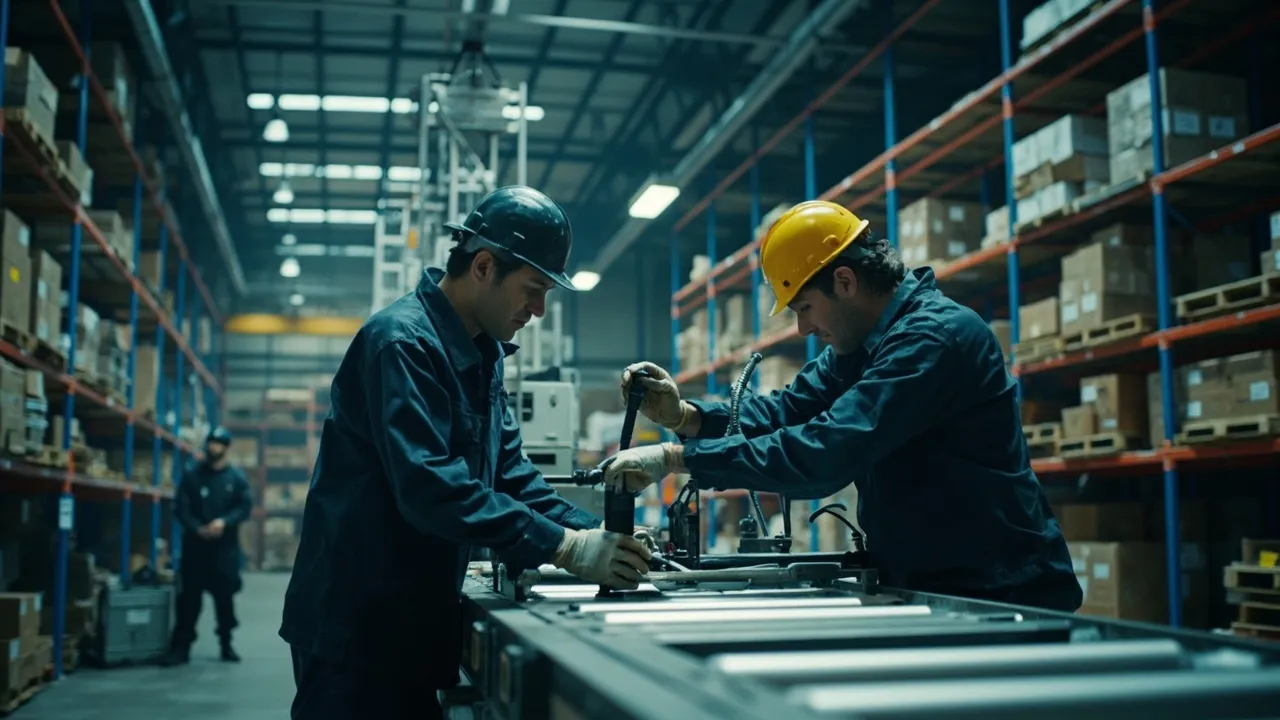
- Human intervention: Can a trained warehouse associate recover the cell safely, or does every anomaly become a controls-engineering ticket?
Report successful picks, retries, false positives, no-picks, damaged product, and manual touches by SKU and condition. An aggregate success rate can conceal one high-volume item that drives most downtime.
Connect the Cell to the Operating Record
Robot recovery is not complete merely because the arm is moving again. A failed grasp may leave inventory physically displaced, a tote locked to an abandoned task, labor waiting downstream, or an order approaching its carrier cutoff.
MHI's implementation guidance says full-scale robotics requires integration with existing WMS, TMS, and other digital infrastructure. That integration should carry structured events, not just a generic fault light.
Every exception record should include a cell and device ID, task and attempt ID, SKU or handling-unit ID, timestamps, commanded and observed pose, failure reason, retry count, intervention type, operator, and final disposition. Correlation IDs should connect that event to the WMS task, inventory transaction, order, wave, dock plan, and shipment.
This makes the event useful beyond maintenance. Labor managers can see minutes consumed by intervention. Inventory teams can find stranded or double-counted units. Fulfillment leaders can identify orders at risk. Transportation planners can decide whether a recovery delay threatens consolidation or pickup rather than discovering the problem at the dock.
Build the ROI From Exceptions Up
The business case should subtract the full cost of variability from theoretical labor and throughput gains. Include intervention labor, technician coverage, spare cameras and lighting, model retraining, integration support, safety validation, planned cleaning, and lost output during recovery. Compare those costs against actual productive hours—not scheduled availability.
Useful pilot KPIs include first-attempt success, automatic-recovery rate, interventions per thousand picks, productive minutes lost per thousand picks, MTTR by failure class, 95th-percentile recovery time, damage rate, and percentage of robot exceptions matched to a business record.
Vision-guided robotics is a compelling development because it can bring automation into less controlled work. But adaptability is not what happens only when vision succeeds. It is also how quickly the operation returns to a known, correct state when vision fails.
CXTMS connects automation exceptions with inventory, orders, labor dependencies, shipment plans, and carrier cutoffs. Request a CXTMS demo to see how cell-level events can become coordinated fulfillment and transportation decisions.