USPS Facility Upgrades Are Delaying Parcels: Build a Processing-Node Exception Map

A parcel can be on schedule by origin and destination ZIP code yet already be in trouble at the processing node between them. That is the lesson from current U.S. Postal Service disruptions affecting Indianapolis and Louisville, Kentucky.
USPS is installing equipment intended to improve package throughput, large-parcel automation, sorting accuracy, and machine reliability. Those gains matter for peak season, but the transition temporarily changes routing and pushes work into neighboring facilities. Shippers need visibility that reflects the network USPS is actually operating—not merely the service standard printed at label creation.
Map the disruption as a network, not a delay notice
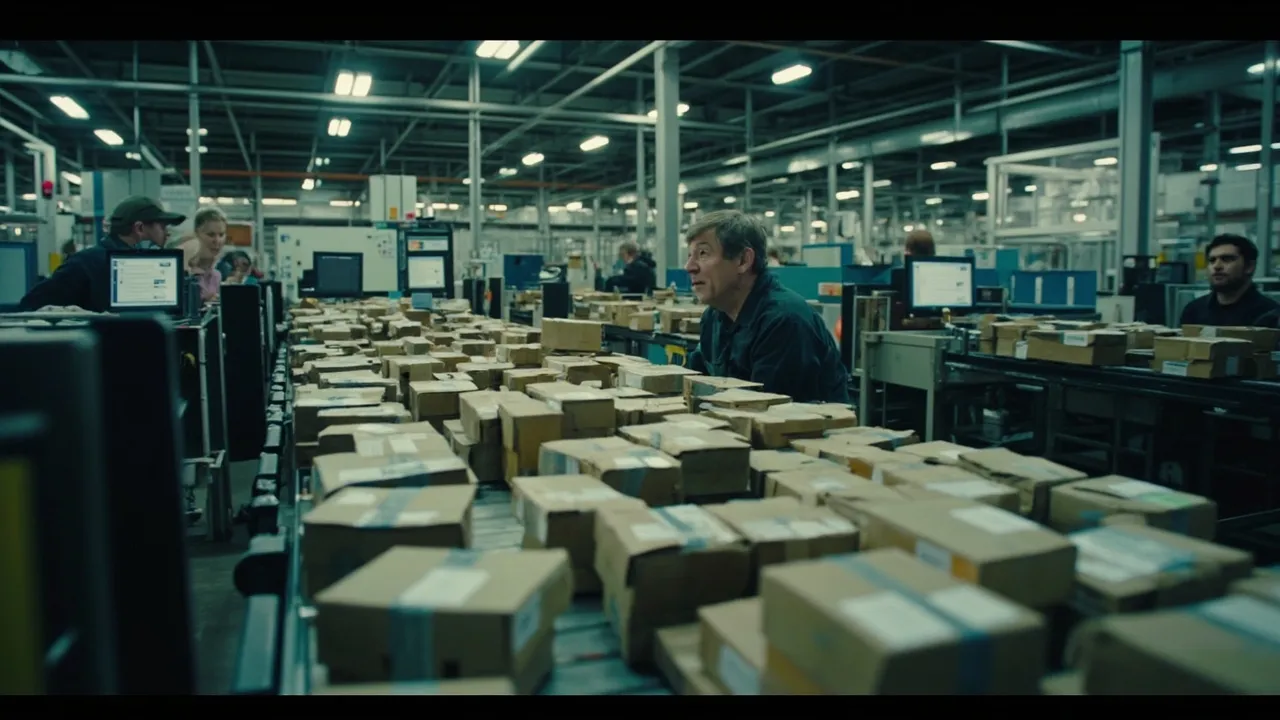
Supply Chain Dive reports that Indianapolis customers may see delays while the regional processing and distribution center installs machines for large and oversized parcels that were historically handled manually. USPS said on September 21 that the work should be finalized within two to three weeks, alongside routing changes and additional hiring.
Louisville illustrates the dependency problem. Its processing and distribution center has faced delays throughout September while taking volume from an Evansville, Indiana, site undergoing equipment upgrades. USPS is diverting some affected volume to Nashville, Tennessee, and an annex in Springdale, Ohio. A shipment whose origin and destination never change can therefore acquire a materially different path, workload, and risk profile.
The scale makes node-level tracking essential. The central processing region that includes Louisville was designed to process 177 million mailpieces per day across 100 facilities. Even a localized installation can create downstream effects when volume moves into facilities with their own labor, dock, transportation, and sort-plan constraints.
Build an exception map with a record for every relevant processing node. At minimum, capture facility name, facility type, planned role, temporary role, affected ZIP ranges, inbound source, outbound destination, upgrade window, diversion destination, first observed delay, and current operating status. Add the timestamp and source behind every status change so teams can distinguish a fresh operational signal from stale commentary.
Detect exceptions before the delivery scan
Most parcel dashboards emphasize tender, in-transit, out-for-delivery, and delivered milestones. That view identifies a failure late. A node-aware model evaluates the scan sequence and time spent between processing events.
Establish a baseline for each origin-node-destination combination by service level and day of week. Then measure:
- Node dwell: Time from arrival or acceptance at a processing facility to the next departure event.
- Missed progression: A package does not receive the expected next scan within its lane-specific interval.
- Unexpected node: The observed facility differs from the normal or current diversion path.
- Cohort delay: A statistically meaningful share of parcels touching the same node begins aging together.
- Downstream compression: Remaining transit time is no longer sufficient to meet the customer promise, even if the carrier commitment has not officially failed.
Avoid one universal dwell threshold. A six-hour pause may be ordinary at one node and exceptional at another. Begin with historical percentiles, then tighten or relax thresholds based on the installation phase. During a known upgrade, cohort behavior is particularly valuable: one parcel without a scan can reflect data latency, while hundreds aging after the same facility scan indicate an operational constraint.
Predefine three response thresholds
An exception map becomes useful when it causes a controlled action. Define thresholds before the backlog grows.
Customer notification: Notify when projected delivery moves beyond the promise date or when node dwell crosses a customer-specific risk threshold. State what is known, give a revised range, and avoid inventing a precise delivery time. Measure notification lead time—the interval between the message and the original promise—to ensure customers learn about risk early enough to act.
Alternative-carrier activation: Shift new orders when the affected lane's projected on-time rate falls below the shipper's service floor for a sustained interval. Require evidence that the alternative bypasses the constrained node; changing the carrier name without checking induction and handoff geography may recreate the same bottleneck.
Rerouting or service upgrade: Use this for high-value, replacement, medical, or deadline-sensitive orders when the expected cost of failure exceeds incremental shipping cost. The decision should consider remaining transit time, product margin, reship inventory, customer tier, and whether the original parcel can be intercepted.
Carrier diversity gives those thresholds practical force. A second Supply Chain Dive report notes that one shipper uses three to four carriers to hedge disruption. Panelists also estimated that alternative-carrier economics can save $2 to $3 or more per order in some cases, although every shipper must validate lane coverage, surcharges, service quality, and integration costs.
Measure recovery instead of assuming it
Equipment completion is not the same as operational recovery. Backlogged parcels must clear, diversion flows must return or stabilize, employees must adapt to the new sort plan, and downstream nodes must absorb the release of delayed volume.
Track recovery in daily cohorts based on the date and hour a parcel entered each affected node. Compare median dwell, 90th-percentile dwell, scan progression, on-time delivery, and exception volume with the pre-upgrade baseline. Also separate parcels processed on the upgraded equipment from manual, overflow, or diverted flows where data permits.
Use explicit exit criteria: for example, several consecutive operating days within the normal dwell band, an exception backlog below its threshold, stable on-time performance, and no unusual accumulation at Nashville, Springdale, or other relief nodes. Keep customer-notification rules active until those criteria are met. Removing controls on the announced completion date can hide the backlog tail.
Within CXTMS, shippers can join order promises, carrier events, node dwell, exception ownership, customer communications, and alternate-carrier rules in one workflow. That turns a general USPS advisory into parcel-level decisions—and creates an auditable record of which intervention protected service.
Need earlier warning when a processing node slows down? Request a CXTMS demo to build parcel exception workflows around the routes, facilities, and customer promises that matter to your operation.