USPS Is Upgrading 16 Sites Before Peak: Build a Sortation Cutover Control Room

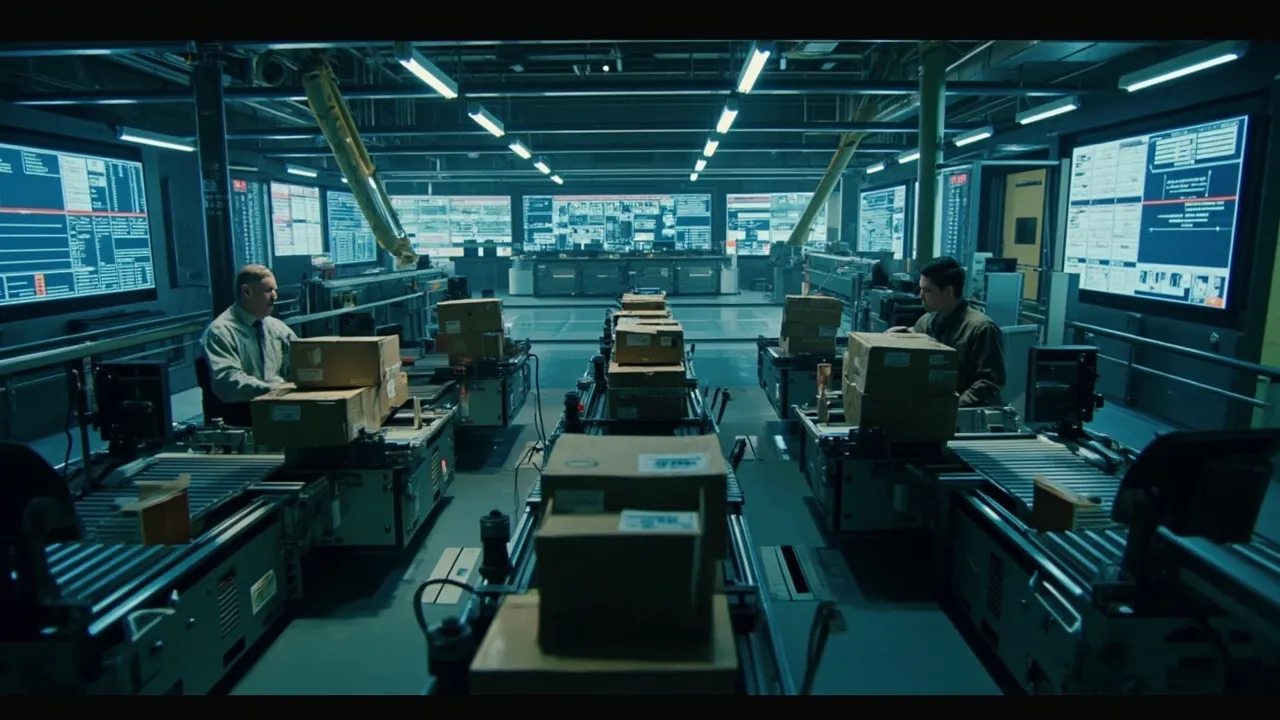
Installing new parcel equipment can create a strange peak-season equation: the same project that promises more capacity may temporarily remove capacity exactly when the network needs it most. That is the challenge surrounding the U.S. Postal Service's plan to upgrade 16 processing sites as holiday volume accelerates.
USPS is not starting from zero. The agency deployed more than 147 package-sortation machines across the country during fiscal 2026, according to Supply Chain Dive. The new wave should ultimately improve throughput, but each installation introduces a cutover period involving construction, testing, employee training, software integration, and the redistribution of live mail.
For shippers, this is not merely a carrier engineering project. It is a network event that can change induction performance, transit time, and exception volume by origin ZIP Code. A focused cutover control room turns those changes into measurable decisions rather than holiday surprises.
Capacity gain comes with transition risk
A machine's rated parcels-per-hour figure describes steady-state potential. It does not describe the first shift after commissioning. During cutover, technicians may take an old line offline before the replacement line has demonstrated reliable production under a representative parcel mix. Induction points can become congested, containers can wait for processing, and missorts can rise while operators learn new procedures.
The 147-machine fiscal-2026 baseline gives USPS and its customers a useful comparison set. Instead of treating installation completion as success, teams should compare each upgraded site's performance with similar prior deployments. How long did it take earlier machines to reach planned throughput? What failure modes appeared during the first 24, 48, and 72 hours? Did diverted volume cause a secondary backlog elsewhere?
USPS has used alternate processing locations during previous installations. Supply Chain Dive reported that equipment upgrades in Indianapolis and Louisville prompted warnings about delays and temporary volume diversions. Diversion protects continuity, but it also adds transportation legs, later arrival times, and workload at the receiving facility. Capacity therefore has to be measured across the affected network—not only at the construction site.
Put five cutover metrics on one screen
The control room should combine carrier communications, scan events, trailer movements, and customer-service signals. Five metrics deserve priority:
- Parcels per hour. Measure actual output against the site's pre-cutover baseline and the new equipment's ramp plan. Segment by parcel profile where possible; small machinable pieces and irregular packages impose different loads.
- Missort rate. Track pieces sent to the wrong operation, destination, or container per thousand processed. A rising rate can erase the apparent benefit of faster primary sortation by creating rework downstream.
- Induction backlog. Count waiting containers and estimate hours of work at the current run rate. Container count alone can mislead when the parcel mix changes.
- Downtime. Record planned and unplanned stops separately, including cause, start time, and operational owner. Repeated short stops may be more damaging than one controlled maintenance window.
- Recovery time. Measure how long the site takes to clear accumulated work after a stop or diversion. Recovery is the clearest test of whether the new capacity is genuinely resilient.
Set green, amber, and red thresholds before the first affected tender. An amber threshold might trigger closer monitoring and a temporary volume cap. A red threshold should activate an approved routing alternative without waiting for an improvised conference call.
Monitor origin ZIPs, not national averages
National service reports are too broad for a site-level cutover. Shippers should map facilities, consolidators, and high-volume customers to the origin ZIP Codes feeding each upgraded location. Then compare acceptance-to-first-processing time, intermediate scans, and delivery performance with an unaffected control group.
This view helps distinguish a local cutover issue from a general seasonal slowdown. If dwell time rises only for parcels inducted through affected origins, the response should be targeted. If performance deteriorates across the control group too, the problem may be weather, demand, or a wider transportation constraint.
Historical service standards also matter. Supply Chain Dive noted that in April 2025 USPS added one transit day for certain Ground Advantage and single-piece First-Class Mail originating more than 50 miles from the nearest regional processing and distribution center. Shippers must evaluate cutover performance against the applicable service promise, not against an outdated expectation.
Pre-authorize the alternatives
Routing decisions made during a red event should already have commercial and operational approval. For each affected origin, define an ordered set of options: move induction to another USPS entry point, shift pickup timing, use a consolidator, upgrade the service level, or allocate selected parcels to another carrier. Record the eligibility rules, daily capacity, extra cost, label requirements, tender cutoff, and decision owner for every option.
Do not divert everything at once. Protect time-sensitive orders, high-value customers, and destinations with little schedule slack first. Low-risk parcels can remain on the planned route while the team validates whether the disruption is persistent. This tiered approach prevents a local installation problem from becoming an expensive network-wide reaction.
The planning horizon should also extend beyond the launch day. SupplyChainBrain argues that the 2026 holiday supply chain requires planning over a longer horizon, as retailers moved goods earlier in response to tariffs, geopolitical uncertainty, fuel costs, and transportation risk. The same principle applies to parcel cutovers: teams must monitor the ramp, the peak itself, returns, and the post-peak backlog.
Make every cutover improve the next one
Close the control room only after the upgraded site reaches stable performance for a defined period and diverted volume has normalized. Preserve the metric history, incident timeline, routing decisions, cost impact, and lessons learned. With 16 sites in scope, one site's recovery curve should become the next site's operating playbook.
CXTMS brings shipment events, routing rules, exception ownership, and carrier performance into one operational view. Request a CXTMS demo to build a parcel cutover control tower that protects service while networks modernize.