US Foods Drivers Authorized a Strike—Build a Customer-by-Route Continuity Queue

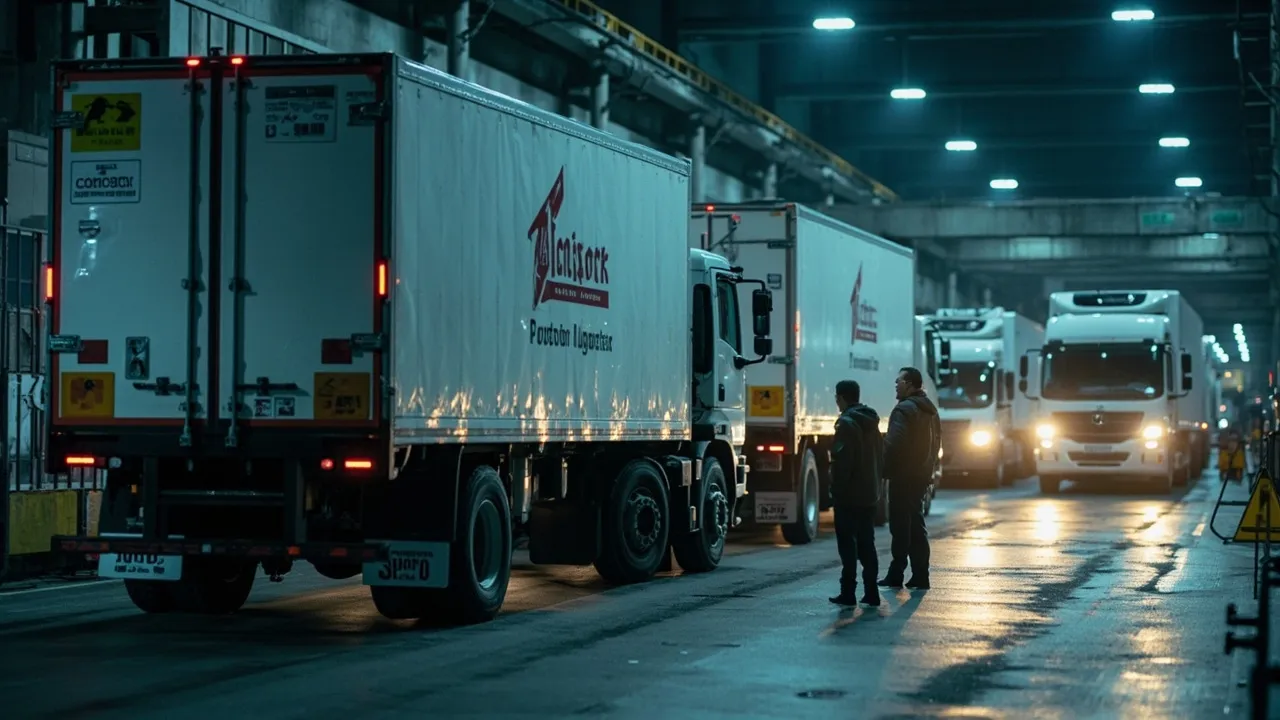
A labor disruption in food distribution is not simply a capacity shortage. It is a race against delivery windows, product shelf life, customer inventory, and temperature limits—all at the same time.
That is the operational lesson from the strike authorization involving US Foods drivers in the New York tri-state area. According to SupplyChainBrain, more than 260 drivers represented by Teamsters Local 282 voted unanimously to authorize a strike amid a dispute over wages, benefits, and working conditions. The union warned that a walkout could affect hundreds of deliveries to restaurants, hospitals, and schools.
Whether a strike begins or the parties reach an agreement, the authorization itself is a useful stress test. Distributors should be able to answer a difficult question before the first route is missed: if only part of tomorrow's network can operate, exactly which customers and products move first?
Stop treating every missed stop equally
The familiar response to a sudden driver shortage is to preserve as many routes as possible. That metric can mislead. Completing 80% of stops is not a good result if the omitted 20% includes hospitals, school kitchens, customers with no safety stock, or sites waiting for highly perishable products.
Instead, create a customer-by-route continuity queue. Each planned stop receives a priority score based on factors that matter during disruption:
- Customer criticality, including healthcare, education, and other essential services
- Product shelf life and temperature sensitivity
- The customer's estimated inventory and time until stockout
- The delivery window and whether the site can receive outside normal hours
- Availability of safe substitutions, customer pickup, or another distribution point
- Miles, driving hours, cube, weight, and stop density required to serve the order
This queue turns a broad crisis into a sequence of explicit dispatch decisions. It also makes tradeoffs visible. A dispatcher can see why one stop moved ahead of another, and customer service can give an explanation grounded in operational facts rather than guesswork.
Protect the cold chain before chasing capacity
Food freight becomes more fragile as dwell time increases. FreightWaves reports that 40% of food requires refrigeration, while 2.5% of global emissions are attributed to the cold chain. In a separate 2026 report, approximately 72% of organizations said demand for refrigerated and frozen food was rising. A labor disruption therefore lands on a network already handling substantial and growing temperature-controlled demand.
Before assigning an alternate truck, driver, cross-dock, or carrier, verify that the option can preserve the product's required conditions. Capacity is not interchangeable when equipment, sanitation, monitoring, or chain-of-custody requirements differ.
For every reassigned load, the continuity record should include trailer type, pre-cool confirmation, temperature range, seal number, sensor or logger identifier, planned transfer points, and responsible party at each handoff. If the shipment is held, the system should record where it is staged and how long its remaining temperature tolerance permits it to wait.
The practical rule is simple: do not solve a service failure by creating a food-safety failure.
Prequalify alternatives without double counting them
During a regional disruption, many distributors may call the same carriers, staffing providers, and cross-docks. A verbal assurance is not usable capacity. The continuity plan should separate possible resources from confirmed resources.
Maintain a prequalified roster that covers alternate carriers, legally eligible labor, nearby cross-docks, customer pickup options, inter-branch transfers, and approved product substitutions. For each option, record operating hours, equipment, geography, insurance, food-safety qualifications, rates, lead time, and the person authorized to activate it.
Then apply a reservation status: identified, contacted, offered, accepted, dispatched, or unavailable. This prevents the same truck or worker from appearing in several recovery scenarios. It also exposes shortfalls early enough to consolidate routes or negotiate adjusted receiving windows.
The aim is not to reproduce the normal network at any cost. It is to build the smallest reliable operating plan that protects the highest-consequence orders.
Run the disruption from one exception queue
Spreadsheets and group messages fracture quickly when routes change by the hour. A transportation management system should create one exception record for each affected shipment and connect it to the order, route, customer, inventory position, and temperature evidence.
Useful exception states include:
- At risk but still scheduled
- Held for prioritization
- Assigned to alternate capacity
- Customer pickup or substitution offered
- Missed and awaiting recovery
- Recovered with proof of delivery
- Closed with spoilage, refusal, or claim
Every state needs an owner and a response deadline. The system should flag orders approaching a delivery-window cutoff, a customer stockout, or a product exposure limit. That focuses the team on the next decision rather than the loudest incoming call.
Communication should draw from the same record. Sales, customer service, warehouse teams, and dispatchers need one current estimated delivery time and one approved service option. Conflicting promises waste scarce capacity and erode trust precisely when customers need clarity.
Sequence recovery instead of restarting the old plan
When labor returns, loading every missed order onto the next available route can create a second disruption. Receiving sites may be closed, fresh orders may already cover part of the need, and delayed perishables may no longer be saleable.
Revalidate each missed stop before dispatch. Confirm the customer's current inventory, receiving window, revised quantity, substitution acceptance, and product condition. Then rebuild the queue using both backlog and new demand.
Recovery metrics should measure more than route completion. Track critical customers served, orders recovered before stockout, temperature excursions, spoilage, refused deliveries, premium transportation cost, hours to clear backlog, and the reasons alternatives failed. These measures reveal whether the continuity design protected customers or merely moved freight.
Make route resilience an operating capability
A strike authorization is a warning, but labor is only one cause of route interruption. Severe weather, equipment failures, cyber incidents, and local road closures can create the same operational problem. The durable response is a reusable queue that ranks consequences, validates constrained capacity, preserves cold-chain evidence, and controls recovery.
CXTMS brings orders, routes, carrier options, shipment exceptions, and delivery evidence into one operational view. Teams can prioritize affected customers, assign accountable owners, and manage recovery without losing the shipment-level record.
Request a CXTMS demo to see how exception-driven transportation workflows can strengthen your food-distribution continuity plan.