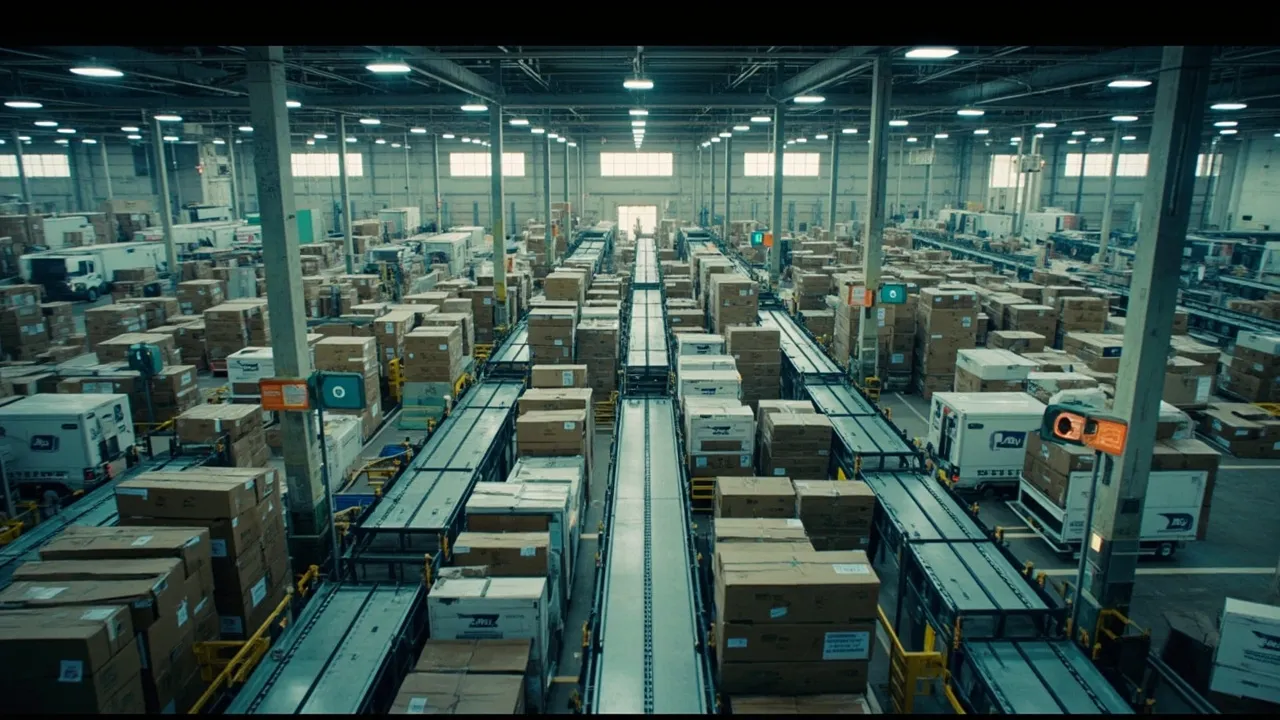
Four Billion RFID Packages Change the Parcel Exception Workflow

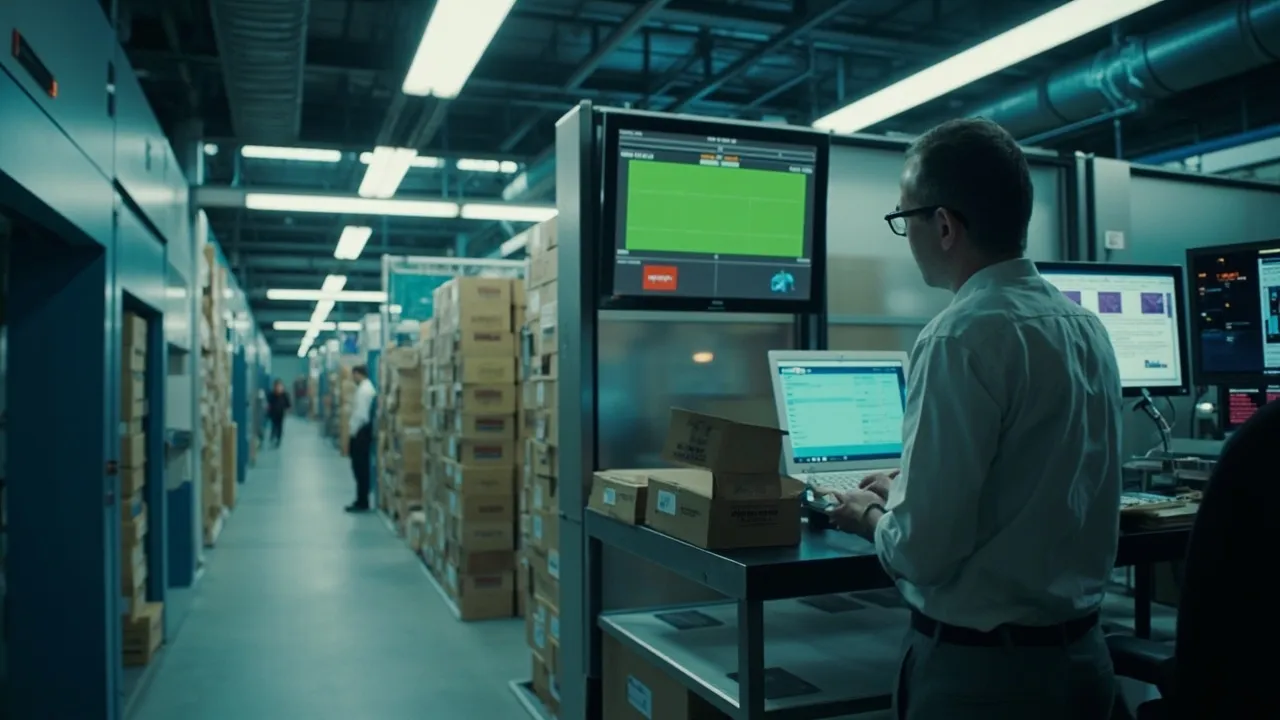
Parcel visibility is about to become a data-management problem as much as a tracking problem. UPS projects that it will deliver more than 4 billion RFID-enabled packages by the end of 2026. At that scale, passive radio-frequency identification can produce more evidence about where a parcel entered the network and how it moved through facilities—but more events do not automatically create better decisions.
The operational opportunity is to redesign exception management around that evidence. Instead of waiting for a customer to report a late parcel, shippers can identify a missing, late, duplicated, or contradictory event early enough to launch a targeted search. That requires a common event model spanning customer-applied labels, UPS Store induction, hub reads, vehicle reads, and conventional barcode scans.
RFID volume is moving beyond a pilot
Supply Chain Dive reports that UPS is already serving 3 million RFID-enabled packages per day from customer locations, up from 2.2 million per day in July. The carrier expects that customer-location volume to reach 6 million packages per day in 2027. UPS Store locations add another stream of RFID-labeled parcels, and the company projects more than 4 billion RFID-enabled deliveries by the end of 2026.
The network footprint is substantial. Logistics Management reports that UPS is using RFID sensing in U.S. package vehicles, domestic delivery facilities, and more than 5,000 UPS Store locations, including for customer returns. Earlier reporting put UPS Store RFID processing at 1.3 million packages daily.
The productivity case is equally significant. UPS says the expansion can eliminate nearly 20 million manual scans per day. RFID readers can detect a tagged parcel without requiring an employee to aim a handheld scanner at a visible barcode. FreightWaves notes that these reads can also provide redundancy where conveyor barcode scans fail because one parcel blocks another label.
That is a major improvement in event coverage. Yet an RFID read is still evidence, not a delivery outcome. It must be interpreted in the context of origin, route, facility, service commitment, and the events that should have occurred before and after it.
Build one event model for three origin paths
Shippers should avoid treating every RFID parcel as if it entered the network in the same way. At minimum, the tracking model needs three origin paths.
Customer-applied labels begin with the shipper's label-generation record. The first physical RFID read should be reconciled against the manifest, scheduled pickup, package identifier, and promised handoff window. A created label without a physical read may indicate a parcel still sitting at the origin, a missed pickup, or a tag that was not encoded correctly.
UPS Store induction has a different chain of custody. The store acceptance transaction, receipt time, RFID label, and first outbound network read should form one sequence. Returns also need the original order and return authorization so an operations team can distinguish a delayed return from an unrecognized parcel.
Network scans cover movement after induction. RFID portal and vehicle reads should coexist with barcode scans, sort events, trailer assignments, and delivery records. Do not discard the older event simply because RFID is available. Two sensing methods can corroborate movement, while disagreement between them is itself a useful exception signal.
Normalize these inputs into a common record containing package ID, event type, source technology, location, timestamp, reader or facility ID, expected next event, and confidence. Preserve the raw carrier event for audit purposes, but give operations a consistent vocabulary such as label created, physically inducted, facility arrived, sorted, loaded, out for delivery, and delivered.
Trigger searches from missing and conflicting evidence
A useful workflow asks what should happen next and by when. Once a parcel is inducted at a store, for example, the model can predict its next facility event from the pickup schedule and service level. If that event is absent after a defined buffer, the system should open a focused exception rather than a generic “no movement” alert.
The search instruction should reflect the last credible evidence. A parcel read at induction but not at the origin hub points the team toward the store cage, pickup vehicle, and unload area. A parcel read into a vehicle but assigned to a different route requires a vehicle or preload check. A hub RFID read followed by a barcode scan at an impossible location may indicate a duplicate identifier, bad timestamp, or data-mapping error rather than physical misrouting.
Use confidence tiers to prevent alert overload. A single missing read may be informational when later evidence proves forward movement. Two missed expected events near the commitment time should be actionable. Conflicting physical reads, a delivery event without preceding local evidence, or a parcel remaining at one location beyond its dwell threshold deserves immediate review.
The goal is not to make every event perfect. It is to intervene while the parcel can still be recovered without breaking the delivery promise.
Measure the workflow by origin type
Network-wide averages can hide weak handoffs. Segment the scorecard by customer-applied label, UPS Store shipment, UPS Store return, and any other meaningful induction path. Track four core measures.
Scan completeness is the share of expected milestones supported by a valid physical event. Report it by origin, facility, route, and service level. A high delivered-event rate can coexist with poor induction visibility.
False-exception rate is the share of alerts later cleared without intervention because the parcel was moving normally. High rates indicate that timing thresholds, route logic, or event ingestion needs tuning.
Recovery time runs from exception detection to a credible location, corrected routing decision, or confirmed forward movement. Measure both median time and the long tail; the hardest cases generate customer contacts and claims.
Claims avoidance estimates the value of parcels recovered before loss, service refunds prevented, and replacement shipments avoided. Tie each avoided claim to the exception and intervention that produced the result rather than claiming credit for every parcel that eventually arrived.
Add promise protection as the final outcome: the percentage of actionable exceptions recovered before the original delivery commitment. That measure keeps the program focused on customer service rather than maximizing sensor events.
Turn visibility into an operating discipline
Four billion RFID-enabled packages will create an unusually rich stream of parcel evidence. The competitive advantage will not come from displaying more dots on a tracking page. It will come from joining origin and network events, identifying the last credible location, and sending the right team a precise recovery task before a late shipment becomes a claim.
CXTMS can provide the transportation context around those carrier events: orders, service commitments, facilities, customers, exceptions, ownership, and recovery outcomes. That shared record helps parcel teams learn which alerts matter and where interventions actually protect promises.
Ready to turn parcel tracking events into managed recovery workflows? Request a CXTMS demo and build exception management around evidence, ownership, and measurable results.