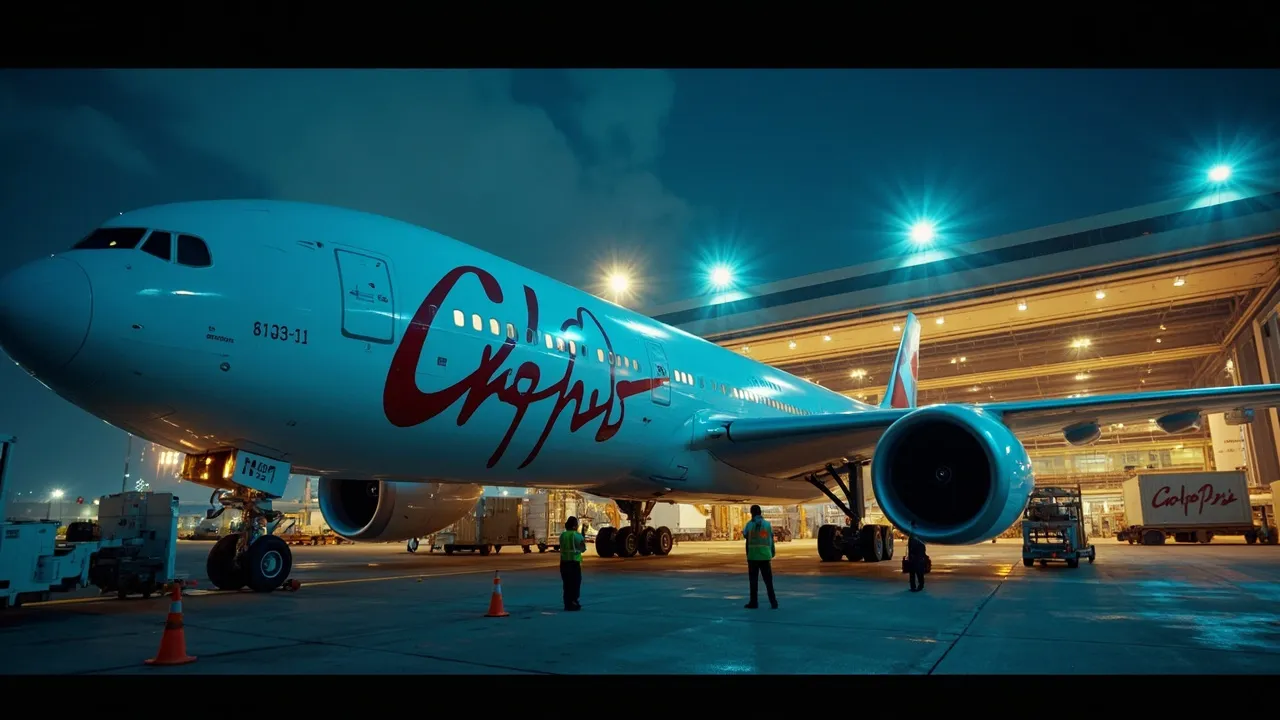
A Grounded UPS 767 Is a Peak-Season Fleet Substitution Test


One unavailable freighter should not become hundreds of broken customer promises. Yet during peak season, replacing an aircraft is not as simple as moving a tail number on a schedule. The substitute must have the right payload and range, qualified crews, maintenance coverage, airport access, ground-handling support, and enough time to connect freight with downstream departures.
That challenge became concrete after a UPS Boeing 767-300 freighter was damaged in a low-speed collision at Miami International Airport. FreightWaves reported that a Copa Airlines 737 carrying 166 passengers clipped the nose of the UPS aircraft while taxiing. The UPS jet had been preparing to fly from Miami to Bogotá, and photos showed substantial nose damage. No UPS crew members were injured, but the event removed capacity while seasonal volumes were surging.
The real operational test is therefore not how quickly maintenance returns that exact aircraft to service. It is whether the network protects shipments while the aircraft remains unavailable.
Substitution Is a Five-Constraint Decision
Fleet planners should evaluate a recovery option across five linked constraints.
Aircraft: The substitute needs sufficient payload, cubic capacity, range, door configuration, and airport compatibility. A smaller freighter may require two rotations or force lower-priority freight onto another mode. A larger aircraft may be technically capable but uneconomic or unable to use the planned stand.
Crew: Pilots must be qualified for the aircraft type and legal under duty-time rules. Positioning a reserve aircraft without an available crew merely relocates the bottleneck.
Maintenance: The replacement needs adequate remaining flight time before its next check, plus engineering and spare-parts support at the operating stations. Deferring scheduled work can create capacity today while increasing risk later in the peak calendar.
Slots and handling: Miami and Bogotá departure windows, parking stands, customs processes, loaders, and warehouse labor all have to align. A substitute that arrives after the sort cutoff may preserve a flight but still miss the service promise.
Shipments: Freight must be ranked by commitment, connection risk, product sensitivity, and recovery cost. The correct substitution plan protects customer outcomes, not simply aircraft utilization.
Define the Recovery Ladder Before Peak Begins
An effective playbook should give dispatchers a preapproved ladder of options rather than forcing commercial, maintenance, and operations teams to negotiate from scratch during an incident.
The first option is a spare aircraft with a qualified crew. That is usually fastest, but reserves are scarce when the entire network is operating near its seasonal ceiling. The second option is to consolidate routes or swap aircraft across lanes, accepting a controlled delay where more schedule slack exists. The third is dedicated third-party airlift through a wet lease or charter. The fourth is commercial belly capacity for eligible shipments. Truck substitution can protect domestic or regional connections, while truly deferrable freight can move on the next planned rotation.
This is not hypothetical. During an earlier disruption, FreightWaves documented how UPS responded to the loss of MD-11 capacity by wet-leasing aircraft, consolidating flights, and reconfiguring truck routes. The reported response included four Cargojet 757-200 freighters, one Amerijet 767 operating daily between Louisville and Houston, and three or four 767s from ABX Air and Air Transport International. UPS had about 27 MD-11s in active service when that fleet was grounded, showing that recovery depends on several levers rather than a one-for-one aircraft replacement.
These options should carry explicit activation thresholds. For example, reserve lift may activate when projected payload exceeds available capacity by a set percentage, a high-value connection faces a cutoff, or the estimated repair duration crosses a defined number of rotations. Contract rates, aircraft specifications, station approvals, and vendor contacts should already be attached to the plan.
Prioritize Freight by Promise Risk
When substitute capacity is smaller than planned capacity, first-booked should not automatically mean first-loaded. A shipment-priority score should consider:
- Time remaining to the promised delivery date
- Probability of missing an onward air or ground connection
- Contractual penalties and customer escalation status
- Temperature, security, perishability, or regulatory constraints
- Availability and cost of an alternate route or mode
Planners should reserve protected capacity for critical shipments and create a clear cutoff for deferred freight. Every displacement needs a reason code and a new expected delivery time. Customer service teams should receive those changes before customers discover them through a late scan.
The scale of the fleet offers useful context but not immunity from local disruption. Reuters reported that an eight-aircraft order was expected to bring the UPS 767 fleet to 108 jets. Even in a large fleet, however, aircraft are not instantly interchangeable across geography, maintenance status, crews, and tightly timed hub banks.
Measure Shipments, Not Tail Numbers
Aircraft return-to-service time is an engineering metric. It is not the best recovery metric for customers. A substitution dashboard should instead track:
- Shipments and weight displaced from the original flight
- Percentage rebooked before the next service cutoff
- Missed connections and missed delivery promises
- Average delay by customer and service tier
- Premium lift, handling, and trucking cost per recovered shipment
- Time from disruption detection to customer notification
A repair may take several days while nearly every shipment arrives on time. Conversely, an aircraft may return quickly after poor prioritization has already created a backlog. The first outcome is operational success; the second is not.
Peak-season resilience comes from treating aircraft, crews, maintenance, slots, handlers, routes, and customer commitments as one decision system. CXTMS helps logistics teams centralize those constraints, apply shipment-priority rules, and coordinate exceptions across carriers and customers. Request a CXTMS demo to build a recovery workflow that protects delivery promises when planned capacity disappears.