UniUni’s Peak-Season Carrier Handoffs: How to Preserve Parcel Chain of Custody

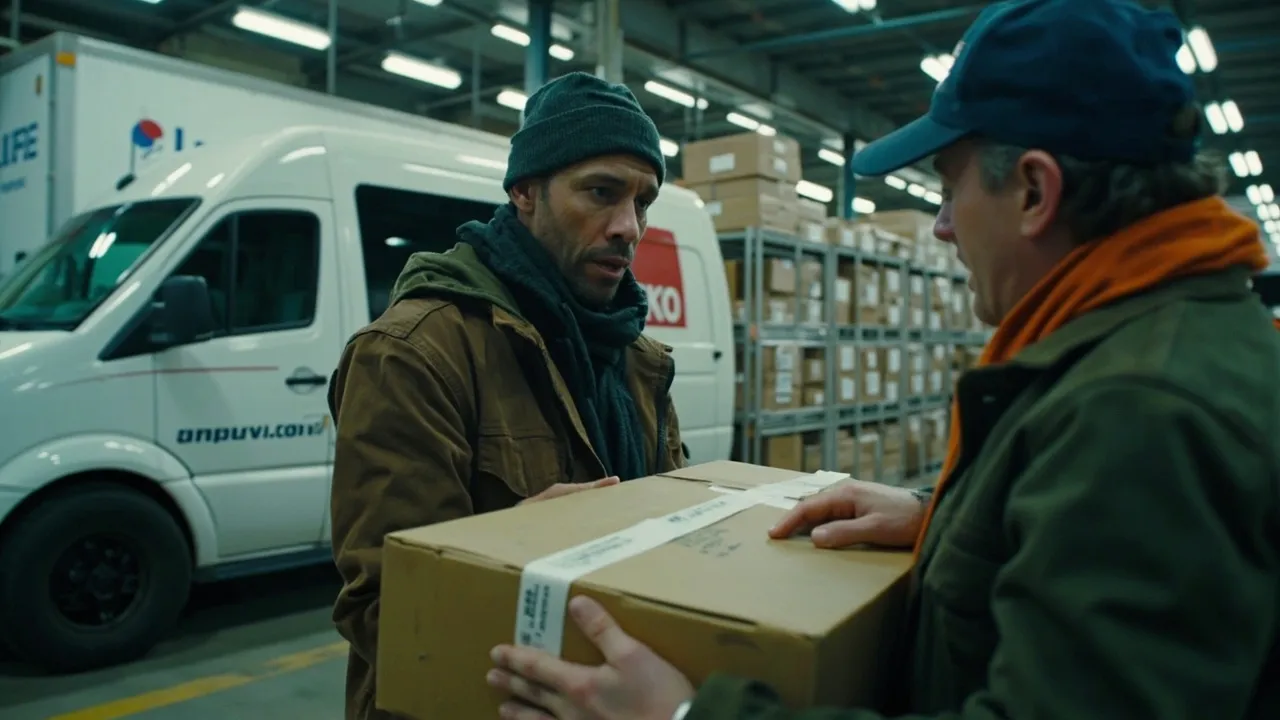
Peak season is pushing parcel carriers to rethink where one network ends and another begins. UniUni plans to hand selected packages to other delivery providers, including Gofo, during the holidays. The objective is straightforward: improve route density by reducing situations in which separate carriers assign drivers to the same neighborhood with half-full routes.
The operational challenge is less straightforward. A parcel may move through UniUni’s pickup, injection, sortation, and linehaul network, then enter another carrier’s last-mile operation. If identifiers, timestamps, service promises, and exception rules do not survive that transfer, the efficiency gain can create a visibility loss.
For shippers and 3PLs, the right response is not to resist collaborative delivery networks. It is to make every handoff auditable.
Why the handoff model matters now
Supply Chain Dive reports that UniUni can deliver more than 1 million parcels per day and covers roughly 65% of the U.S. population and 80% of Canada’s population. The carrier says partner handoffs can help the shared driver pool deliver more parcels daily through better route density and productivity.
That economic logic is compelling. Two carriers serving the same street separately pay twice for overlapping stem miles, dispatch work, and driver time. Consolidation can reduce cost per stop while increasing the number of parcels on a route.
But each additional operating party also creates a control point. The shipper still owes the customer one delivery promise even when two carriers perform it. “Transferred to partner” is not enough information for customer service, claims, or performance management.
The broader market is experimenting with other forms of delivery control. CarParts.com, for example, delivered more than 6,000 packages through its internal network in its fiscal third quarter—about double its second-quarter total—and is targeting 300,000 packages annually. Its stated aim is to control cost, timing, and customer experience. Whether a company brings delivery in-house or hands it to a partner, the underlying requirement is the same: preserve a complete operational record.
Establish a minimum shipment-event contract
A carrier partnership needs a data contract before the first parcel changes hands. At minimum, every transfer should carry five elements:
- Package identity. Preserve the shipper reference, original tracking number, partner tracking number, and any container or route ID. Never force an operations team to match shipments by address and timestamp.
- Custody timestamp and location. Record when and where the physical transfer occurred, not merely when a manifest file was sent.
- Promised delivery date. Pass the customer commitment as a controlled field so the receiving carrier can plan against the same service expectation.
- Scan status. Use a defined status map for tendered, accepted, physically received, out for delivery, attempted, delivered, and exception events.
- Exception owner. Identify which organization must act, the escalation deadline, and the evidence required to close the issue.
These fields should be acknowledged by the receiving network. A manifest transmission proves only that data left one system; it does not prove that the partner accepted the parcel, recognized the promise, or can report subsequent events.
Separate commercial transfer from physical custody
Peak operations often compress several moments into one “handoff” status. In reality, the originating carrier may assign a parcel to a partner, transmit a manifest, stage it in a cage, load a trailer, and receive the partner’s acceptance scan at different times.
Each moment answers a different question. Assignment shows intent. Manifest transmission shows data movement. Departure shows the parcel left a facility. Acceptance confirms the next carrier recognizes custody.
The gap between departure and acceptance deserves its own exception timer. If a parcel departs at 2 a.m. but receives no partner scan by the agreed cutoff, the case should route to an owner before the customer notices a stalled tracking page.
Capacity pressure makes this discipline more important. FreightWaves reported that dry-van spot rates rose more than 4% from late October into early November even as diesel prices fell roughly 3.5%. It also noted that spot freight represents about 10% to 25% of truckload volume. While parcel and truckload markets differ, the signal is useful: late seasonal freight can strain flexible capacity quickly, making clean induction and exception decisions essential.
Build a handoff scorecard around completed delivery
Cost per tendered parcel is an incomplete measure. A partner can look inexpensive at induction and costly after reattempts, claims, support contacts, and refunds. Score each origin-partner-market combination using:
- on-time delivery against the original promise;
- first-attempt delivery success;
- time from origin departure to partner acceptance;
- parcels without an acceptance scan by cutoff;
- claims and loss rate per 1,000 parcels;
- customer contacts per 1,000 parcels;
- cost per completed stop, including reattempts and adjustments; and
- exception resolution time by accountable party.
Review the scorecard daily during peak, not after the season. If one depot’s acceptance lag grows while another remains stable, the network can redirect volume selectively instead of abandoning the entire partnership.
Keep one operational record across networks
Customers should not need to understand carrier architecture to learn where a package is. A transportation management system can retain one shipment record while linking the original and partner tracking numbers, normalizing status codes, and preserving raw events for audit.
That shared record should also drive action. Missing acceptance scans can create tasks automatically. A failed attempt can be assigned to the party able to correct the address or schedule a reattempt. Claims teams can retrieve the manifest, custody scans, delivery evidence, and exception history without stitching together email threads.
Collaborative parcel delivery can create real efficiency, especially when multiple networks draw from the same pool of drivers. The winning model will not be the one with the fewest handoffs. It will be the one that makes every handoff visible, accountable, and measurable through final delivery.
CXTMS gives freight forwarders and logistics teams one operating record for carrier assignments, tracking events, custody transfers, exceptions, costs, and customer commitments. Request a CXTMS demo to see how your team can manage multi-carrier parcel execution without losing control at the handoff.