Tractor Supply's Automated Idaho DC: Test One-Day Delivery Readiness by ZIP Code

Opening a large distribution center changes a retail network immediately. It does not make every nearby order eligible for one-day delivery immediately.
That distinction matters at Tractor Supply's new facility in Nampa, Idaho. The automated site gives the retailer a major western node, but the customer promise still depends on whether the right item is available, released, picked, inducted, and delivered within a specific ZIP code's operating window. Network reach is a map; service readiness is a chain of executable conditions.
A large node creates options, not guarantees
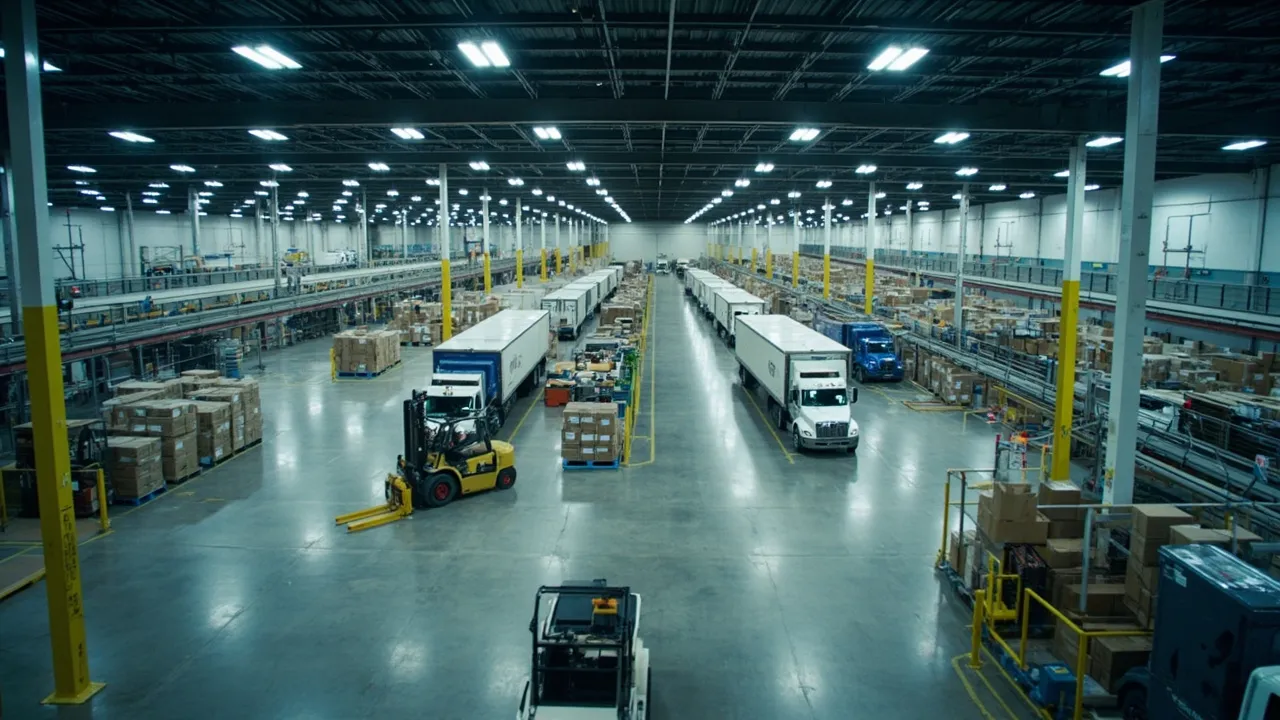
Supply Chain Dive reports that the Nampa DC represents an investment of more than $200 million. The 865,000-square-foot facility has 80 dock doors and is expected to create about 500 jobs. It will serve 123 stores across nine states during its first year and can scale to more than 200 stores at full capacity.
Those figures establish meaningful throughput potential. They do not answer the question a shopper asks at checkout: can this basket reach my address tomorrow?
One-day eligibility must be calculated at the intersection of SKU, node, time, carrier capacity, and destination. A ZIP that sits within a theoretical one-day transit radius may still be ineligible because the item is at another DC, the order arrived after the wave cutoff, the parcel trailer has closed, or a bulky product requires an appointment-based private-fleet route.
The promise engine therefore needs to test five gates before displaying a date:
- Inventory availability: Is sellable stock physically available in Nampa or a connected store, after reservations and safety stock?
- Order cutoff: Is there enough time remaining for payment approval, allocation, and release into the correct fulfillment wave?
- Pick completion: Can the item move through the relevant automated or manual process before dock close?
- Carrier induction: Is confirmed capacity available on the service that supports the promise, not merely a published carrier schedule?
- Destination performance: Does the ZIP have a recent, reliable one-day delivery record for that service, weekday, and product class?
If any gate fails, the system should offer a defensible later date or another fulfillment option. Optimistic promises simply move the exception downstream, where recovery becomes more expensive.
Treat parcel and bulky delivery as different networks
Tractor Supply's assortment complicates the model. A box of work gloves and a large stock tank may originate from the same retail network, but they do not share the same handling path, capacity unit, or last-mile economics.
The company's broader delivery expansion shows why those paths must remain visible. Supply Chain Dive reported that Tractor Supply planned to extend delivery capabilities across more than 1,200 stores, reaching over 15 million customers. A later update said the retailer had established about 200 final-mile hubs and planned another 176 during 2026.
That scale creates a useful multi-node network: a DC can replenish stores, stores can act as forward inventory points, and local hubs can handle larger orders. But eligibility rules must compare the entire cost and service path. Shipping a product from Nampa by parcel may be fast for one ZIP, while transferring it to a store and assigning an employee-delivery route may be more reliable for another.
The order management system should classify each basket before promising service. Parcel-compatible items can use carrier pickup and ZIP transit history. Bulky items need vehicle capacity, route-day availability, equipment requirements, and appointment constraints. Mixed baskets require an explicit split-shipment decision rather than an accidental split discovered after allocation.
Measure the launch by promise quality
Facility metrics such as cartons per hour, dock utilization, and pick productivity remain important, but they cannot prove that the new node improved the customer experience. The launch scorecard should connect warehouse execution with the promise shown at checkout.
Four measures reveal whether the network is ready:
- Promise accuracy: the share of orders delivered on or before the original promised date, reported by ZIP, product class, and fulfillment path.
- Split-shipment rate: the share of baskets divided across nodes or delivery methods, including the added freight and handling cost.
- Cost per completed order: all fulfillment, transfer, carrier, private-fleet, and exception costs—not just the outbound transportation charge.
- Exception recovery: the share of threatened orders recovered before the promised date, plus the time and cost required to resolve them.
These metrics should be reviewed in cohorts. A network-wide average can hide a weak rural zone, a late carrier pickup on Fridays, or chronic misses for oversized products. ZIP-level analysis shows where the promise should be widened, where inventory placement should change, and where an additional induction or route is justified.
Give automation governed decision rights
The Nampa operation also includes a team focused on applying practical AI to operational needs. The best early use is not an unconstrained prediction of the fastest possible date. It is a governed recommendation built from observable events: inventory confidence, queue depth, historical pick completion, trailer capacity, route acceptance, and ZIP-level delivery performance.
Every automated promise should retain its inputs and reason code. When a manager overrides a cutoff or adds capacity, the system should record who changed the decision and whether the order ultimately arrived on time. That feedback converts daily exceptions into better eligibility rules.
The same control loop should govern expansion. Add ZIP codes only after several full operating cycles demonstrate stable inventory, induction, and destination performance. Remove or narrow eligibility when service deteriorates. Growth becomes a series of evidence-based releases instead of a single geographic announcement.
Tractor Supply's Idaho DC gives the western network more inventory, automation, and dock capacity. The competitive advantage will come from translating that capacity into promises the operation can keep—one SKU, cutoff, carrier handoff, and ZIP code at a time.
Ready to connect inventory, fulfillment milestones, and transportation execution in one workflow? Request a CXTMS demo to build delivery promises around live operational capacity.