Taylor Farms' Mexico Sourcing Halt: Build a Seasonal Produce Exclusion Calendar

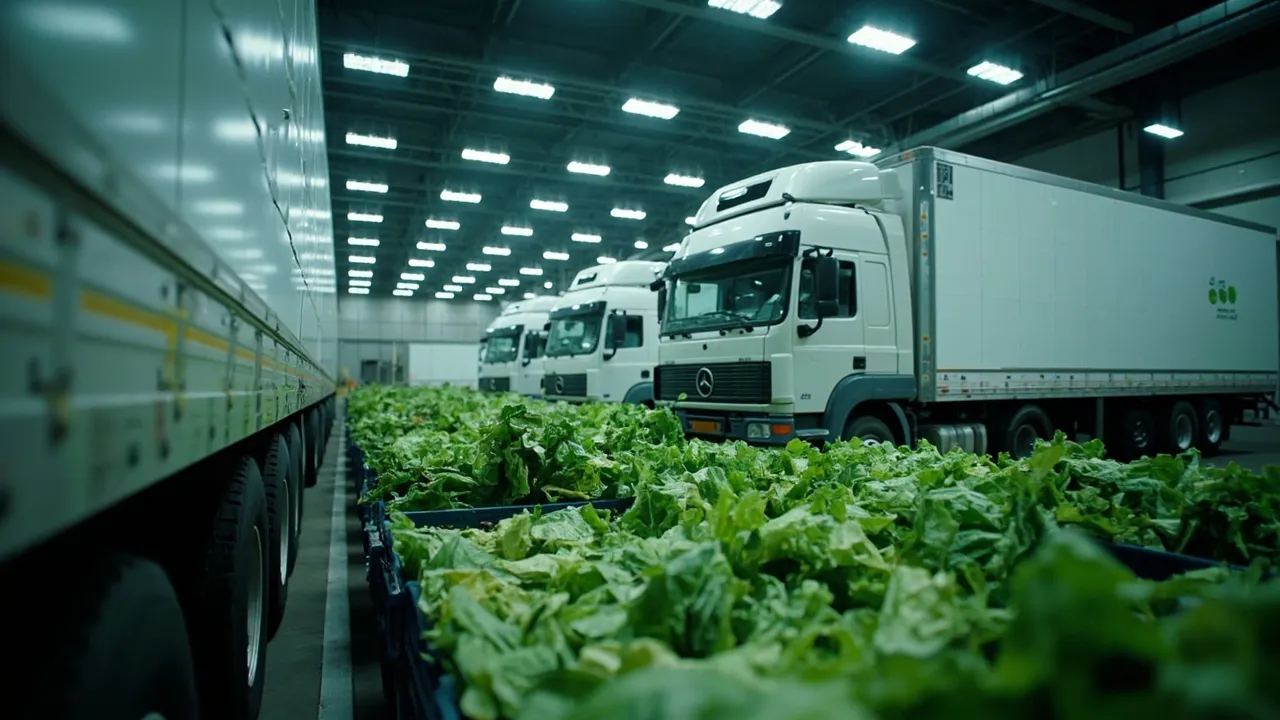
Taylor Farms has turned a food-safety lesson into a firm sourcing rule: it will no longer harvest or process lettuce from central Mexico between May and August. The four-month window aligns with the period the CDC considers cyclosporiasis season, according to Supply Chain Dive.
That decision deserves attention beyond the produce aisle. It shows how a seasonal risk assessment can become an executable supply-chain control—not merely a warning in a supplier manual. For shippers, importers, and food distributors, the operational question is whether prohibited origin and date combinations can be stopped before a purchase order is released or a truck is tendered.
The strongest answer is a seasonal exclusion calendar connected to procurement, transportation, quality, and traceability data.
Convert a Risk Season Into a System Rule
A calendar control needs more precision than “avoid central Mexico in summer.” Define the excluded geography, commodity, growing and processing activities, effective dates, and exceptions. The rule should evaluate the harvest date and processing date—not only the order or delivery date—because a load delivered in early May may have been harvested outside the risk window, while an August purchase may arrive after the window closes.
Build the rule from five fields:
- commodity and product specification;
- farm, field, processor, and country or subregion of origin;
- harvest and processing dates;
- requested ship and delivery dates; and
- approved exception with owner and expiration.
Apply it twice. At purchase-order creation, block a supplier-origin combination that will fall inside the exclusion window. At load tender, recheck the actual lot and origin because allocation may have changed after the PO was placed. A warning that appears only after receipt is documentation, not prevention.
Taylor Farms' May-through-August policy spans roughly one-third of the year. That is long enough to affect contracted acreage, lane design, refrigerated capacity, inspection appointments, and customer service commitments. The alternate supply plan therefore needs to be ready before May 1, not assembled when the first order is rejected.
Prequalify the Entire Alternate Lane
An approved substitute farm is only the beginning. Produce has a biological clock, and changing origins can alter transit time, border dwell, temperature exposure, inspection capacity, and remaining shelf life. Procurement and logistics teams should qualify the complete farm-to-customer path.
For each alternate origin, record available weekly volume, lead time, pack configuration, food-safety certifications, expected border crossing, approved cold-storage facilities, qualified carriers, and temperature range. Run a trial shipment before the seasonal cutoff. That test should measure pickup readiness, transit variance, inspection dwell, pulp or ambient temperature, rejection rate, and shelf life at receipt.
Capacity must be reserved at likely bottlenecks. If several buyers shift production away from the same region at once, reefer equipment and inspection appointments can tighten even when farm output is available. Use primary and backup carriers for every critical lane, with agreed response times and procedures for a refrigeration alarm or border delay.
Shelf life should be part of the routing decision. A cheaper alternate lane can be a false economy if two additional transit days shorten the selling window and increase spoilage. Compare landed cost after expected shrink, rejection, and expedite expense—not freight rate alone.
Keep Traceback Evidence Attached to the Shipment
Visibility and traceability solve different problems. Visibility tells an operator where a load is and what temperature it is experiencing. Traceability connects the shipment to production lots, suppliers, transformations, and downstream customers. Food Logistics makes this distinction explicit: a location ping cannot identify which production lot was used in a shipment.
Every produce load should maintain one linked evidence record containing:
- farm, field, processor, and declared origin;
- lot and case identifiers;
- harvest, pack, ship, and receipt timestamps;
- trailer and seal numbers;
- carrier, driver, and chain-of-custody events;
- continuous temperature readings and alarm responses; and
- inspection results, certificates, photos, and disposition decisions.
Do not leave these items scattered across email, a procurement portal, carrier tracking pages, and a quality spreadsheet. During an incident, teams need to identify affected lots and customers in minutes. Centralizing the evidence also limits the blast radius: precise records allow a company to hold the implicated inventory instead of stopping every shipment from an entire supplier or region.
Design Exceptions That Cannot Become Loopholes
Seasonal exclusions sometimes require exceptions—for example, when evidence supports a different micro-region, controlled environment, or processing arrangement. Exceptions should never be free-text overrides.
Require a named quality approver, supporting documents, the specific supplier and facility, applicable product, start and end dates, and a reason code. Set the authorization to expire automatically. The TMS should preserve both the original blocked rule and the approval so auditors can reconstruct why the load moved.
Track exception volume weekly. A rising exception rate indicates either that the source rule is too broad or that commercial pressure is bypassing the intended control. Both require management attention. No seasonal policy is credible if planners can routinely click through it.
Put the Calendar Into CXTMS Workflows
CXTMS can make the exclusion calendar operational across planning and execution. Configure an approved-origin matrix by commodity and date, then validate purchase orders, shipment plans, and tenders against it. When a planned load fails, route the exception to food safety and suggest qualified alternate origins, carriers, and lanes rather than leaving a planner to restart manually.
Use milestones for farm release, inspection, border clearance, temperature confirmation, and customer receipt. Trigger alerts when documents are missing, the actual lot differs from the planned lot, dwell threatens shelf life, or a temperature excursion occurs. Preserve each event in the shipment record with the commercial and quality decisions it produced.
Finally, review the calendar after every season. Compare rejected orders, exceptions, service failures, temperature alarms, transit variation, shrink, and claims by origin and lane. Those measures turn the next exclusion window from a copied date range into a better-informed risk control.
Taylor Farms' action is a useful operating model: identify a recurring hazard, define a clear time-and-place boundary, and redesign sourcing before the next season begins. Companies that embed that boundary in their systems will respond faster, protect shelf life, and retain the evidence needed for a precise traceback.
Ready to connect seasonal sourcing rules with cold-chain execution and shipment-level evidence? Request a CXTMS demo to see how procurement controls, transportation milestones, and traceability can work in one platform.