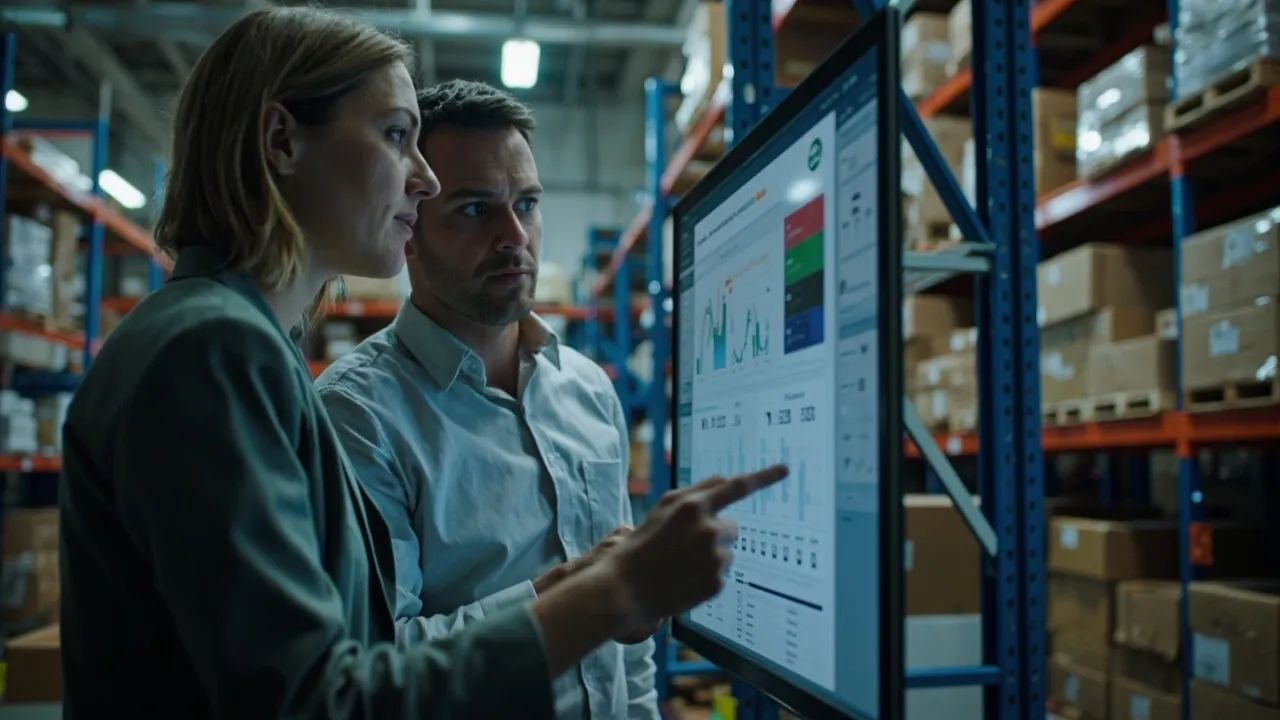
Target’s In-Stock Recovery: Turning Shelf Availability Into a Supply Chain Control Loop


Target is making in-stock reliability a central measure of its turnaround. That is more than a merchandising objective. Availability is the final output of a long operational chain: the forecast creates demand, the purchase order commits supply, the distribution center receives and allocates inventory, the store records the units, and employees move them to the shelf or pick them for a digital order.
When any link breaks, the customer sees the same result: the product is unavailable.
Supply Chain Dive reports that Target has recently improved item availability, although the retailer did not publish a specific in-stock percentage. The operational outcome is tangible: more customers are completing shopping trips with everything they intended to buy. Target is pursuing that improvement while strengthening its supply chain leadership and advancing a broader recovery plan.
The lesson for other retailers is not to copy a single Target initiative. It is to manage shelf availability as a closed-loop process with shared data, clear failure categories, and accountable owners.
Connect the transaction to the shelf
An in-stock metric can conceal as much as it reveals. A network may hold enough inventory in aggregate while the wrong stores, aisles, or digital fulfillment nodes show shortages. Retailers need an event chain that connects five operational records:
- Purchase order: What quantity did the retailer order, for what date, and under what supplier commitment?
- Distribution center receipt: What arrived, when was it received, and were discrepancies resolved?
- Store receipt and inventory: What was transferred to the location, and does the perpetual count match physical stock?
- Shelf availability: Was saleable inventory actually placed where a customer or picker could find it?
- Sale, substitution, or cancellation: What did the customer ultimately receive, and what demand went unfulfilled?
This integration is essential because inventory is not available merely because a system says it exists. McKinsey notes that retailers must combine distribution center inventory with store perpetual inventory to replenish stores accurately. Separate dashboards for vendors, warehouses, stores, and ecommerce teams create local explanations; one linked event record creates a root cause.
Separate three causes that look identical to customers
Retailers often respond to stockouts by increasing the forecast or adding safety stock. That can raise working capital without fixing the actual failure. Every availability exception should first be assigned to one of three cause families.
Forecast error occurs when actual demand differs materially from expected demand. Promotions, weather, local events, assortment changes, and unrecorded lost sales can distort the signal. A store that sells zero units may have zero demand—or it may have had an empty shelf all day. Forecast models need an availability flag so censored sales are not interpreted as weak demand.
Replenishment latency occurs when demand was understood but inventory did not move fast enough. Late suppliers, receiving queues, delayed allocation, missed store trucks, backroom congestion, and slow shelf restocking all belong here. The fix is cycle-time reduction and exception management, not necessarily a larger order.
Inventory-record error occurs when the system count differs from usable physical inventory. Shrink, damage, mispicks, misplaced units, incorrect substitutions, and unprocessed returns can create phantom stock. The replenishment engine then suppresses an order because it believes stock is available. Targeted cycle counts and rapid adjustment workflows are more useful than broad inventory buffers.
These distinctions matter especially in omnichannel retail. McKinsey estimates that in a pick-from-store model, 10% to 15% of orders can encounter stockouts and potentially require substitutions. A substitution is therefore not only a customer-service event; it is a high-value diagnostic signal about forecasting, flow, or record accuracy.
Build a weekly availability control loop
A practical control loop starts with a small, stable scorecard. Track shelf in-stock rate, digital fill rate, substitution rate, phantom-inventory rate, purchase-order lateness, DC-to-store cycle time, and time from store receipt to shelf. Segment the measures by item, supplier, distribution center, store, and fulfillment channel.
Then review the largest availability losses weekly. Each exception should carry an owner, a cause code, a corrective action, and a due date. Merchandising owns forecast and assortment decisions. Suppliers and inbound teams own purchase-order performance. Distribution operations own receipt and allocation latency. Store operations own backroom-to-shelf execution. Inventory control owns record accuracy. Shared responsibility without named ownership is how recurring stockouts become background noise.
The review should follow a consistent sequence:
- Identify the items and locations responsible for the most lost demand or substitutions.
- Trace each case backward from shelf or digital pick to store receipt, DC event, and purchase order.
- Confirm the root cause with event data rather than selecting a convenient category.
- Assign one corrective action and measure whether the same exception returns.
- Feed verified lost demand and corrected inventory records back into planning.
The financial upside can be substantial. In a separate analysis, McKinsey reported that one convenience retailer unlocked more than $100 million in incremental sales through availability improvements including better inventory accuracy, overdue purchase-order reconciliation, service-level changes, and an inventory health dashboard. The number will differ by network, but the mechanism is consistent: recover sales by repairing the flow of decisions and inventory.
Make availability an operating promise
Target’s recovery highlights a useful principle: customers do not experience forecasts, inventory files, or warehouse productivity in isolation. They experience whether the item is there. Retailers that treat availability as an end-to-end control loop can diagnose failures sooner, avoid indiscriminate inventory growth, and turn every substitution or empty shelf into a precise operational signal.
CXTMS helps logistics teams connect orders, shipment milestones, exceptions, and accountable workflows across the transportation network. Schedule a CXTMS demo to see how better event visibility can support more reliable replenishment and inventory availability.