Retail Logistics
66 posts tagged with “Retail Logistics”

Walmart's Prepaid Consolidation Program Makes First-Mile Freight the New Supplier Scorecard
Walmart's Prepaid Consolidation Program shifts more first-mile freight discipline onto supplier readiness, SKU visibility, appointment planning, and inbound scorecards.
 CXTMS InsightsJune 26, 2026 · 6 min read
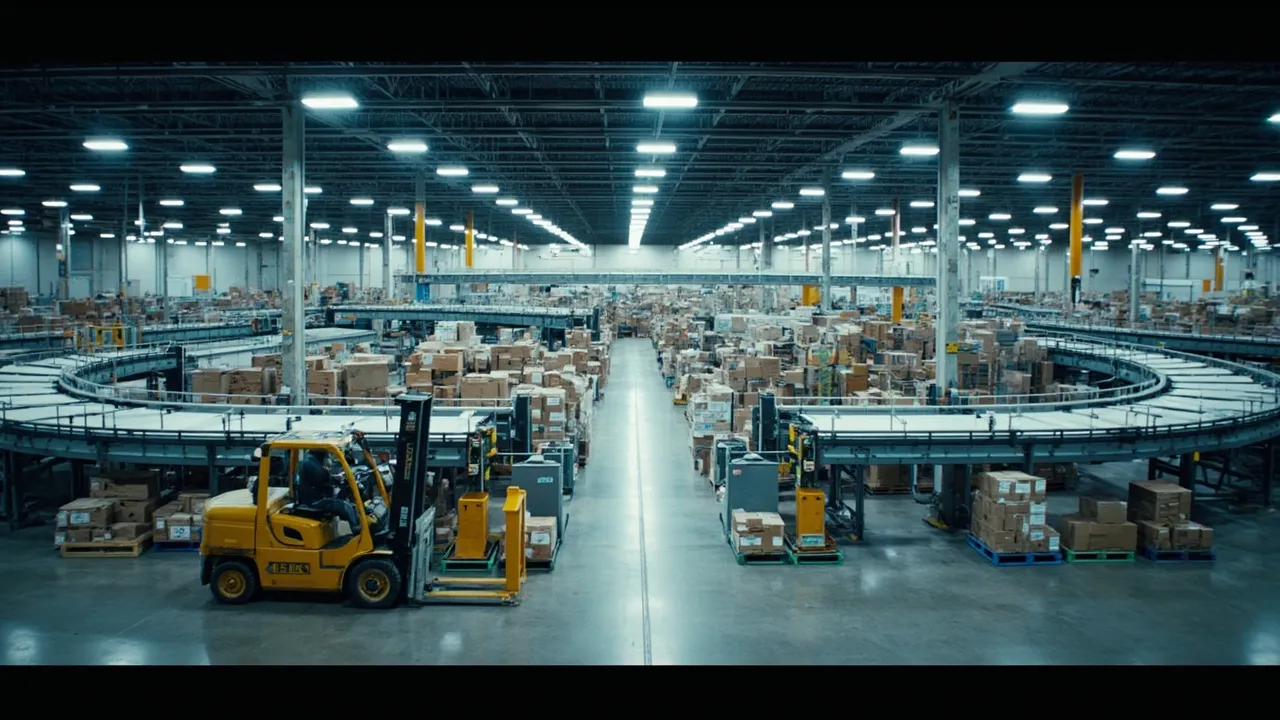
Burlington’s 2M-Square-Foot Georgia DC Shows Retail Speed Now Depends on Sortation Discipline
Burlington’s 2 million-square-foot Georgia distribution center shows why off-price retail speed depends on disciplined sortation, software, and throughput control.
CXTMS InsightsJune 21, 2026 · 7 min read
May Retail Sales Growth Turns Fulfillment Planning Back Into a Demand-Sensing Problem
May retail sales growth shows why fulfillment teams need weekly demand sensing across inventory, labor, parcel capacity, and transportation execution.
CXTMS InsightsJune 20, 2026 · 6 min read
Walmart’s Texas DC Remodel Shows Brownfield Automation Has Become the Real Capex Story
Walmart’s $8 million Texas distribution center remodel shows why brownfield automation is becoming the practical capital strategy for retail logistics networks.
CXTMS InsightsJune 20, 2026 · 7 min read
Tractor Supply's AI Routing Push Shows Rural Last Mile Needs Local Decision Support
Tractor Supply's rollout of AI-assisted route building for its last-mile delivery network reveals why rural bulky-goods delivery resists standard parcel optimization logic — and why manager-in-the-loop AI may be the only viable path to density at scale.
CXTMS InsightsJune 17, 2026 · 5 min read
Wayfair’s Big-and-Bulky Logistics Upgrade Starts With Product Dimensions, Not Faster Trucks
Wayfair’s focus on accurate product dimensions shows why big-and-bulky logistics depends on freight data quality, trailer utilization, and connected execution workflows.
CXTMS InsightsJune 9, 2026 · 7 min read
AutoZone’s Mega-Hub Strategy Turns Store Replenishment Into a Network Design Problem
AutoZone’s mega-hub expansion shows why store replenishment now depends on transportation frequency, SKU depth, and service-window design—not inventory alone.
CXTMS InsightsJune 8, 2026 · 6 min read
Delivery Reliability Is Beating Speed. Retail Logistics Teams Should Rebuild Promises Around That.
Retail leaders are putting delivery reliability ahead of raw speed. Here is how logistics teams can turn delivery promises into operational commitments.
CXTMS InsightsJune 8, 2026 · 6 min read
Target’s Inventory Turns Jump 10%: Why Upstream Holding Capacity Is Becoming a Retail Advantage
Target’s 10% inventory-turn improvement shows why upstream holding capacity, replenishment timing, and transportation planning now matter as much as warehouse speed.
CXTMS InsightsMay 30, 2026 · 6 min read
Walmart’s 30-Minute Delivery Reach Turns Store Fulfillment Into a Network Design Benchmark
Walmart’s faster store-fulfilled delivery model shows why local inventory, labor planning, carrier orchestration, and promise logic now define last-mile network design.
CXTMS InsightsMay 30, 2026 · 7 min read