Automotive
25 posts tagged with “Automotive”

Honda's $462M Alabama Expansion Needs a Supplier Ramp Control Tower
Honda's Alabama expansion shows why automotive production ramps need part-level supplier, routing, inventory, and launch-readiness controls.
 CXTMS InsightsNovember 20, 2026 · 6 min read

Autoliv's China Expansion: Build a Launch-Control Tower for New Airbag Capacity
Autoliv's Wuhu, Jiading, and Wuhan investments show why automotive suppliers need a launch-control tower that tracks qualified capacity, not construction progress.
CXTMS InsightsNovember 12, 2026 · 6 min read
AutoZone's Suppliers Finance $7.74 Billion of Inventory: Measure the Hidden Replenishment Risk
AutoZone's supplier-financed inventory model is efficient, but payment terms, fill rates, lead times, concentration, and constrained SKUs must be monitored together.
CXTMS InsightsNovember 12, 2026 · 5 min read
BMW Localizes EV Battery Supply: Turn Dual Suppliers Into a Capacity Allocation Model
A practical capacity-allocation model for converting BMW's regional battery supply agreements into qualified, launch-ready EV production capacity.
CXTMS InsightsNovember 12, 2026 · 6 min read
CarParts.com Targets 300,000 In-House Deliveries: Build a Last-Mile Insourcing Gate
A practical framework for deciding where an internal last-mile fleet can lower cost and damage without weakening delivery promises.
CXTMS InsightsNovember 12, 2026 · 6 min read
Ford Faces a $2 Billion Cost Headwind: Separate Logistics Inflation From Commodity Noise
Ford expects a $2 billion combined headwind from commodities, memory, and logistics. Manufacturers need cost attribution that exposes controllable freight variance.
CXTMS InsightsNovember 12, 2026 · 6 min read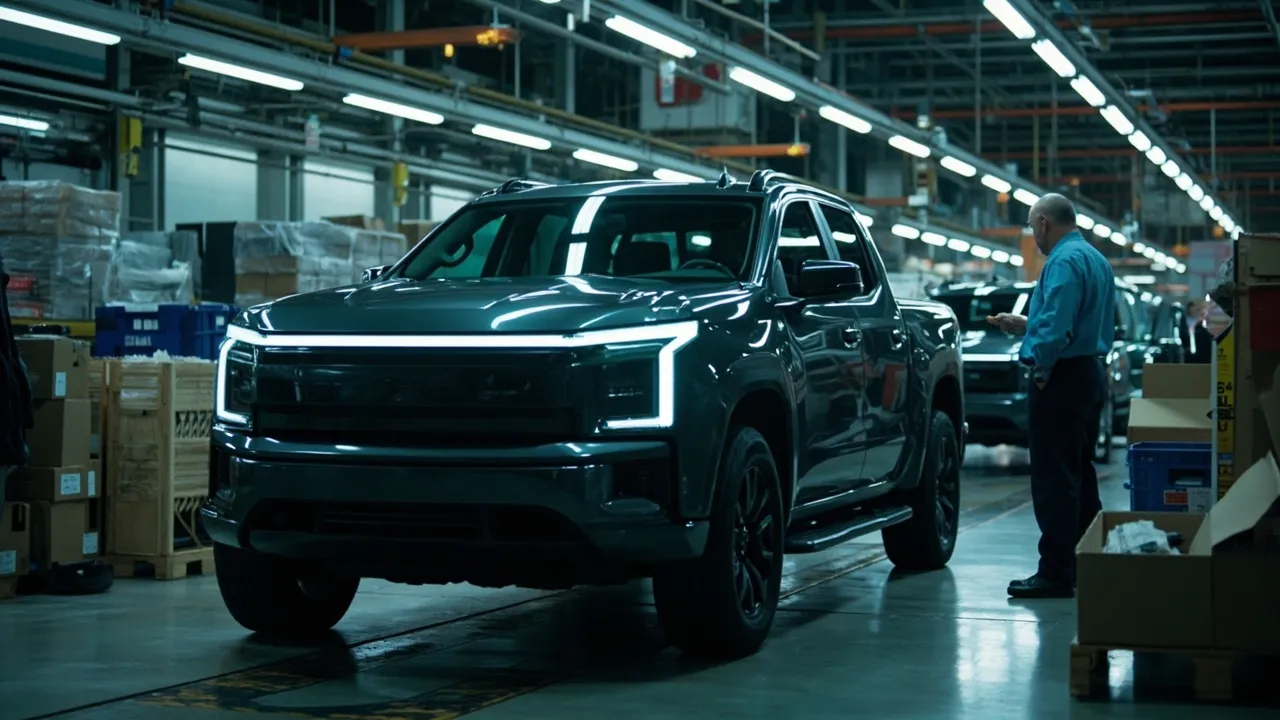
Cybertruck Production Wind-Down: A Supplier Exit Plan for Slow-Moving Programs
Use a controlled supplier exit plan to reconcile orders, tooling, service obligations, and inventory when an automotive program winds down.
CXTMS InsightsNovember 9, 2026 · 6 min read
BMW Now Expects Deliveries to Fall as Much as 9.9%—Reset Inbound Capacity Before Production Does
BMW's weaker 2026 delivery outlook is a signal for automotive logistics teams to reset inbound capacity with volume bands, supplier protections, and controlled triggers.
CXTMS InsightsNovember 4, 2026 · 6 min read
Chinese EVs Gain Ground in South Korea but Stall in Japan: Localize the Market-Entry Logistics Model
Learn why EV manufacturers need separate port, inventory, parts, dealer, charging, and reverse-logistics models for South Korea and Japan.
CXTMS InsightsOctober 30, 2026 · 6 min read
Audi's $4 Billion Georgia Plant Needs an Inbound Supplier Ramp Control Tower
Audi's first U.S. factory will need milestone-based supplier readiness, transport trials, and launch alerts to protect its Georgia production ramp.
CXTMS InsightsOctober 28, 2026 · 6 min read