From Supply Chain Visibility to Autonomy: Define the Decisions Machines May Make

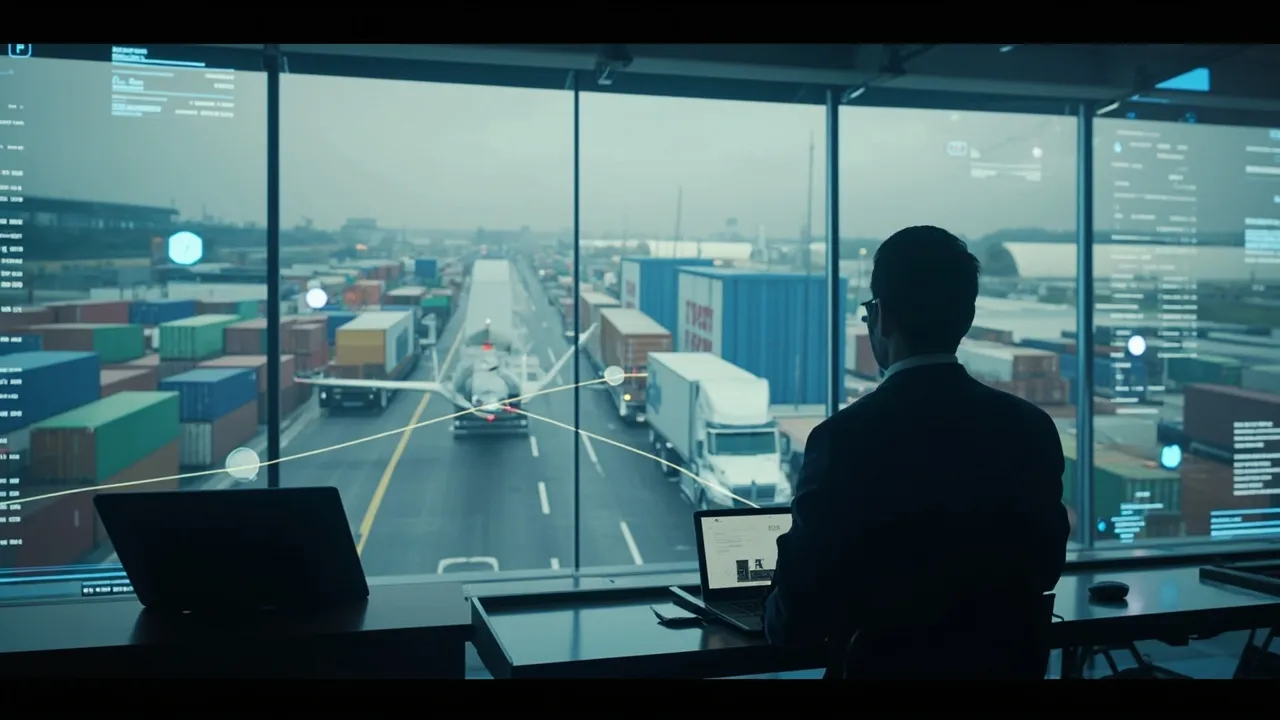
Supply chain technology has spent years getting better at seeing. Platforms now collect shipment milestones, inventory positions, capacity signals, weather events, and estimated arrival times. The next step is not another dashboard. It is allowing systems to decide and act—but only within boundaries the business has consciously approved.
That transition is already underway, although the rhetoric is moving faster than operational readiness. Gartner predicts that 60% of supply chain disruptions will be resolved without human intervention by 2031. Yet Gartner also expects only 5% of organizations to make at least 10% of supply chain planning decisions autonomously by 2030. The apparent contradiction is useful: autonomy will grow, but it will grow workflow by workflow—not through one switch marked “autopilot.”
Use four levels instead of one vague promise
Calling every AI-enabled workflow autonomous hides important differences in authority and risk. A clearer operating model separates four levels:
- Visibility: The system reports what happened or predicts what may happen. A late inbound load appears on a dashboard, but a person decides what to do.
- Recommendation: The system ranks responses and explains the tradeoffs. It may propose a carrier change or inventory transfer, but execution still requires approval.
- Bounded execution: The system acts inside explicit limits. It can retender a rejected load to an approved carrier if the rate remains within tolerance and service requirements remain intact.
- Full autonomy: The system can select and execute a response across a broad decision domain, escalating only novel or high-risk exceptions.
Most companies should concentrate on bounded execution. It captures repetitive speed without pretending that every commercial, regulatory, and customer consequence can be reduced to a model score.
The potential productivity is real. FreightWaves reported that teams using one logistics AI platform doubled files-per-head throughput, while operators could begin the day with 10 to 15 quotes already staged instead of completing four or five emails and multiple lookups for each quote. Staging a decision, however, is different from authorizing a machine to commit capacity or price. That authority must be designed.
Assign rights by decision, not by technology
A governance policy should name the specific decision the machine may make, the data it must possess, and the conditions that return authority to a person.
For load tendering, an automated workflow might choose only contracted carriers with valid insurance, required equipment, acceptable service scores, and rates within a defined band. A carrier outside the routing guide, a spot quote above the cost ceiling, or missing compliance data triggers review.
For rerouting, the system needs more than a faster path. It should consider customer delivery windows, driver hours, border restrictions, cargo characteristics, appointment availability, and the cost of disrupting downstream stops. Hazardous materials, controlled goods, or a change in customs jurisdiction should remain human-approved.
For inventory allocation, autonomy can work for routine transfers below quantity and value limits. Scarce inventory affecting strategic customers, regulated products, or multiple regions needs a named commercial owner.
For expedites, define both a dollar cap and an economic reason. A machine may purchase premium transportation when the documented cost of a stockout exceeds the expedite and its confidence clears the threshold. It should not turn “late” into “buy airfreight” by default.
For customer promises, distinguish a calculated estimate from a contractual commitment. Machines can quote within available capacity and known lead-time ranges. Unusual volumes, penalties, or service exceptions should escalate before a promise is made.
Give every autonomous workflow a safety envelope
Decision rights become executable through a small set of controls.
Confidence thresholds define how certain the system must be. The threshold should rise with the decision's financial, safety, compliance, and customer impact. A routine status message and an international reroute should not share the same standard.
Cost and exposure limits cap the value at risk per action and over time. Include cumulative limits: fifty individually acceptable expedites can still destroy a monthly budget.
Human overrides must be immediate, visible, and attributable. Operators need to stop pending actions, reverse reversible ones, and record why an override occurred. Repeated overrides are evidence that a rule, data feed, or model needs adjustment—not employee resistance to be ignored.
Safe fallback states define what happens when data is stale, integrations fail, or confidence drops. The right fallback may be to preserve the current plan, pause execution, tender through the last approved routing guide, or create a prioritized exception for a person. Silence is not a fallback.
Audit actions and outcomes, not just model output
Autonomous operations require a record that answers five questions: What did the system know? What rule and model version did it use? What action did it take? Who or what had authority? What happened afterward?
Record those details alongside the shipment, order, tender, and cost event in CXTMS. Then evaluate autonomy with operational measures: acceptance rate, service recovery, cost versus approved baseline, override frequency, false escalation rate, and customer impact. A decision that looked rational at execution time may still produce a poor outcome; both facts belong in the audit trail.
SupplyChainBrain's coverage of the shift from visibility to autonomy emphasizes the foundation: standardized events and trusted ETAs enable recommendations and automated responses. Governance completes that foundation by deciding where those responses may go.
The safest route to autonomy is deliberately incremental. Select one high-volume, reversible decision. Document its owner, inputs, boundaries, escalation path, and success measure. Run it in recommendation mode, compare proposed actions with actual outcomes, then permit bounded execution. Expand authority only when the evidence supports it.
Visibility tells a team what is happening. Autonomy changes what happens next. The companies that benefit will not be those granting machines the broadest freedom; they will be those defining decision rights precisely enough for machines and people to act with speed and accountability.
Ready to turn transportation data into controlled, auditable execution? Request a CXTMS demo to see how intelligent workflows can support faster logistics decisions without surrendering operational control.