French Supermarket Freezer Hacks Put Cold-Chain Cybersecurity on the HACCP Checklist

A refrigeration controller is no longer just a maintenance device. Once it accepts remote commands, it becomes part of the food-safety control environment—and a compromised setting can turn a cyber incident into a product-hold event in minutes.
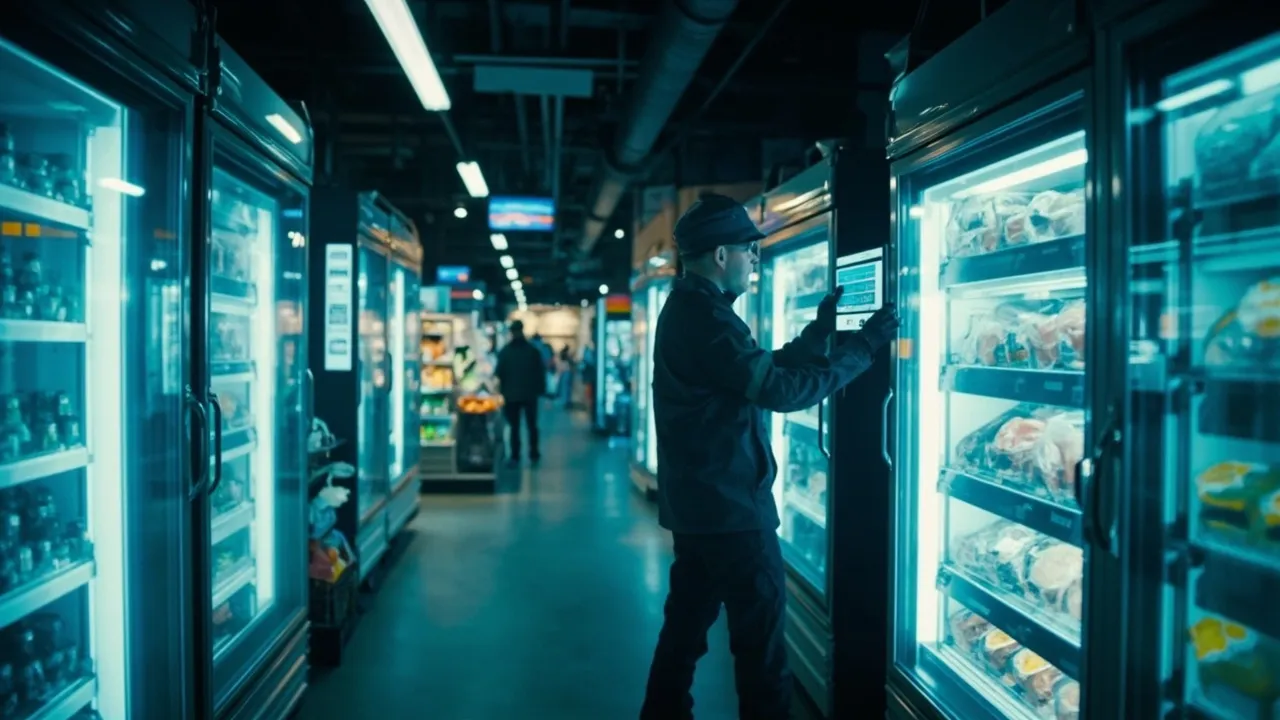
That lesson became painfully concrete in France. SupplyChainBrain reported that attackers remotely overrode temperature controls at as many as 700 stores across multiple grocery chains. Thousands of refrigerators, freezers, and chiller cabinets were affected. Settings reportedly moved from as low as -16.6°F to above 100°F, spoiling food and, in some locations, contributing to fires and sprinkler damage.
The operational question is not merely how security teams remove the attacker. It is how food-safety, store, warehouse, transportation, and quality teams determine which products remain fit for sale. That decision requires evidence stronger than the same controller that may have been manipulated.
Put connected refrigeration inside the HACCP boundary
Hazard Analysis and Critical Control Point programs traditionally focus on biological, chemical, and physical hazards. Connected equipment adds another route to the same unsafe outcome: a malicious or unauthorized command can create a temperature excursion that encourages pathogen growth, damages frozen goods, or invalidates shelf-life assumptions.
The French incident reportedly involved internet-connected controllers used for remote maintenance and failure alerts. The supplier said affected units were running outdated firmware after security flaws had been identified in 2025. That detail makes patch status, network exposure, and controller support life operational food-safety variables—not issues that belong exclusively to IT.
Facilities should add refrigeration-control compromise to their hazard analysis wherever temperature is a preventive control or critical limit. The review should identify every controller model, firmware version, remote-access path, responsible owner, supported-life date, and product zone affected. Unsupported devices need a funded replacement plan and compensating controls, such as network isolation and independent alarms.
Separate commands from trustworthy evidence
Cold-chain teams need four distinct records during an incident:
- Controller commands: Setpoint changes, defrost commands, user identities, remote sessions, and configuration changes show what the equipment was told to do.
- Equipment readings: The controller's probe indicates what it reported, but a compromised device cannot be the sole source of truth.
- Independent temperature evidence: Calibrated data loggers, handheld measurements, case-level probes, and trailer sensors provide a separate basis for disposition.
- Manual observations: Door status, frost condition, product feel, odors, alarms, smoke, water exposure, and employee timestamps fill gaps that systems cannot.
This separation matters because a displayed temperature can be stale, falsified, or measured in air rather than at the product. A normal screen after a reset does not prove that every case remained inside its approved time-temperature envelope.
Digital cold-chain systems still deliver real value. Food Logistics describes how smart controllers can react to warmer areas and how sensor data can feed warehouse and analytics platforms. The lesson is to preserve that visibility while designing an independent verification layer for exceptional events.
Make isolation and product hold automatic
The first response playbook should be brutally clear. A suspected unauthorized refrigeration command should trigger isolation of remote access, preservation of controller and network logs, and a hold on products in affected zones. Employees should not discard or release inventory based on intuition while the evidence is still being assembled.
Each hold needs a defined scope: facility, cabinet or zone, time window, lot, handling unit, and downstream shipment. Quality teams can then compare the known or worst-case temperature curve with product-specific limits and validated exposure guidance. If the start time is uncertain, the review must use a conservative boundary rather than the first alarm time.
Escalation triggers should be predetermined. They may include an untrusted sensor, unknown excursion duration, breached critical limit, fire or sprinkler exposure, inability to identify affected lots, or evidence that product already moved downstream. Those conditions should route the case to food-safety leadership, legal counsel, insurers, regulators, customers, and recall teams according to the organization's approved plan.
Join cyber time with supply-chain time
Cybersecurity tools organize events around IP addresses, accounts, and timestamps. Food operations organize work around lots, locations, orders, and shipments. Defensible disposition requires joining those two timelines.
For every controller or refrigerated zone, operators should be able to identify which lots were present during the suspicious window, when they arrived, where they moved, and which orders or customers received them. The same record should retain independent logger data, manual checks, corrective actions, approvals, and the reason for release, rework, donation, destruction, or recall.
That discipline also supports traceability obligations. A Food Logistics overview of the FSMA Food Traceability Rule emphasizes the operational need for stronger recordkeeping, lot tracking, and data sharing across cold-chain operations. Cyber incident readiness should use those same identifiers rather than create a separate spreadsheet that cannot follow inventory beyond one building.
Test the response before the next alarm
A tabletop exercise should begin with a believable signal: several cabinets enter defrost mode overnight, remote credentials appear in the logs, and independent sensors disagree with controller displays. Then measure how long it takes to isolate access, place inventory on hold, find affected lots, retrieve downstream shipment records, and authorize a disposition.
The useful metrics are operational: percentage of refrigeration assets on supported firmware, percentage covered by independent sensors, time from anomalous command to product hold, lot-trace completeness, and time to customer-ready evidence. A security alert that closes quickly while questionable food remains available is not a successful response.
Cold-chain cyber resilience ultimately depends on connecting equipment, inventory, and shipment records. CXTMS helps logistics teams preserve that chain of custody across locations and movements, giving decision-makers the shipment-level context they need when a temperature event occurs. Request a CXTMS demo to see how unified logistics records can strengthen exception response and traceability.