Suntory's High-Spirits Logistics: Designing Beverage Networks for Reconfiguration

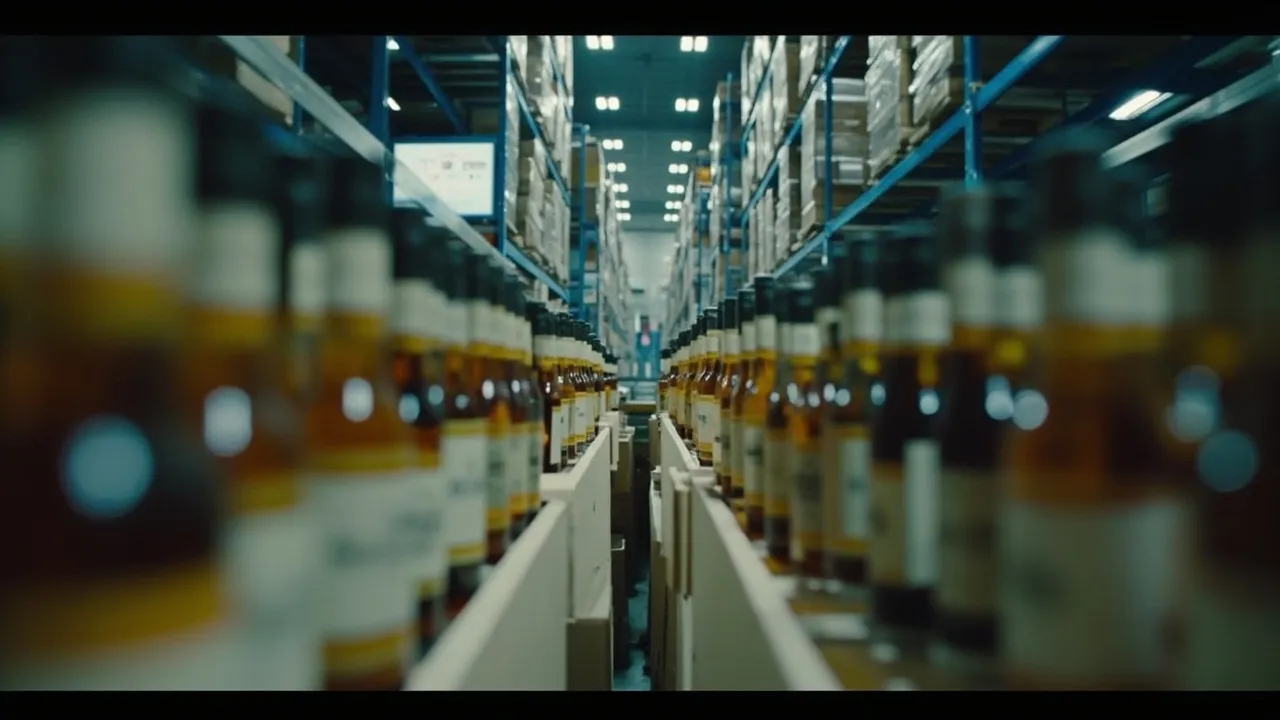
The beverage supply chain was once designed as a sequence: source ingredients, produce and mature the liquid, bottle it, move it through a national distribution network, and replenish customers. That linear model is increasingly brittle. Geopolitical friction, tariff changes, port disruption, glass shortages, and shifting consumer demand can now affect several links at once.
Suntory Global Spirits' North American transportation perspective offers a useful way to think about the response. In a recent SupplyChainBrain discussion, the operating environment is described as a “Great Reconfiguration” in which traditional linear supply chains become a structural liability. The practical implication is bigger than adding safety stock: beverage companies need networks that can change routing, inventory allocation, and finishing decisions without losing compliance or control.
Why spirits logistics is unusually constrained
Spirits are not simply another packaged consumer product. A case can carry regulatory, financial, packaging, and service constraints simultaneously.
First, tax status matters. Product moving under bond cannot be treated like ordinary finished inventory. Its location, ownership, documentation, and permitted next destination must remain visible. An alternate warehouse is useful only if it is authorized to receive and handle the stock.
Second, aging creates a fixed biological clock. Whiskey that needs years in a barrel cannot be expedited to cover a forecast miss. At the same time, mature liquid is valuable inventory, so a poorly timed bottling or allocation decision can lock working capital into the wrong package or market.
Third, packaging components have different risk profiles. Glass, closures, labels, cartons, and promotional packs may come from different suppliers and countries. The liquid can be available while one market-specific label or bottle format prevents shipment. Seasonal promotions make that mismatch more costly because their delivery windows are short.
Finally, alcohol distribution rules vary by jurisdiction. Customer allocation cannot be separated from licensed channels, excise requirements, and chain-of-custody records. A route that looks faster in a transportation model may be unusable in practice.
These constraints explain why generic “more inventory” advice is inadequate. Inbound Logistics notes that supply chains have faced successive tariff rounds, COVID-era disruption, conflicts, and renewed trade-policy volatility over the past five or six years. For beverage operators, each disruption interacts with inventory that may be bonded, aged, market-specific, or promotion-bound.
Build optionality before the disruption
Reconfiguration begins with postponement. Keep liquid or semi-finished product in the least market-specific state that remains operationally and legally practical. Final labels, cartons, gift packs, or even bottling formats can be assigned later when demand and lane conditions are clearer.
That does not mean delaying every decision. It means identifying the point where product becomes committed to a country, customer, or promotion, then testing whether that commitment can safely move downstream. The value of postponement should be measured against extra handling, changeover time, component storage, quality requirements, and tax implications.
Alternate routing also needs to be designed in advance. For every critical lane, teams should maintain at least one qualified combination of port, carrier, warehouse, and customs or bonded-handling process. A backup port without onward capacity is not a real alternative. Neither is an overflow warehouse that cannot preserve the product's tax status.
CXTMS recommends recording each alternate as an executable route, with rates, lead times, capacity assumptions, handling qualifications, and required documents attached. When disruption arrives, planners can compare feasible options rather than rebuild the network from emails and spreadsheets.
A lane-and-inventory stress test
A practical stress test can expose false flexibility before it is needed. Start with the top lanes by revenue, margin, or irreplaceable inventory, then apply four scenarios:
- Primary gateway unavailable for 14 days. Identify which shipments can divert, the added transit time and cost, and whether the alternate node can handle bonded freight.
- Glass or closure supply delayed for 30 days. Calculate how much mature liquid remains unbottled, which SKUs can use a qualified substitute, and where packaging postponement preserves allocation choices.
- Promotional demand shifts by 20%. Test whether inventory can move between customers or regions without relabeling, tax, or channel-compliance problems.
- A tariff or excise change takes effect in 45 days. Compare accelerating inbound movements with holding under bond, including capacity, cash-flow, and documentation effects.
For each scenario, score time to respond, percentage of volume recoverable, incremental landed cost, compliance readiness, and customer impact. The exercise should use lot-level inventory and live lane data. Aggregate inventory can hide the fact that the available stock has the wrong label, package, tax status, or destination eligibility.
Turn the network into a decision system
The management goal is not constant rerouting. It is controlled choice. Transportation, inventory, orders, component availability, and compliance attributes should meet in one operational view. Planners then need exception triggers that show when the primary plan is no longer the best feasible plan.
Useful triggers include a missed vessel cutoff, port dwell above tolerance, component coverage below the production horizon, promotion inventory falling behind allocation, or bonded-warehouse capacity approaching its limit. Each trigger should connect to a predefined playbook and an accountable owner.
The strongest beverage networks will not attempt to predict every disruption. They will preserve enough options to respond while keeping cost and compliance visible. For spirits producers, resilience is the ability to decide later, route differently, and allocate scarce product deliberately—without losing track of the liquid, the tax status, or the customer promise.
Ready to make your beverage network more adaptable? Request a CXTMS demo to see how unified transportation and inventory visibility supports faster, controlled logistics decisions.