Stryten's C&D Trojan Acquisition: Protecting Industrial Battery Continuity Across Warehouse Fleets

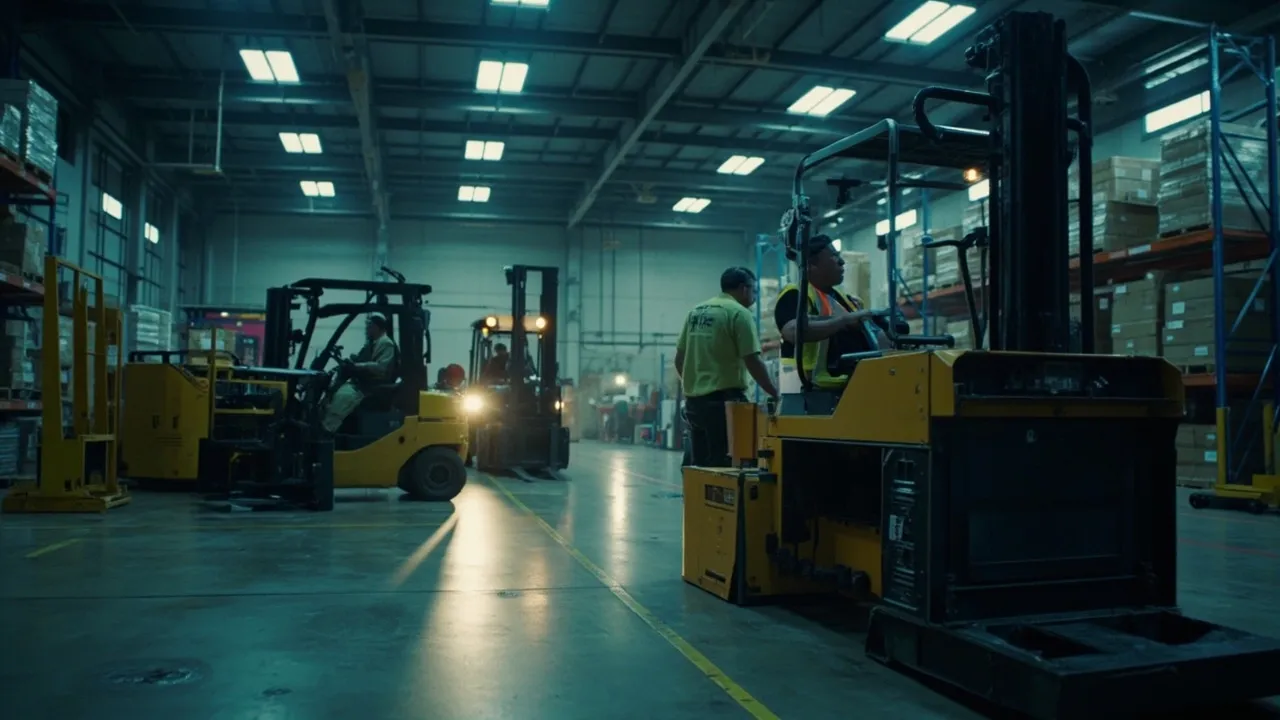
Stryten Energy has signed a definitive agreement to acquire C&D Technologies and Trojan Battery Company, creating a broader industrial battery platform serving material handling, rail, heavy-duty, and mission-critical power applications. For warehouse operators, the transaction is not merely supplier news. It is a reason to verify exactly which batteries keep each lift truck moving, which chargers support them, and how replacement and service obligations will transfer.
Modern Materials Handling reports that the transaction is intended to create a scaled global manufacturing platform with a broader portfolio of stored-energy technologies. Trojan already has a substantial footprint: MMH notes that it operates manufacturing facilities in the United States, Mexico, and China, supported by authorized dealers and master distributors. That reach can strengthen supply continuity, but integration can also change part numbers, ordering channels, warranty procedures, and service contacts before the physical equipment on a warehouse floor changes at all.
The sensible response is not to stockpile batteries blindly. It is to build an installed-base register, validate every battery-truck-charger combination, and set measurable supplier-integration checkpoints.
Treat motive power as production infrastructure
A battery is easy to classify as a consumable until an unavailable replacement sidelines a lift truck during peak volume. In a multi-shift distribution center, motive power determines whether receiving, replenishment, picking, and shipping can sustain their planned rates. The risk extends beyond forklifts to pallet trucks, order pickers, cleaning equipment, rail assets, and backup-power systems.
Battery economics also justify closer control. In its maintenance coverage, MMH places batteries and chargers among the top five areas of lifetime spending for an electric forklift. A supplier transition can therefore affect a meaningful cost category even when unit prices remain stable. New freight terms, minimum orders, technician coverage, core-return rules, or warranty exclusions can change total cost of ownership.
Operations should map the consequence of losing each battery family. A common battery with multiple approved substitutes presents less risk than a proprietary configuration supporting a high-utilization reach truck. The latter deserves a confirmed replacement lead time, an approved spare, and an escalation contact before integration changes begin.
Build an installed-base register before records fragment
Start with a physical inventory rather than purchase history alone. Purchase records show what was ordered; they do not always show swaps between sites, rebuilt units, dealer substitutions, or batteries retired without an asset update.
For every battery, record:
- Manufacturer, brand, model, serial number, chemistry, voltage, amp-hour rating, connector, dimensions, weight, and date placed in service.
- Assigned equipment, equipment class, site, shift pattern, duty cycle, average run time, charging method, and criticality.
- Approved charger, charger firmware or profile, cable and connector configuration, and battery-management interface.
- Warranty start and end dates, service provider, inspection interval, safety documentation, and open claims.
- Replacement part number, approved alternatives, current supplier, minimum order, lead time, and on-site spare status.
Connect the register to maintenance and utilization events. A battery that repeatedly overheats, underperforms, or misses equalization should not carry the same continuity rating as a healthy unit of the same model. Runtime, charge duration, temperature alerts, water consumption for flooded lead-acid units, and unscheduled swaps reveal which assets are likely to create demand first.
Validate the complete truck-battery-charger system
Matching voltage is not enough. MMH's coverage of warehouse electrification warns that converting an in-service truck from lead-acid to lithium-ion is not always a direct swap: compartment dimensions, charger compatibility, and ballast must be considered, especially when battery weight contributes to a counterbalanced truck's stability.
Require written approval for every proposed substitute. The validation should cover voltage and capacity, physical fit, minimum battery weight, connector type and polarity, charging profile, communications protocol, thermal limits, and applicable truck-manufacturer requirements. Also verify whether a substitute preserves the truck, battery, and charger warranties.
Safety documentation deserves its own checkpoint. MHI identifies UL 2580 as the standard used by forklift manufacturers for lithium batteries and notes that warehouse battery chargers are commonly expected to be certified to the applicable UL standard. Procurement should collect current certifications, safety data sheets, emergency procedures, and charging-room requirements before approving a new configuration.
Put supplier integration on an operational scorecard
Acquisition integration should be managed with dates and evidence, not general assurances. Ask the supplier to confirm which brands, factories, distributors, and service networks will remain active. Obtain a cross-reference table for any changing SKUs and require effective dates for new labels, packaging, portals, return addresses, and warranty processes.
A practical scorecard should track:
- Fill rate and quoted versus actual lead time by battery family.
- Availability of critical spares and validated substitute models.
- Response and resolution time for service calls and warranty claims.
- Completion of technician training and updated safety documents at every site.
- Charger-profile validation and first-article acceptance for changed configurations.
- Landed cost per operating hour, including freight, maintenance, energy, rentals, and downtime.
Set triggers in advance. If lead time exceeds the replacement horizon for a critical battery, increase the approved spare level or qualify a second source. If warranty turnaround breaches the agreed threshold, use a loaner or rental clause. If a new SKU lacks compatibility evidence, quarantine it from operational use rather than testing it during a live shift.
Use the transition to improve fleet decisions
Clean installed-base data does more than protect continuity. It exposes oversized battery pools, underused chargers, inconsistent maintenance, and equipment whose energy system no longer fits its duty cycle. MMH's 2026 motive-power reporting describes connected systems in which trucks, batteries, and chargers feed a telematics dashboard, reducing the complexity of gathering productivity data. Even without a fully integrated platform, consistent asset and event records make replacement planning more defensible.
CXTMS can connect supplier orders, inbound milestones, site inventory, documents, and exceptions so logistics teams see whether a critical battery or charger will arrive before operational coverage runs out. The Stryten-C&D Trojan transaction is an opportunity to replace scattered spreadsheets with a controlled continuity process.
Request a CXTMS demo to see how supplier milestones and exception workflows can protect critical warehouse assets through a changing industrial battery market.