Scan, Label, Apply, Manifest: Treat the SLAM Station as a Shipping Data Control Point

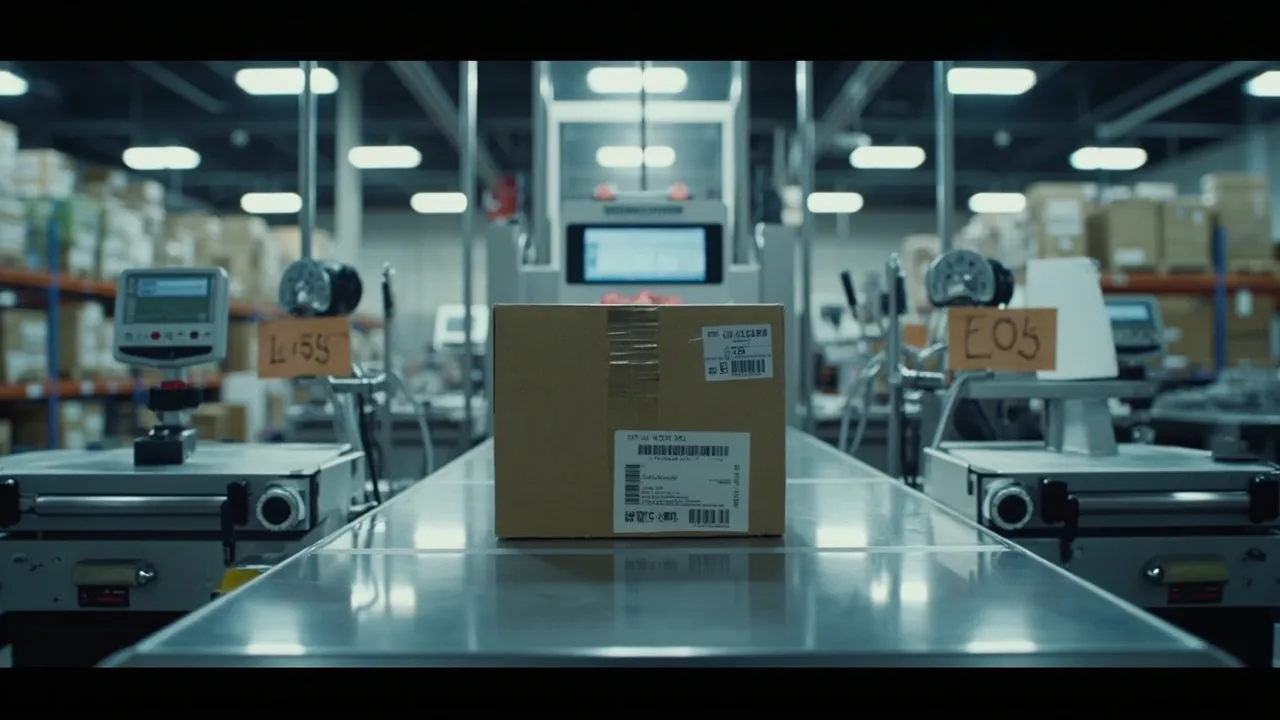
The last few feet of a parcel line decide much more than how quickly a carton reaches the outbound dock. At the scan, label, apply, and manifest—or SLAM—station, a warehouse converts a packed box into a carrier-ready shipment. That conversion binds the order, package, service, chargeable weight, tracking number, and manifest response to one physical object.
When that binding is reliable, downstream systems can trust the package identity. When it is not, the same carton can acquire a duplicate label, the wrong service, an incorrect freight charge, or no valid carrier record at all. The SLAM station should therefore be managed as a shipping data control point, not merely as conveyor equipment.
One Carton Needs One Authoritative Identity
The control sequence begins when the station reads the package license plate or order identifier. That scan should retrieve the expected order, items, carton type, destination, and shipping instructions. The station then captures actual weight and dimensions, selects or confirms the carrier service, prints and applies the label, verifies that the new barcode is readable, and records the carrier's manifest acceptance.
Each observation belongs to the same immutable package ID. Do not let separate device records become competing versions of the shipment. A scale reading without the package ID is only a number. A tracking number without the measured carton is difficult to defend when a carrier issues an adjustment. A printed label without an acceptance response is not proof that the carrier recognized the shipment.
MHI describes SLAM technologies as supporting automatic identification, labeling, data capture, and the final fulfillment steps. That framing is useful because it makes data capture part of the operating process rather than an afterthought. MHI also warns in its guidance on SLAM and returns that databases should not reuse license-plate or order numbers—the barcodes that track boxes and mailers on the conveyor. Unique identity is the foundation of every later control.
Weight and Dimensions Are Financial Evidence
The SLAM station should retain both the expected and observed package characteristics. A mismatch can expose a picking error, missing dunnage, an unsuitable carton, or inaccurate master data before the parcel leaves the building.
It also affects cost. Carriers may rate a parcel using dimensional rather than scale weight. Inbound Logistics reports that dimensioning, weighing, and barcode scanning can verify invoice accuracy. The same source notes that combining a dimensioner, scale, barcode reader, camera, and suitable software places the critical information about a shipment in one record.
That record should include the device readings, units of measure, timestamp, calibration or device identifier, carton image where available, and the dimensions and weight submitted to the carrier. If the carrier later rebills the parcel, transportation teams can compare the carrier measurement with evidence captured at release instead of searching through warehouse logs.
Treat Label Verification as a Gate
Printing a label is not success. The applied label must match the intended package, and its barcode must be readable after application. A verification scanner placed downstream from the applicator should confirm the tracking number and symbology against the package record. If verification fails, the parcel should divert to an exception lane rather than continue toward loading.
Define explicit responses for common failures:
- Duplicate label: quarantine both the new package and any earlier package associated with the tracking number; void and reissue only after identity is reconciled.
- Unreadable barcode: capture the failed image, reprint under controlled authorization, and verify the replacement before release.
- Carrier rejection: retain the request and response code, prevent loading, and route the package for address, service, account, or hazardous-material review.
- Weight or dimension variance: compare against tolerances and require repack, recount, or approval when the difference is material.
- Late manifest close: identify packages physically staged but not accepted, then prevent a false shipped status from reaching the customer.
The value of automatic identification is visible at network scale. FreightWaves reported in 2026 that UPS had installed RFID sensing in all U.S. package vehicles and delivery stations, with labels produced through more than 5,500 UPS Store locations. Executives estimated that the technology could eliminate 20 million manual scans per day, while misloads had fallen by nearly 70% since adoption began. Those figures concern a carrier network, but the lesson applies inside the warehouse: reliable machine-readable identity reduces manual touches and catches routing errors sooner.
Do Not Confuse Manifest Creation With Acceptance
A warehouse system may build a manifest file and still fail to transmit it, receive a rejection, or close it after the carrier cutoff. The package should not become “shipped” simply because a label exists.
Use distinct events for label generated, label applied, barcode verified, manifest submitted, carrier accepted, physically loaded, and carrier inducted. Store the carrier confirmation or rejection code with its timestamp. If a response is delayed, keep the shipment in a pending state visible to operations. This state model exposes the dangerous gap between warehouse completion and carrier recognition.
Cutoff controls also need operational ownership. The system should warn supervisors as unmanifested packages approach the close, report which parcels remain in exception lanes, and prevent an operator from closing a trailer while package records are unresolved. Overrides should require a reason and named approver.
Send SLAM Events Into the TMS
The transportation management system needs more than the final tracking number. Send it the package ID, order and shipment references, selected service, rated cost, actual weight and dimensions, tracking number, label-verification outcome, manifest response, exception codes, timestamps, and operator or automation source.
This event stream serves two practical workflows. First, freight audit can compare the carrier invoice with the characteristics and service authorized at shipment. Second, customer service can reconstruct a delivery investigation: which label was applied, whether it passed verification, when the carrier accepted it, and whether a later relabel or exception occurred.
Measure the control point with first-pass read rate, label reprint rate, carrier rejection rate, dimension variance, packages pending at cutoff, and the time from first exception to resolution. Throughput still matters, but a fast station that creates ambiguous shipment records merely moves errors faster.
The best SLAM operation releases a parcel and a trustworthy data package at the same moment. Connect every measurement, decision, barcode, and carrier response to one package identity, and the final warehouse checkpoint becomes a source of billing accuracy, service accountability, and faster exception resolution.
Ready to connect warehouse release data with transportation execution? Request a CXTMS demo to see how package events, carrier responses, costs, and delivery investigations can live in one accountable workflow.