Ross Plans a 1.75M-Square-Foot Distribution Center: Phase the Volume Before the Building

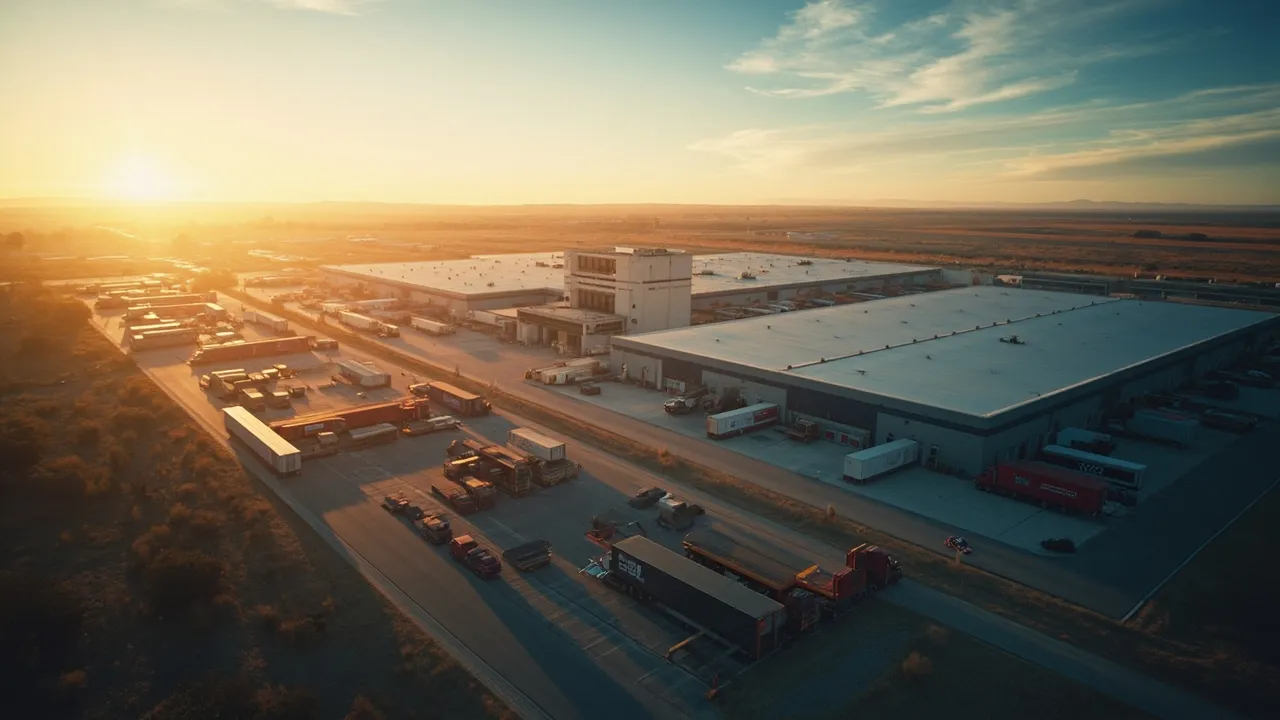
Ross Stores' planned Bakersfield, California, distribution center is enormous by almost any measure. But 1.75 million square feet of completed building does not automatically equal 1.75 million square feet of productive capacity.
The operational risk lies in the handoffs: suppliers must change ship-to instructions, inventory must move without starving stores, associates must learn new processes, carriers must absorb new lanes, and the yard must handle real arrival patterns. Bringing all of that online at once turns a construction milestone into a network-wide stress test.
A safer launch phases volume through measurable gates. Each wave should prove that people, inventory, systems, transportation, and yard operations can perform together before the next wave begins.
Put 1.75 million square feet in network context
Supply Chain Dive reports that Ross plans to invest $500 million in the Bakersfield processing and distribution center. The multiyear project is expected to break ground in 2027, create nearly 1,000 jobs, and become the retailer's 10th distribution center.
The site will join three other Ross distribution facilities in California, plus locations in Arizona, Texas, Pennsylvania, and South Carolina. It also supports a growing store base: Ross announced plans to open 47 stores this year, while second-quarter comparable sales increased 10% year over year and total sales rose 13%.
Those numbers make the new capacity strategically understandable. They do not determine how the capacity should be activated. The building's role must be defined lane by lane: which suppliers will ship there, which inventory categories it will process, which stores and regions it will replenish, and which existing facilities will surrender volume.
Before launch, establish a network baseline for inbound purchase orders, weekly units, pallets, cartons, store orders, trailer arrivals, dwell time, outbound miles, service performance, and peak-week demand. That baseline gives planners a way to distinguish a successful transfer from volume that merely moved locations.
Build launch waves around operational risk
The first wave should not be a random slice of freight. Start with stable suppliers, predictable products, manageable order profiles, and nearby outbound destinations. Avoid combining a new facility, a new supplier process, unusually seasonal merchandise, and distant stores in the same first test.
A four-wave sequence could look like this:
- Controlled pilot: A small group of reliable suppliers and low-complexity categories serves a limited set of nearby stores. The objective is to validate appointments, receiving, putaway, allocation, picking, loading, and delivery confirmation.
- Category expansion: Add products with different handling and storage characteristics. Confirm slotting rules, inventory accuracy, replenishment, exception handling, and productivity by work area.
- Regional expansion: Increase outbound geography and carrier demand. Test longer routes, multi-stop schedules, store receiving windows, trailer pools, and backhaul opportunities.
- Peak simulation and full transfer: Run forecast peak volumes before exposing the operation to a real seasonal surge. Transfer the remaining volume only after the earlier waves meet their gates consistently.
Wave size should be expressed in operational units—not just a percentage of forecast volume. Specify daily inbound trailers, cartons received, active stock-keeping units, orders, outbound trailers, and doors required by shift. A 10% volume increase can create a much larger workload if it adds fragmented orders or difficult product profiles.
Ramp labor with the work, not the floor area
Nearly 1,000 planned jobs will not become a productive workforce on opening day. Hiring, training, coaching, and retention need their own ramp curve. Staffing plans should connect each launch wave to certified headcount by role, expected learning-curve productivity, supervisor coverage, equipment availability, and overtime limits.
Measure the operation by process and shift. Inbound Logistics recommends monitoring indicators such as cycle time, employee turnover, on-time inbound delivery, inventory accuracy, on-time shipping, direct versus indirect labor hours, labor cost per unit, safety, and overtime. The same source describes how one logistics operator reduced an unwieldy scorecard from 44 measures to 28, a useful reminder that launch teams need a focused set of actionable signals.
For each wave, define the minimum number of trained receivers, equipment operators, inventory-control specialists, pickers, loaders, yard coordinators, maintenance technicians, and supervisors. Count demonstrated proficiency, not people who merely attended training.
Test transportation and yard flow before full volume
A large building can still be constrained by a gate, a shift-change queue, insufficient trailer parking, or poorly synchronized appointments. Model inbound and outbound flows in 15- or 30-minute intervals. Daily averages conceal the congestion that occurs when suppliers, linehaul carriers, and store routes converge.
Run live yard tests before expanding a wave. Include gate check-in, security, appointment validation, door assignment, drop-trailer moves, live unloading, empty-trailer control, staging, outbound dispatch, and exception recovery. Measure gate-to-door time, unload time, door utilization, yard dwell, appointment compliance, detention, and missed cutoffs.
Transportation planners should tender representative loads early enough to expose capacity gaps. Confirm carrier acceptance by lane and day of week, not only through broad commitments. Compare planned versus actual transit time and monitor whether the new network design creates excessive empty miles, driver waiting, or store delivery bunching.
Make readiness milestone-based
Construction completion answers whether the building is available. Go-live readiness answers whether the operation can serve the network reliably.
Create an approval gate for every wave with named owners from distribution, transportation, merchandising, inventory, IT, safety, human resources, and store operations. Require several consecutive operating days at target rather than a single successful shift. Core gates should include:
- inventory and location accuracy at the agreed threshold;
- stable receiving, picking, and loading productivity;
- on-time inbound and outbound performance;
- acceptable yard dwell, detention, and door utilization;
- trained labor and supervisor coverage for the next wave;
- successful interface, label, scan, allocation, and financial tests;
- documented contingency capacity at another facility or carrier.
If a gate fails, hold the next wave and resolve the cause. That is disciplined network control, not a delayed launch. The cost of pausing a transfer is usually smaller than the cost of misplaced inventory, missed store deliveries, emergency transportation, and customer-facing stockouts.
Turn a major investment into dependable capacity
Ross's Bakersfield project can add significant western distribution capability, but its value will be realized through sequencing rather than square footage. A controlled ramp lets the team learn with bounded risk, protects the existing network, and connects every volume increase to evidence that the operation is ready.
CXTMS gives transportation teams the shipment visibility, carrier performance data, appointment context, and exception controls needed to manage a phased distribution-center launch. Request a CXTMS demo to see how one platform can coordinate the transportation side of your next network expansion.