Rocky Mountain Chocolate's $6.6M Warehouse Deal Turns Logistics Real Estate Into Working Capital

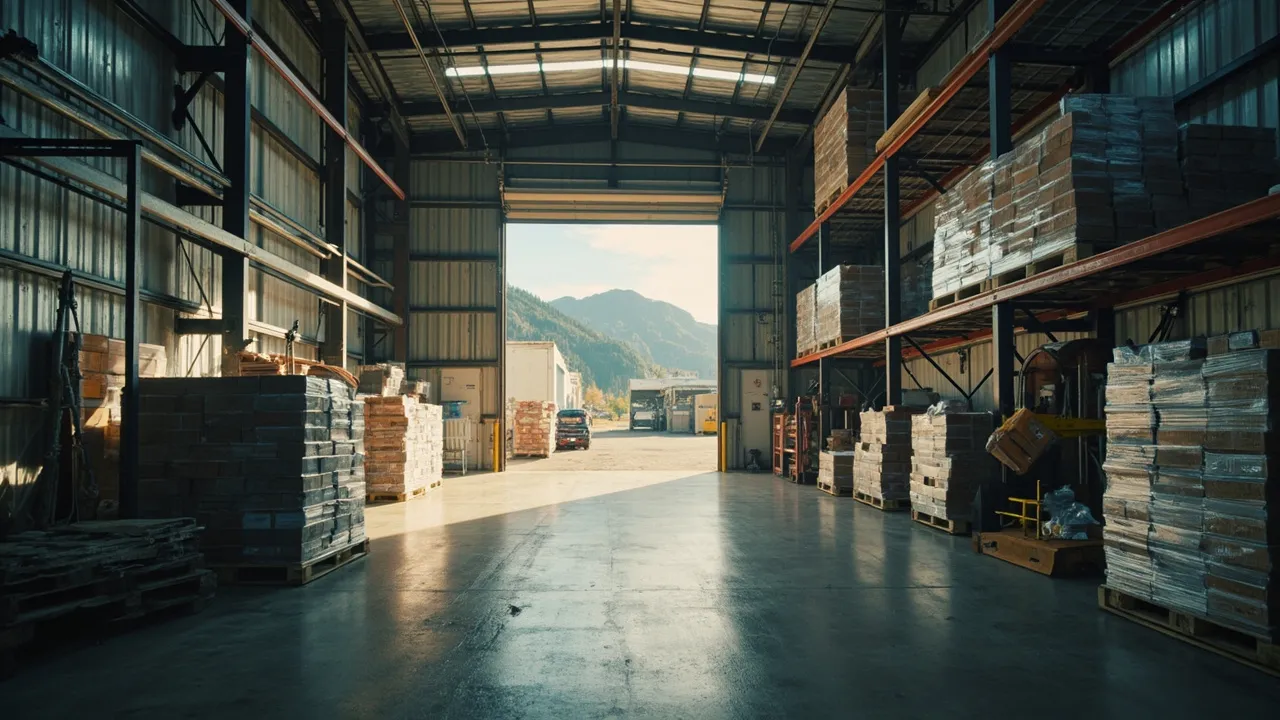
A warehouse can be essential to the network and still be an inefficient place to store capital. Rocky Mountain Chocolate Factory has put that tension into sharp relief by selling its Durango, Colorado, production and warehouse property for $6.6 million, then leasing the same facility back. The transaction converts an illiquid asset into cash without forcing an immediate relocation of production, distribution, or corporate functions.
For logistics leaders, the deal is more than a real estate footnote. A sale-leaseback changes the cost structure of the facility, creates a long-term contractual dependency, and affects decisions about automation, capacity, food safety, and network design. The right evaluation therefore belongs in the same operating model as freight, inventory, labor, and service—not in a disconnected property spreadsheet.
Liquidity now, occupancy costs later
Supply Chain Dive reports that Rocky Mountain Chocolate Factory will use the proceeds to repay $6.6 million in outstanding promissory notes. The company secured an initial 10-year lease, with an option for another 10 years. First-year rent is $624,000, escalating 2% annually.
Those figures make the basic trade visible. The first year's contractual rent equals about 9.45% of the sale proceeds. With annual escalation, base rent reaches roughly $746,000 in year 10. Across the initial term, nominal base rent totals approximately $6.83 million. That is not a verdict on the deal: paying down debt can reduce interest expense and financial risk, while the property buyer assumes ownership capital. But it shows why the proceeds cannot be evaluated separately from the lease obligation they create.
Sale-leasebacks are already a meaningful logistics financing channel. Supply Chain Dive cites industry data showing approximately $3.5 billion in warehouse and logistics sale-leaseback volume across nearly 300 properties from the beginning of 2025 through the first quarter of 2026. Operators are using owned facilities to fund debt reduction, growth, automation, and other supply chain investments while retaining day-to-day occupancy.
Build a full facility-cost model
The headline comparison—sale proceeds versus annual rent—is only the first pass. A useful model should cover at least the initial lease term and include:
- Base rent and the exact escalation schedule
- Property taxes, insurance, and common-area charges assigned to the tenant
- Roof, structure, refrigeration, utilities, and equipment maintenance responsibilities
- Required capital improvements and landlord approval costs
- Debt retired, interest avoided, fees, taxes, and transaction expenses
- Moving, duplicate-operation, and service-disruption costs if the lease is not renewed
- The operational return expected from reinvesting the released capital
The last item is decisive. Unlocking $6.6 million merely to absorb recurring operating losses is different from deploying it into capacity, automation, demand planning, or higher-return growth. Rocky Mountain Chocolate Factory reported a $1.2 million net loss for the quarter ended May 31, according to Supply Chain Dive. That context raises the standard for tracking what the transaction improves and whether the benefit persists.
Past operational changes offer a useful benchmark. In 2023, the company said improved demand planning helped eliminate two third-party warehouses and reduce inventory 46% year over year. That is the type of measurable operating outcome—lower inventory, fewer facilities, faster turns, or better freshness—that should be connected to any capital released from logistics real estate.
Protect the operation inside the lease
The Durango property is not just storage space. It combines production, warehousing, and headquarters functions. Replacing that footprint could involve food-grade requirements, specialized utilities, temperature controls, labor availability, outbound carrier access, permitting, and a complex cutover. A lease for a mission-critical facility must protect those operating realities.
Capacity rights should address seasonal peaks, yard and dock access, trailers, employee parking, and any adjacent space that may be needed. Food operations need explicit responsibility for sanitation-critical repairs, pest control, water, drainage, refrigeration, emergency power, and access during incidents. The agreement should also define who can approve and who ultimately owns automation, racking, conveyors, security equipment, and building-system upgrades.
Renewal language deserves stress testing. An option is valuable only if its notice period, pricing method, condition requirements, and default provisions are workable. Operators should model a downside case in which renewal is unavailable or uneconomic. That scenario needs a timeline for site selection, permits, equipment transfer, inventory build, dual operations, customer qualification, and transportation-network redesign.
Keep property finance tied to shipment economics
A facility should have a cost record that operations and finance can both use. In CXTMS, that record can allocate rent, utilities, maintenance, labor, and handling costs to orders, lanes, customers, or products using transparent drivers such as pallets, cases, dock touches, storage days, or occupied space.
The resulting scorecard should answer practical questions:
- What is the facility cost per order, case, pallet, and shipped pound?
- How do seasonal peaks change space utilization and overtime?
- Which customers or product families consume disproportionate storage and handling capacity?
- Are inventory turns and outbound service improving after capital is redeployed?
- When rent escalates, do network savings or productivity gains keep pace?
These measures prevent a financial transaction from disappearing into general overhead. They also expose false savings. Outsourcing a process may reduce labor inside the facility while adding freight miles, minimum charges, damage, or lead time elsewhere. Conversely, faster throughput can reduce both working inventory and required space. Inbound Logistics notes that moving goods through a facility faster can lower labor and real estate costs at the same time.
Treat real estate as part of network design
The lesson from the Rocky Mountain Chocolate transaction is not that every operator should sell its warehouse. It is that owned real estate should compete for capital like every other supply chain asset. A sale-leaseback can strengthen liquidity and preserve continuity, but only when the lease protects the operation and the new occupancy cost is measured against the value created by the released cash.
CXTMS helps logistics teams connect facility costs, inventory activity, orders, and transportation performance in one operational record. Request a CXTMS demo to see how property decisions can be translated into shipment-level economics and accountable network performance.