Rhine Water Levels Hit a Record Low: Recalculate Barge Payload Before Booking

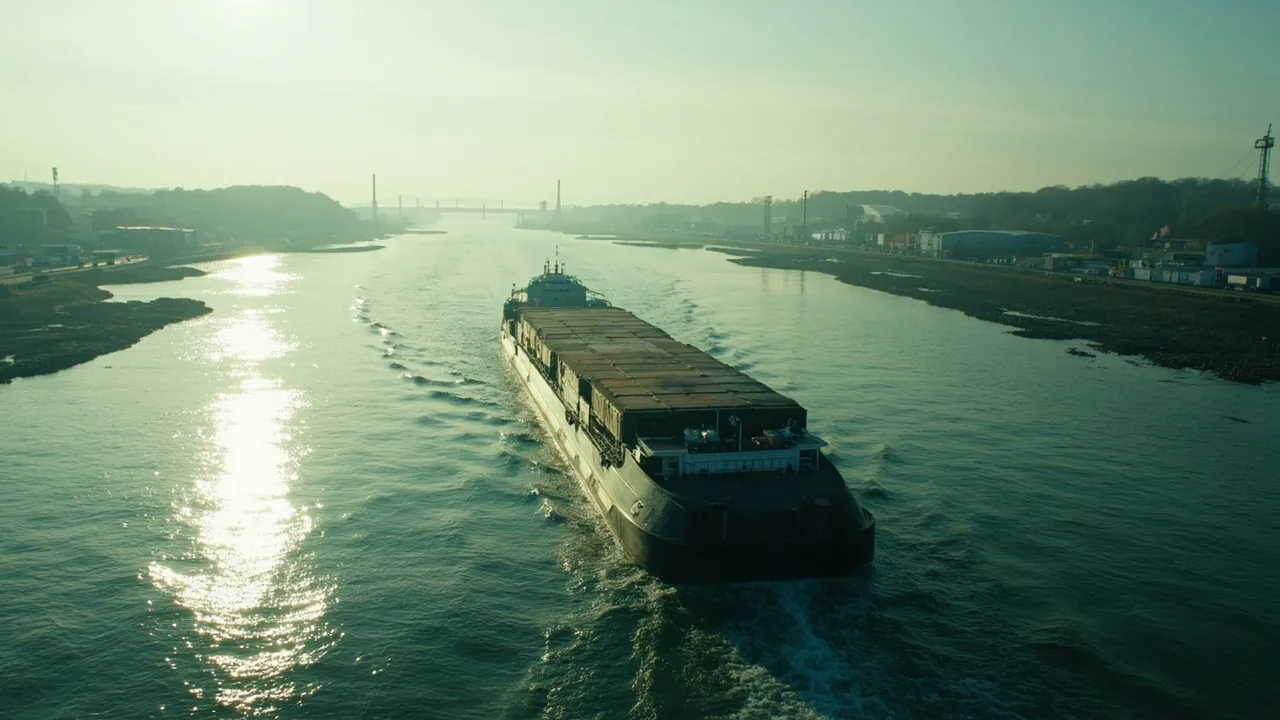
The Rhine does not need to close before a shipper has a capacity problem. Falling water reduces the draft available to a vessel, which forces operators to load fewer tonnes per sailing. The barge still moves, but the same purchase order may require more sailings, a different vessel, or a transfer to rail or truck. That hidden capacity loss should be calculated before freight is booked.
This is now an urgent planning issue. The Kaub gauge, a key reference point on the route to Germany and Switzerland, fell to 4 centimeters on September 24—the lowest reading in records dating to 1880, according to SupplyChainBrain. A gauge reading is not the physical depth of the channel. It is an operational reference that vessel owners use with vessel dimensions, route conditions, and required under-keel clearance to determine safe loading.
Low water removes payload before it removes sailings
At Kaub, the Rhine spent 74 days below 78 centimeters, a level at which barge shippers must reduce loads by 30%, analysis cited by SupplyChainBrain found. That is far longer than the 41-day stretch recorded during the 2022 energy crisis. The commercial impact was already visible: the cost of moving diesel from Rotterdam to Karlsruhe rose 15% on September 21 after more than doubling during the month.
The wider network has little spare capacity. SupplyChainBrain reports that European inland waterways carry roughly 473 million tonnes of goods each year and the Rhine handles about 70% of that freight. During the drought, vessels were reportedly taking less than one-quarter of their normal cargo. Replacing one barge can require 100 to 200 trucks—capacity that cannot be summoned instantly.
For shippers, “the river is open” is therefore the wrong booking test. The right questions are how much the assigned vessel can safely carry across the complete route, how confidently it can sail, and what the reduced payload does to delivered cost and inventory timing.
Turn each gauge reading into a lane-specific plan
A water-level feed should not create a generic red, amber, or green alert. It should recalculate a shipment plan. Start with the controlling gauge for each origin-destination pair, not simply the nearest station. Kaub may constrain an upstream movement even when readings near the loading terminal look acceptable.
For every lane, maintain the vessel class, normal payload, maximum draft, empty-vessel draft, safety clearance, loading terminal limits, and the lowest navigable section. Combine those fields with the current reading and a short-range forecast. The result should be an allowable payload for the proposed sailing, with the formula and timestamp retained for audit.
That calculation must flow into four operating assumptions:
- Payload: How many tonnes can the vessel accept today, and how much is likely to be accepted at the planned sailing time?
- Sailing plan: Does the order require another barge, a split shipment, a smaller vessel, or a later departure?
- Transshipment: Will cargo need to transfer at a reachable terminal, and are cranes, storage, labor, and onward capacity reserved?
- Inventory: How many days of production or customer demand remain if the sailing slips or arrives partially loaded?
Keep the current reading, forecast reading, carrier-confirmed payload, and planning payload separate. A forecast is not a tender acceptance, and a carrier estimate should not silently overwrite the conservative figure used to protect production.
Compare alternatives on total delivered cost
Low water surcharges make barge quotations look expensive, but a mode decision cannot rest on the line-haul rate alone. Compare the cost of moving the required tonnes by barge, rail, truck, or a combination. Include extra sailings, low-water surcharges, terminal handling, storage, transshipment, equipment repositioning, demurrage risk, insurance, and the inventory cost of a longer or less certain journey.
Capacity confidence belongs beside cost. Rail may offer attractive unit economics but no train path in the required week. Trucking is flexible for a portion of the volume, yet the requirement of 100 to 200 trucks per replaced barge shows why a full conversion can be unrealistic. Buffer stock can protect a plant more efficiently than a last-minute modal shift, but only if it was positioned before the river reached a critical level.
A useful scenario table compares at least three cases: the expected gauge forecast, a lower-water case, and a recovery case. For each, calculate deliverable tonnes, number of movements, earliest arrival, total cost, capacity confidence, and days of inventory remaining. The lowest quoted rate is not the winner if it leaves a plant exposed to a high-probability shortfall.
Define triggers before the next drop
Trigger levels should translate water conditions into named actions. The exact centimeters will vary by lane and vessel, so use payload loss—not a universal gauge number—as the operational threshold.
At an early-warning threshold, refresh forecasts daily, validate stock cover, and ask carriers for indicative payloads. When the modeled payload falls 10% below normal, reduce shipment size or split high-priority cargo. At a 20% loss, reserve rail or truck capacity for critical volume and pre-book transshipment resources. At a 30% loss—the reduction associated with readings below 78 centimeters at Kaub—require management approval for an unprotected barge booking and revise customer promises using confirmed, not nominal, capacity.
Add a separate trigger for duration. Seventy-four low-water days create a different risk than a brief dip because alternate capacity, terminal space, and inventories erode over time. Escalate when the forecast shows the threshold persisting beyond the available stock cover, even if today's sailing remains possible.
Preserve one decision record
Each shipment record should show the gauge and forecast used, calculated payload, carrier confirmation, alternative modes considered, total delivered cost, inventory exposure, trigger reached, and approver. When conditions change, create a revised transport plan without erasing the original decision. That history lets teams measure forecast accuracy, surcharge exposure, mode shifts, missed promises, and the cost of reacting late.
Record-low water turns vessel draft into a supply-chain planning variable. Teams that connect river data to payload, capacity, inventory, and promises can act while alternatives still exist—not after a barge booking fails to cover the order.
CXTMS helps logistics teams manage lane assumptions, carrier capacity, multimodal alternatives, costs, and shipment exceptions in one operating record. Request a CXTMS demo to see how earlier transport decisions can protect supply when river capacity changes.