Rhine Low Water Is Turning Rail Diversion Into a Capacity Allocation Problem

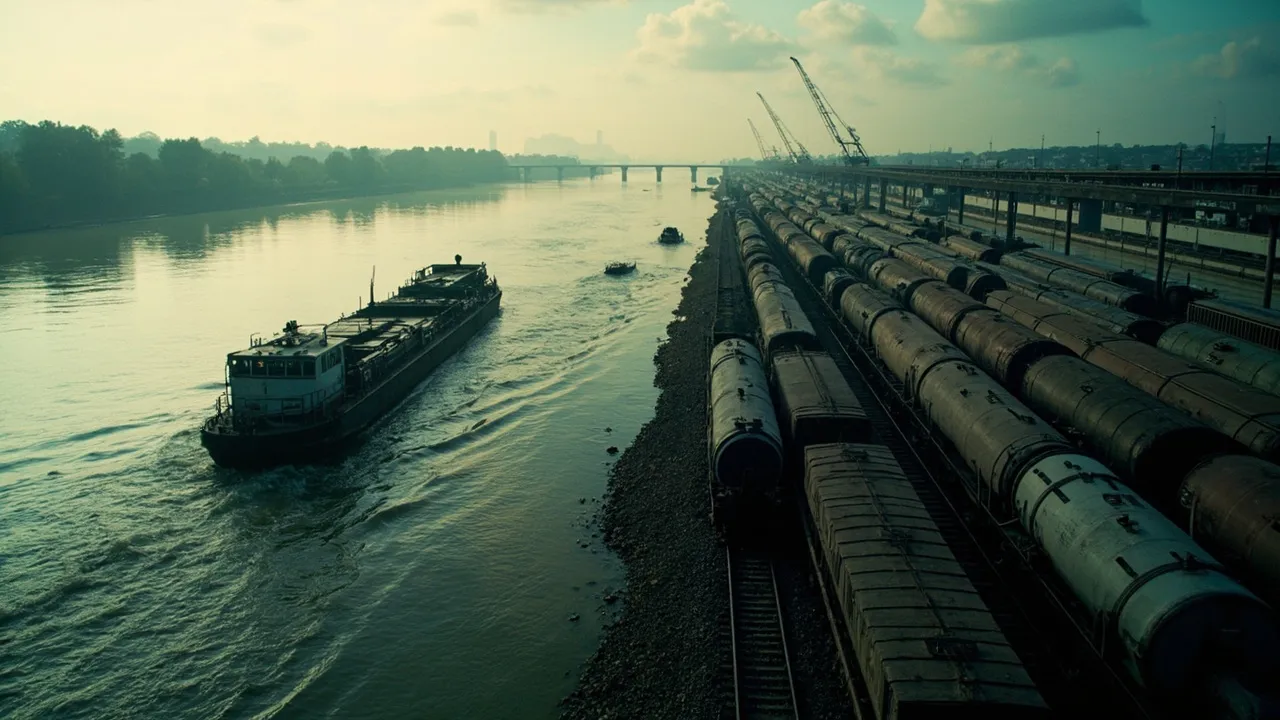
When the Rhine falls, the first operational response is usually to find trains and trucks. In 2026, that answer has become dangerously incomplete. Low water has reduced barge payloads while maintenance limits Germany's rail network, so industrial shippers are competing for alternatives that cannot absorb every displaced ton.
This is no longer a simple mode-switching exercise. It is a capacity allocation problem: which cargo moves, on which mode, through which terminal, and at what cost before a missed delivery becomes a production outage?
The Rhine cannot be replaced lane for lane
The scale mismatch explains the pressure. An average Rhine barge can carry about 2,500 metric tons, while replacing it requires more than 110 trucks, according to SupplyChainBrain's analysis of the corridor. The same source reported that Rotterdam-to-Basel barge transport costs roughly 40% less than rail. A shipper moving bulk feedstock cannot simply buy an equivalent rail service without confronting wagon supply, loading equipment, terminal paths, and materially higher landed cost.
The 2026 drought has made that structural gap acute. Reuters reported that the navigable water depth at Kaub, the Rhine's key chokepoint, fell to 10 centimeters on August 14, below the previous record low of 25 centimeters set in 2018. Barges were not universally prohibited, but many could carry only a fraction of their normal load, prompting transfers to land modes and low-water surcharges.
Rail is also constrained. SupplyChainBrain reported in October that Germany's network could not handle all cargo diverted from the river because infrastructure maintenance was reducing available capacity. That combination changes the planner's question from “What is the rail rate?” to “Which demand deserves a scarce rail path?”
Rank demand by operational consequence
First-come, first-served allocation is easy to administer and usually wrong. High-volume cargo can consume capacity while a smaller shipment with no substitute shuts down a plant. Each diversion request should receive a priority score based on five factors:
- Production impact: hours until a line stops, output at risk, and restart cost.
- Commodity constraints: hazardous, temperature-controlled, liquid, dusty, or contamination-sensitive handling needs.
- Equipment availability: wagon type, tank certification, containers, chassis, tractors, and drivers.
- Terminal compatibility: siding length, crane or pump capability, operating window, storage, and onward connection.
- Recovery time: how quickly delayed inventory can be replenished after river or rail capacity returns.
Commercial importance can be included, but it should not erase operational facts. A high-revenue customer with ten days of stock may rank below a lower-revenue plant with eight hours of critical feedstock. Record the inputs and score so planners can explain why one load moved and another waited.
Build one allocation rule across every mode
Planning barge, rail, truck, and storage in separate queues produces false options. A rail path has no value if the correct tank wagons are unavailable. A truck booking fails if the receiving plant has no unloading window. A shallow-draft barge helps only if its reduced payload and sailing frequency meet the consumption rate.
A daily allocation process should begin with confirmed demand, inventory cover, and production consequence. It should then reserve capacity in this order:
- Keep cargo on the river when safe draft, vessel design, and delivery timing permit it.
- Assign rail to dense, long-distance flows with compatible equipment and terminals.
- Use trucks for urgent replenishment, short feeder moves, and loads rail cannot handle quickly.
- Position buffer inventory at terminals or inland storage when an immediate final delivery is impossible.
- Hold or reschedule low-impact cargo rather than paying premium rates without avoiding a real loss.
Every allocation needs a time limit. If a rail slot is not confirmed by the cutoff, the order should automatically re-enter the decision queue with updated road, storage, and production options. Otherwise, teams protect a theoretical solution until all practical alternatives disappear.
Separate transport price from landed-cost variance
Low-water surcharges and premium rail or truck rates are visible. The expensive consequences often are not. Measure planned versus actual landed cost per ton, including extra handling, terminal transfers, storage, demurrage, partial-load penalties, rework, and premium final-mile delivery.
Pair cost with delivery confidence. A useful operational forecast expresses the probability of delivery within the plant's required window, supported by water-level forecasts, confirmed equipment, terminal appointments, rail-path status, driving time, and inventory cover. A cheap plan with a 40% chance of preventing shutdown is not automatically better than a more expensive plan with a 90% chance.
Maintain three scenarios—expected, deteriorating, and recovery—and update them whenever gauge forecasts or infrastructure availability change. The expected case guides normal bookings; the deteriorating case pre-authorizes spend and priority rules; the recovery case prevents an uncontrolled rush of deferred cargo when capacity returns.
Run the disruption from a shared control view
Execution data should connect each shipment to its business consequence, allocated mode, equipment, terminal, booking status, cost variance, and confidence level. Review exceptions at least daily, and more often when gauge readings or network restrictions change quickly.
The core measures are straightforward: tons requested versus allocated by mode, inventory cover at risk, rail-slot confirmation rate, premium cost per ton, forecast delivery confidence, terminal dwell, and production hours protected. Together they show whether the company is merely spending more or actually reducing disruption.
Rhine low water reveals a hard truth: alternative transport capacity is neither unlimited nor interchangeable. Shippers that rank consequences, validate physical compatibility, and allocate all modes through one rule will protect more production with the capacity they can actually secure.
CXTMS gives freight forwarders and logistics teams one place to manage multimodal bookings, milestones, costs, capacity commitments, and exceptions. Request a CXTMS demo to see how a shared transport control view can support faster disruption decisions.