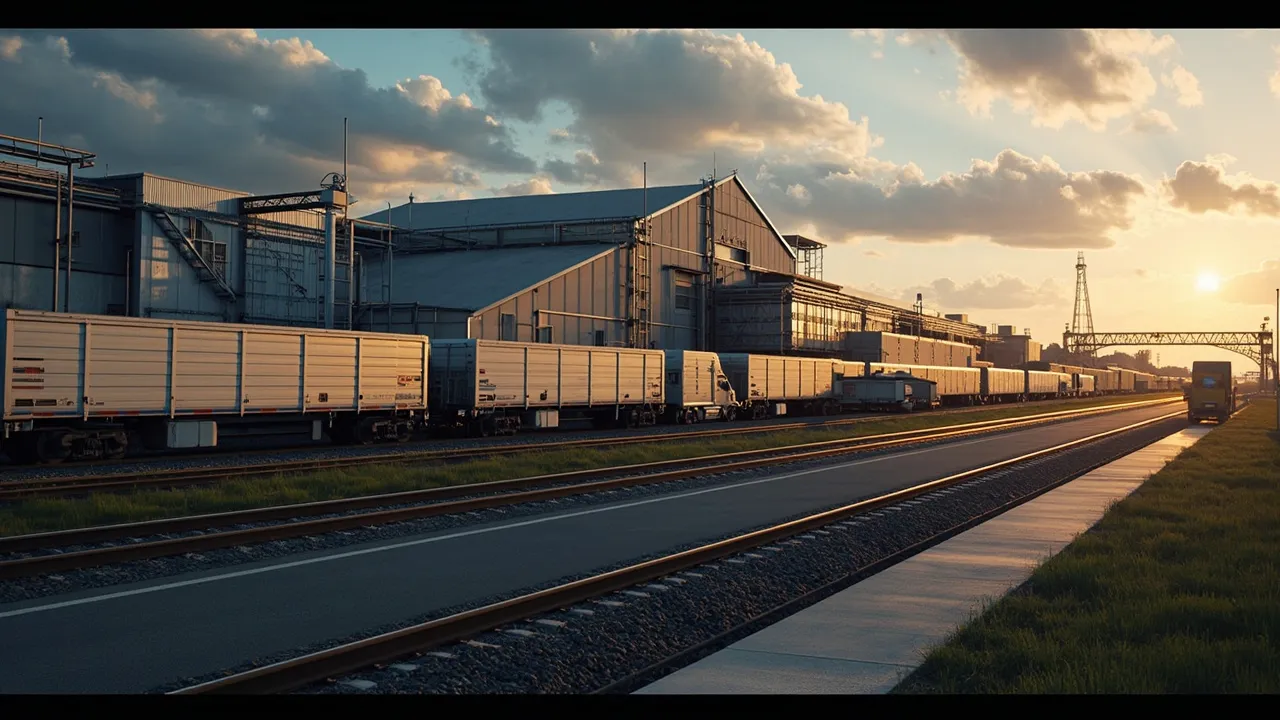
Reshoring Announcements Need a Supplier-and-Freight Feasibility Gate


Reshoring can shorten supply lines, reduce exposure to geopolitical shocks, and bring production closer to engineering teams and customers. It can also move a bottleneck rather than remove it. A factory announcement creates value only when the domestic supplier base, skilled labor, tooling, utilities, and freight network can support the promised production ramp.
The intent is clearly growing. A 2026 survey of 249 U.S. manufacturers found that 36% of original equipment manufacturers had reshored some production or were actively doing so, up from 29% in 2025. Among contract manufacturers, the share doubled from 16% to 32%. But the same SupplyChainBrain report shows why intent must pass an operational feasibility gate before capital is committed.
Strong Intent Does Not Equal Executable Capacity
The survey identifies compelling benefits: 70% of OEM respondents cited faster speed to market, 65% improved fulfillment or on-time delivery, and 60% logistics savings. Those are credible advantages, but none arrives automatically with a domestic postal code.
Labor is an immediate constraint. Sixty-six percent of respondents described hiring welders, machinists, and electrical or chemical engineers as very difficult or at crisis levels. Another 60% reported the same difficulty finding maintenance and repair technicians. Automation can raise output, but automated cells still require people who can install, program, maintain, and troubleshoot them.
Supply depth is equally important. A domestic final-assembly plant may still depend on imported castings, electronics, resins, machine components, or packaging. If the upstream tiers remain concentrated overseas, the network keeps much of its original disruption risk while adding new transfer points and potentially higher conversion cost.
That is why approval should depend on evidence, not the attractiveness of the announcement.
Gate 1: Verify the Supplier Base Beyond Tier One
Start with a bill-of-materials map covering the components that can stop production. For each item, identify the nominated supplier, manufacturing location, sub-tier dependencies, qualified alternates, available capacity, minimum order quantity, and replenishment lead time.
A supplier should not count as domestic capacity merely because it has a U.S. sales office or warehouse. Verify where conversion occurs, where critical raw materials originate, and how much capacity is already committed. Require production trials and quality approval for high-risk components before the investment decision—not after the plant is built.
Set measurable release conditions. For example, every production-stopping component might need one qualified source within the target region and a validated backup elsewhere in North America. Components without a second source should have an explicit buffer, tooling-duplication plan, and executive risk acceptance.
Gate 2: Test Labor, Tooling, and Utilities Together
A workforce study must go beyond regional unemployment. Build a role-level demand plan for operators, controls engineers, machinists, maintenance technicians, quality staff, and supervisors. Compare that demand with local graduation rates, competing employers, wage levels, shift preferences, and realistic time to proficiency.
Then connect labor to the equipment ramp. Record tooling design, fabrication, shipment, installation, validation, and maintenance lead times. Include spare parts and specialist support. A machine with a 12-month delivery window or a single overseas service team can become the real critical path.
Utilities need the same scrutiny. Confirm electrical capacity, natural gas, process water, wastewater permits, broadband redundancy, and expansion timelines with providers. A signed real-estate agreement is not proof that sufficient power will be available on the production launch date.
The gate passes only when these schedules align. Available labor without installed tooling is idle cost; installed tooling without technicians is stranded capital.
Gate 3: Build the Inbound Freight Plan Before Site Approval
Model the physical flow for raw materials, components, service parts, packaging, and returns. The plan should specify weekly volume by lane, mode, equipment type, shipment profile, required delivery window, and seasonal peak. It should also test carrier coverage, warehouse and dock capacity, driver availability, and alternative routes.
Do not assume shorter mileage guarantees better service. Domestic lanes can be fragmented, low-density, or poorly balanced. A supplier 300 miles away may offer worse reliability than an established import flow if there is limited backhaul capacity, weak appointment discipline, or no recovery carrier.
Stress-test predictable failures: a tooling delay, supplier quality hold, winter shutdown, port disruption affecting imported subcomponents, or a 20% volume surge. Define which loads receive premium transport, which inventory buffers absorb delay, and who can authorize mode conversion. As Inbound Logistics notes, geopolitical friction, trade-policy shifts, volatile demand, and other macro disruptions now form the operating baseline rather than rare exceptions.
Gate 4: Compare Scenarios on Landed Cost and Service Risk
Compare at least three scenarios: the current network, a nearshore option, and the proposed reshored network. Use the same demand forecast and service requirements for each.
The calculation should include:
- unit purchase and conversion cost;
- duties, tariffs, brokerage, and compliance expense;
- inbound and outbound freight, fuel, accessorials, and premium transport;
- pipeline, cycle, safety, and work-in-process inventory carrying cost;
- tooling, qualification, transition, and duplicated-capacity expense;
- expected cost of downtime, defects, late delivery, and demand volatility.
Only about 30% of OEMs in the 2026 survey currently use a total-cost-of-ownership methodology. That leaves many decisions vulnerable to comparisons based on wage rates or piece prices while ignoring inventory, freight, service, and disruption economics.
Use ranges rather than a single forecast. Test tariff changes, fuel increases, slower ramp yields, labor premiums, and different demand levels. A sound decision should remain acceptable across plausible conditions, not only in the base case.
Make the Announcement the Output of the Gate
The final approval packet should contain signed evidence: supplier capacity confirmations, quality trials, workforce commitments, tooling milestones, utility dates, lane bids, capacity assurances, and scenario economics. Assign an owner and deadline to every unresolved dependency.
Executives can then use staged decisions: approve site diligence, release long-lead tooling, authorize construction, validate pilot production, and finally approve full-volume transfer. Each stage should have stop conditions. If a critical supplier lacks proven capacity or the freight plan cannot meet launch volume, the schedule pauses instead of converting optimism into expedites and missed customer promises.
Reshoring is a network redesign, not simply a change of factory address. Manufacturers that put supplier and freight feasibility ahead of the press release are more likely to capture the speed, service, and resilience that make the strategy worthwhile.
Planning a domestic or nearshore network change? Request a CXTMS demo to model freight flows, manage carrier execution, and monitor the service risks behind your reshoring business case.