The 100,000th Remanufactured Forklift Makes Equipment History a Warehouse Data Problem

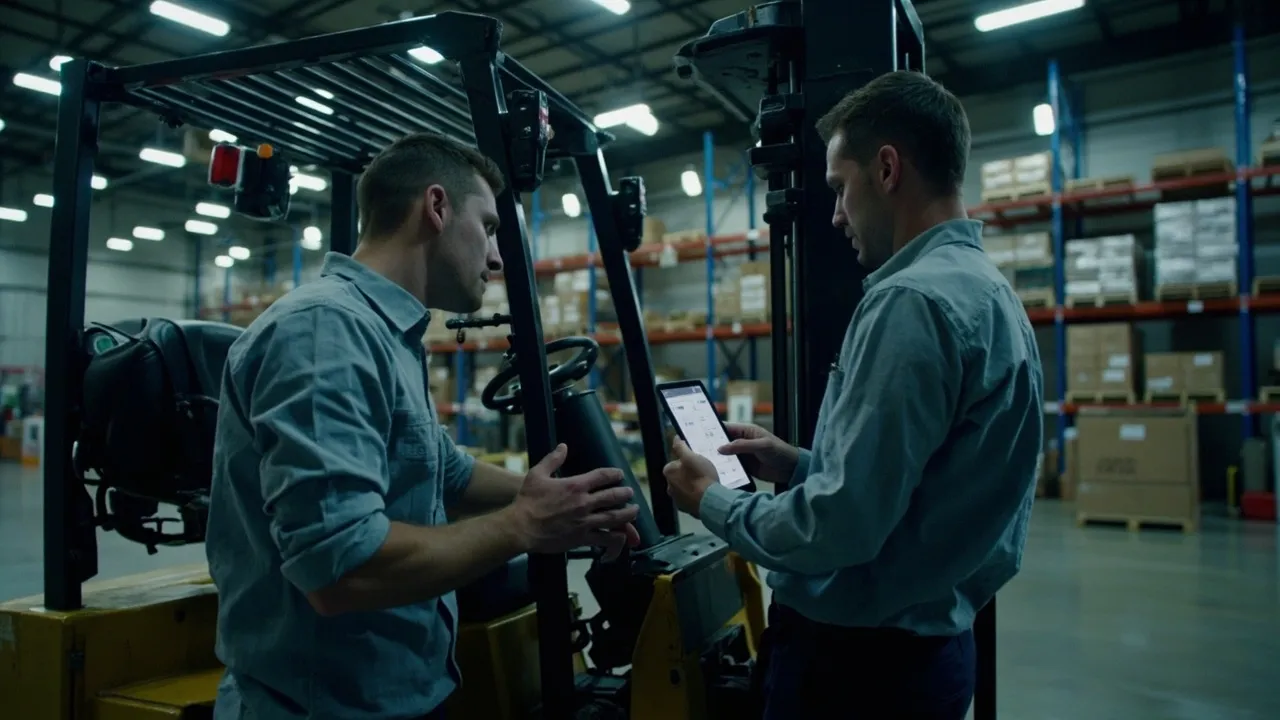
Jungheinrich's 100,000th remanufactured forklift is more than a circular-economy milestone. It signals that used material-handling equipment has become a repeatable procurement category—and that buyers need better data to distinguish a productive second life from a costly maintenance problem.
Inbound Logistics reported that the 100,000th truck was remanufactured at Jungheinrich's Used Equipment Centre in Germany. At that scale, remanufacturing is no longer an occasional alternative for budget-constrained facilities. It can be part of planned fleet renewal, temporary capacity, and network expansion.
The catch is that "remanufactured" does not make every truck equivalent. Model year and meter hours alone cannot show whether the mast was repeatedly overloaded, the battery was poorly charged, or a safety repair is approaching. The procurement decision therefore depends on an equipment-history record that follows the asset across owners, sites, service events, and component replacements.
Build an Equipment Passport Before Comparing Prices
A credible equipment passport should identify the truck, its configuration, and every material change in condition. Start with serial number, model, rated capacity, mast height, attachments, controller and software versions, manufacture date, and original commissioning date. Then connect those fields to timestamped operating and maintenance records.
Buyers should require, at minimum:
- meter hours separated into travel, lift, idle, and attachment use where available;
- planned maintenance dates, technician findings, fault codes, and completed repairs;
- mast, fork, chain, tire, brake, steering, hydraulic, and structural inspection results;
- battery chemistry, capacity, age, charge cycles, state of health, charger compatibility, and replacement history;
- records of impacts, overload events, safety lockouts, recalls, and corrective work;
- component serial numbers for major replacements and evidence of approved parts;
- remanufacturing scope, test results, warranty terms, exclusions, and service coverage; and
- the sites, applications, shift patterns, temperature ranges, and duty cycles in which the truck operated.
This record makes the sales label auditable. A truck with 8,000 hours in a clean, single-shift facility may carry less risk than a lower-hour unit exposed to freezer cycles, corrosive products, or continuous dock work. Context converts the hour meter from a crude odometer into an operating-risk signal.
Connect Condition to Throughput Risk
Forklift condition is not only a maintenance metric. It is a capacity input. When a critical truck fails, the warehouse may lose replenishment moves, trailer turns, putaway capacity, or picking support. Labor can remain on the clock while work queues grow.
Logistics Management notes that lost uptime can cost far more than the parts a facility was trying to avoid buying. Its fleet-maintenance reporting also describes quality of service, service cost, and downtime as three concerns weighted about equally. That is the right frame: the cheapest repair or asset is not economical if it creates the most operational interruption.
Translate equipment records into a risk-adjusted capacity plan. For each truck, estimate available hours, probability and duration of failure, and the workflow affected. Flag single points of failure such as a specialized reach height, clamp attachment, freezer rating, or narrow-aisle configuration. Then assign a backup: an interchangeable truck, reserved rental, dealer response agreement, or deliberately protected capacity elsewhere in the fleet.
Temporary rental should be triggered by data, not panic. Useful triggers include repeated critical fault codes, declining battery state of health, maintenance hours above a set share of scheduled hours, or projected available fleet capacity falling below peak demand. A rental premium can be cheaper than missed outbound cutoffs and emergency labor.
Compare Four Options on Lifecycle Cost
Procurement teams should compare remanufacture, new purchase, lease, and delayed replacement over the same planning horizon. The model needs more than acquisition price.
For each option, include financing or lease payments, expected maintenance, energy, batteries, tires, attachments, telematics, operator training, insurance, planned downtime, expected unplanned downtime, rental backup, and residual value. Apply the same utilization forecast and service-level requirement to every scenario.
A simple decision equation is:
Lifecycle cost = acquisition and financing + operating cost + maintenance + downtime exposure + temporary capacity - residual value.
Remanufacture can win when the unit has documented condition, suitable remaining life, local parts support, and a warranty aligned with the duty cycle. New equipment can justify its premium for high-utilization or specialized roles where reliability, energy efficiency, or automation integration materially affects throughput. Leasing can fit uncertain volumes or sites that value predictable payments and planned refreshes. Delayed replacement may preserve cash, but it should carry an explicit risk charge for rising repairs, falling availability, and emergency rental.
Energy assumptions deserve special attention. MHI reported that warehouses once needed more than 2,500 operating hours per year to justify lithium-ion forklifts over internal-combustion equipment, while the economics have since broadened to smaller operations. That changing threshold shows why a lifecycle model must use current energy, charging, maintenance, and utilization data rather than inherited fleet rules.
Make the History Operational
The equipment passport should not disappear into a procurement folder after acceptance. Connect the asset record to the maintenance system, warehouse labor and throughput data, and the transportation schedule. That allows managers to see whether a truck's availability is constraining receiving appointments, replenishment, or trailer loading.
Track planned-versus-actual utilization, maintenance cost per operating hour, mean time between failures, repair turnaround, battery health, safety events, and throughput lost during downtime. Compare those results with the assumptions used in the purchase decision. Over time, the warehouse develops its own evidence for which models, power systems, remanufacturing grades, and warranty structures perform best in each application.
The 100,000-unit milestone shows that remanufactured forklifts can be industrialized. The next step is to industrialize the buyer's decision. With a trustworthy equipment history and a lifecycle model tied to warehouse capacity, operators can reuse assets without inheriting invisible risk.
Ready to connect asset availability, warehouse activity, and transportation demand in one operational view? Request a CXTMS demo to see how better logistics data supports faster, more confident capacity decisions.