Reefer Rejections Hit 23%: Build a Temperature-Controlled Tender Recovery Clock

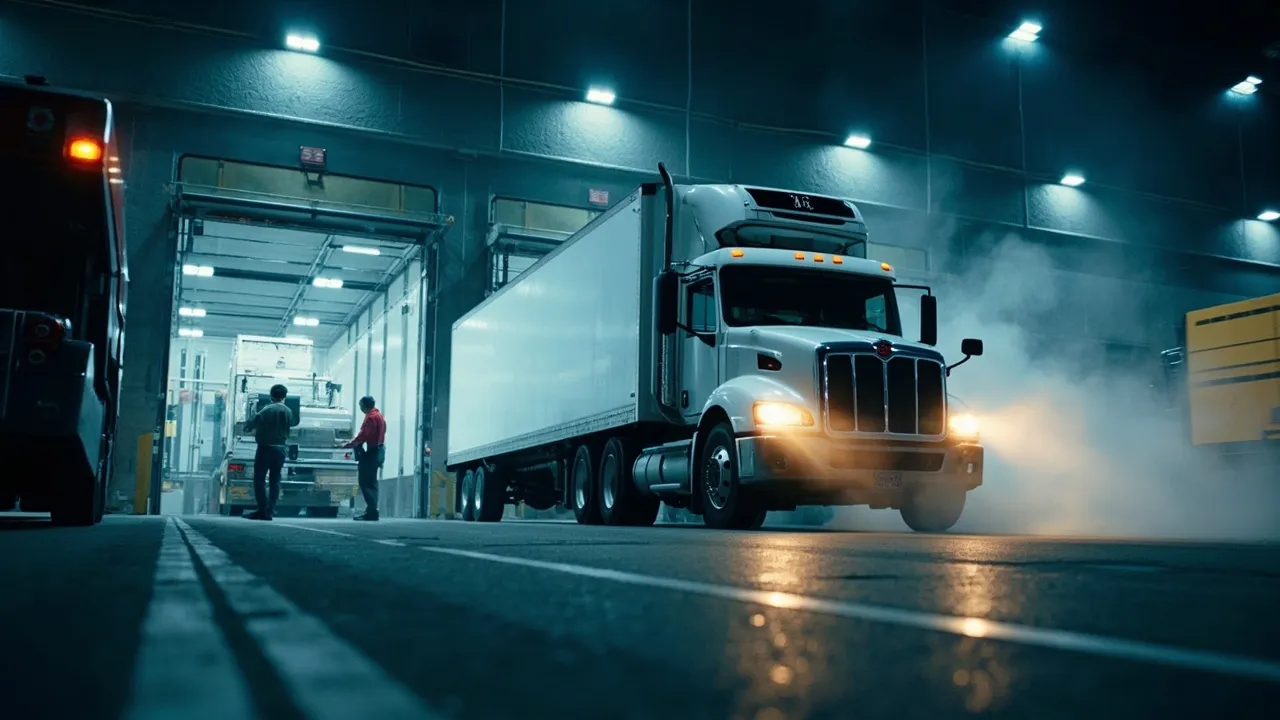
Refrigerated truckload capacity has entered the holiday peak under unusual pressure. Reefer tender rejections reached an extraordinary 23%, nearly twice the year-earlier level, according to FreightWaves. The broader truckload market is tight as well: national tender rejections climbed to 13.68%, already above the prior December holiday peak before the seasonal crest arrived.
For a dry-van shipper, a rejected tender is primarily a service and cost problem. For a temperature-controlled shipper, it is also a race against shelf life. Every hour spent looking for another truck can consume appointment flexibility, increase dwell, and expose inventory to additional handling or temperature risk. The right response is not simply “find a carrier faster.” It is a recovery clock that connects procurement decisions to the product’s remaining safe and commercial life.
Why 23% Is a Supply Warning
A rejection rate near 23% means roughly one in every four contracted reefer tenders is being declined. FreightWaves characterizes the current move as supply-driven rather than a sudden demand boom. That distinction matters. When capacity is structurally scarce, repeatedly tendering the same load through a static routing guide wastes the most valuable recovery resource: time.
The constraint also varies sharply by origin market, pickup day, and lane. A national average should trigger readiness, but it cannot decide the response for an individual shipment. Operations teams need to combine market tightness with shipment-specific exposure.
That exposure is financially significant. Food Logistics reports that global food losses total about $750 billion annually, while temperature-control failures cost biopharma shippers an estimated $35 billion each year. A premium rescue truck can look expensive in isolation and still be cheap relative to a rejected load, spoiled product, or missed retail promotion.
Score Risk Before the First Tender
The recovery clock should be assigned when the load is created, not after a rejection arrives. Segment every shipment on five dimensions:
- Remaining shelf life: Separate products measured in days from those measured in weeks or months.
- Temperature band: Frozen, chilled, controlled ambient, and narrow-band pharmaceutical freight require different safeguards.
- Origin conditions: Identify markets with limited reefer density, seasonal produce competition, weather exposure, or long repositioning distances.
- Appointment rigidity: A flexible warehouse window is not equivalent to a fixed retail, production, or export cutoff.
- Replacement time: Estimate how long it normally takes to secure qualified backup capacity on that lane and day of week.
These inputs produce a risk tier. A short-life chilled load with a fixed appointment and a four-hour replacement time should enter escalation earlier than frozen inventory with several days of delivery flexibility. The clock must reflect that difference automatically.
Build a Four-Stage Tender Recovery Clock
The exact thresholds should be tuned by lane, but a practical framework looks like this:
Minute 0: Primary Tender
Send the tender to the contracted primary carrier with a defined response deadline. Include temperature set point, equipment requirements, pickup appointment, delivery window, cargo value, and any continuous-monitoring or washout requirements. An incomplete tender often creates preventable back-and-forth precisely when speed matters.
Minute 15: Backup Routing Guide
If the primary carrier has not accepted, release the tender to prequalified backup carriers. Do not wait for an explicit rejection if the response deadline has expired. Rank backups by equipment qualification, recent lane performance, acceptance speed, and temperature-compliance history—not only by rate.
Minute 30: Controlled Spot Escalation
Open a targeted spot search with an approved premium ceiling. Give planners a rate guardrail that varies with product exposure. A high-risk shipment can justify a larger premium because its avoided-loss value is greater. Require equipment and insurance validation before award; urgency should not erase cold-chain controls.
Minute 60: Network Alternatives
Escalate to transportation and inventory leaders. Consider team service, expedited options, a different pickup facility, cross-docking, alternate delivery appointments, or inventory substitution closer to the customer. Mode alternatives must be evaluated against total elapsed time and temperature handling, not transit time alone.
The timer should compress for highly perishable or narrow-band freight and expand for resilient frozen loads. Its purpose is not to impose one universal rule. It is to make the next decision happen before the current option expires.
Preserve Temperature Integrity During Recovery
Recovery planning must continue beyond carrier acceptance. Inbound Logistics notes that portable monitoring devices can record and transmit product and ambient conditions before tender, in transit, and after delivery. That evidence supports intervention during the move and helps resolve claims afterward.
Confirm that the trailer is precooled, the unit is set to the correct continuous or start-stop mode, and the driver understands pulp-temperature or loading requirements. Record seal, reefer unit, and sensor identifiers in the shipment file. If pickup is delayed, calculate the time inventory spends outside validated storage and alert quality teams before a threshold is breached.
Measure Whether the Clock Works
Four metrics turn recovery from firefighting into a managed process:
- Acceptance latency: Minutes from first tender to confirmed carrier acceptance, by lane and risk tier.
- Temperature-risk minutes: Time spent outside the planned protected environment or beyond the safe recovery threshold.
- Premium paid: Additional transportation cost over the contracted benchmark.
- Avoided spoilage: Product value protected through successful recovery, including prevented chargebacks or production disruption.
Review these measures together. Driving premium spend to zero can increase spoilage, while buying the first available truck can destroy margin. The goal is the lowest total risk-adjusted cost. Repeated primary-carrier misses should also feed procurement reviews, routing-guide changes, and earlier tender lead times.
Turn Rejections Into Timed Decisions
At 23% reefer rejection, hope is not a routing strategy. Shippers need risk segmentation, explicit response deadlines, qualified backup capacity, and a documented point at which inventory alternatives enter the conversation. A transportation management system can enforce that clock consistently while keeping carrier, cost, appointment, and temperature data in one operational record.
Ready to build faster cold-chain exception recovery? Request a CXTMS demo to see how automated tender workflows and real-time shipment control can protect service and product integrity.