Eight Inches of Rain Closed a Major Rail Line for 60 Hours—Sequence the Backlog, Not Just the Detour

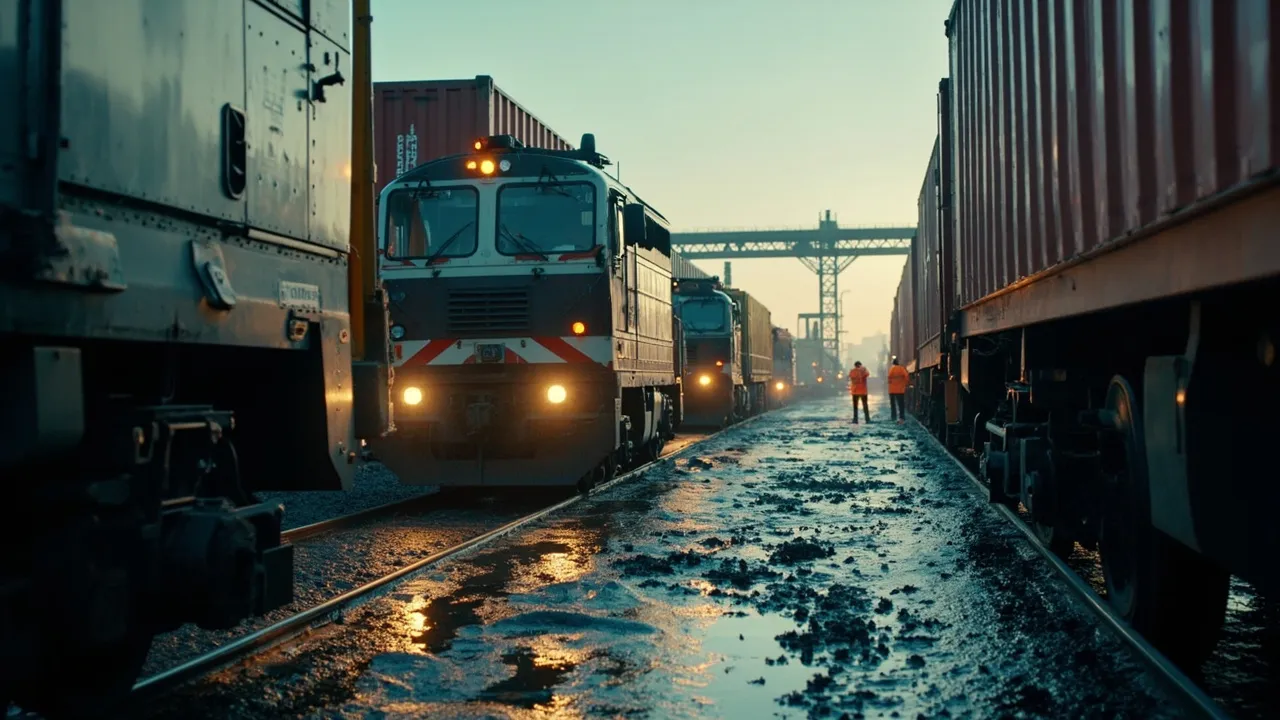
When floodwater closes a critical rail corridor, the visible problem is the blocked track. The harder problem begins after the track reopens: trains are out of position, crews have exhausted hours, terminals have lost appointment rhythm, and customers are competing for the same recovery capacity.
That is why reopening time cannot be treated as delivery recovery time. Following an extraordinary rainfall event in New Mexico, BNSF's Southern Transcon was closed for roughly 60 hours. The corridor is a core artery for intermodal freight between Southern California and the central United States. Restoring the physical route was essential, but it did not instantly restore the network around it.
A 60-Hour Closure Creates More Than 60 Hours of Delay
FreightWaves reported that Laguna, New Mexico, received 8 inches of rain in three days, forcing the Southern Transcon closure beginning October 24. The report identified the route as North America's busiest intermodal corridor and noted that BNSF intermodal volume declined 0.4% while Union Pacific recorded a 17% gain during the comparison period.
Those figures show both the severity of the interruption and the market's ability to redirect some demand. But diversion is only one recovery lever. A truck or alternate rail route must have equipment, driver or crew capacity, terminal access, and enough remaining transit time to protect the delivery promise.
Meanwhile, the network was already busy. In the week ending October 31, U.S. rail traffic increased 3.5% year over year, with carloads up 3.0% and intermodal units up 3.9%, according to FreightWaves's coverage of Association of American Railroads data. A disruption imposed on a growing network leaves less slack for recovery trains and terminal surges.
Build One Recovery Backlog, Not Five Separate Lists
Shippers often track delayed containers while railroads track trains, terminals track grounded units, and dray providers track appointments. That fragmentation hides the real constraint. Recovery should use a single operating view that connects each shipment to five resources:
- Train position and route: Is the unit stopped before the closure, held at origin, or moving on a diversion?
- Terminal slot: Can the destination ramp receive and unload the train without worsening congestion?
- Crew and locomotive: Are qualified crews and power positioned for the next segment when the route is released?
- Dray capacity: Is a driver, chassis, and pickup appointment available when the container becomes accessible?
- Customer appointment: Can the consignee still receive the load, or must delivery be rebooked before movement resumes?
This joined view prevents false progress. A train may clear the repaired segment but still wait outside a full terminal. A container may be grounded but miss its warehouse appointment. In both cases, the route is open and the shipment remains operationally blocked.
Past disruptions reinforce the point. Supply Chain Dive reported that after Canadian rail work stoppages, industry estimates allowed up to a week for each railroad to reset and operate smoothly, with backlogged shipments potentially taking longer. The cause differed, but the recovery principle is the same: restoring infrastructure or labor does not immediately realign every dependent resource.
Sequence Freight by Consequence and Feasibility
First-in, first-out feels fair, but it can waste scarce recovery capacity. A better sequence scores each shipment across four dimensions.
Downstream production risk comes first. Components capable of stopping an assembly line may deserve priority over replenishment inventory with several days of coverage. Planners need the customer's actual run-out time, not a generic “expedite” label.
Perishability and product integrity follow. Temperature-controlled, time-sensitive, or shelf-life-limited cargo accumulates risk while stationary. Its score should reflect remaining usable life and whether reefer fuel, monitoring, or inspection is required.
Contractual and customer priority matters, but it should be explicit. Service penalties, strategic accounts, committed delivery windows, and regulatory obligations should be visible rather than decided through the loudest escalation.
Feasible alternate mode changes the answer. A high-risk load that can move by truck today may be removed from the rail queue, while another load with no safe alternative receives the first available rail slot. Compare the premium against shutdown exposure, spoilage, penalties, and the probability that the alternate route actually succeeds.
The resulting queue should be recalculated whenever route capacity, estimated availability, terminal dwell, or customer receiving hours change. Recovery is a rolling optimization problem, not a one-time spreadsheet sort.
Use Milestones That Continue Beyond Route Reopening
A practical recovery clock should contain at least six milestones:
- Route released: Engineering confirms the track is safe and states any speed or axle restrictions.
- First trains dispatched: Operations identifies which held trains enter the corridor and in what order.
- Network flow stabilized: Crews and locomotives begin cycling without exceptional holds.
- Terminal inventory normalized: Grounded containers and inbound trains fall within local operating thresholds.
- Customer appointments restored: Missed pickups and deliveries are rebooked with confirmed capacity.
- Backlog cleared: Every affected shipment is delivered, diverted, or resolved—not merely moving again.
Track planned versus actual time for each milestone. Publish a shipment-level estimated recovery time with its evidence: train status, terminal outlook, dray confirmation, and customer appointment. A single blanket delay notice cannot support production or inventory decisions.
Turn the Disruption Into a Better Playbook
After clearance, measure how many loads were diverted, how often diversions protected delivery, which customers reached inventory risk, and where recovery stalled. Also record the decision lead time: teams that waited for certainty may have lost the best truck, ramp, and appointment options.
The central lesson is simple. A repaired rail line restores potential capacity. Coordinated sequencing restores service. CXTMS brings shipment priority, alternate routes, milestones, appointments, and exception ownership into one recovery workflow. Request a CXTMS demo to turn the next network closure into a controlled backlog plan instead of a chain of disconnected expedites.