Rail Cargo Theft Gets More Physical: Controls for Forced Train Stops

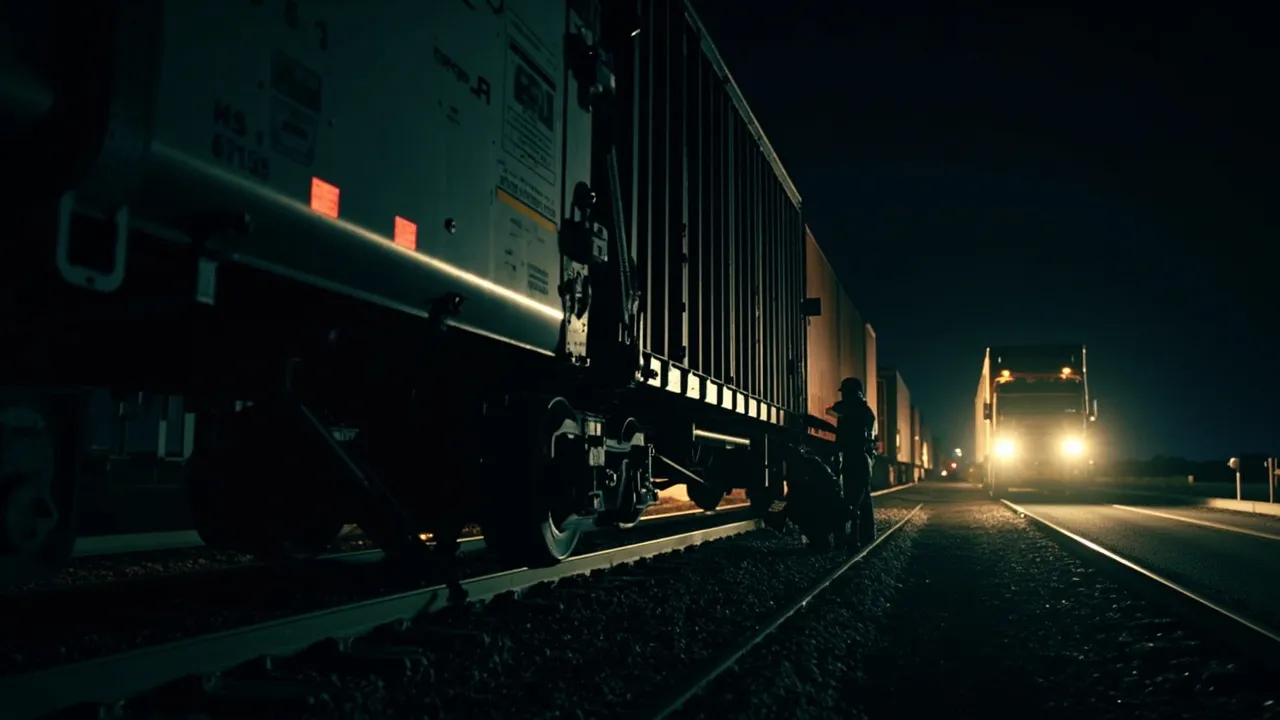
Cargo theft on rail is no longer limited to opportunists opening containers in a yard. An alleged Southern California theft ring shows how organized crews can create the stop they need, position vehicles nearby, remove selected products, and feed them into resale channels.
FreightWaves reports that federal prosecutors charged 14 people in an alleged $22.5 million conspiracy involving more than 70 shipping containers. The alleged tactic was direct: participants cut train air hoses, triggering emergency braking, while trucks and vans waited near predetermined locations. The 49-page indictment describes 122 alleged overt acts from February 2024 through August 2026.
The operational lesson is bigger than this case. A forced stop is simultaneously a safety incident, a security event, and a shipment exception. Shippers, railroads, forwarders, and insurers need an alert chain that connects those perspectives before evidence disappears and stolen goods enter a secondary market.
Treat an unplanned stop as a compound signal
A train stopping outside a terminal is not automatically suspicious. Meets, congestion, mechanical problems, crew constraints, and signal instructions all create legitimate dwell. The risk changes when an unscheduled stop overlaps with other anomalies.
The first control is a corridor-specific geofence. Security teams should map authorized yards, sidings, crew-change points, inspection locations, and expected congestion zones. A train or container entering an unapproved dwell state outside those areas should create an exception, not necessarily a theft alarm. The alert becomes urgent when the stop is accompanied by a rapid brake-pressure loss, a door or seal event, a tracking-device movement, or an unidentified vehicle stopping beside the right of way.
The thresholds must reflect the route. Five minutes of stationary time may be normal near a terminal and highly unusual on an open segment. Use historical movement data to set dwell thresholds by milepost and time of day. Then tier the response:
- Level 1: unplanned stop outside an approved zone; begin automated monitoring.
- Level 2: stop plus abnormal brake telemetry, broken geofence, or lost device signal; notify railroad operations and shipper security.
- Level 3: stop plus seal change, cargo-door activity, verified intrusion, or suspicious vehicle proximity; contact railroad police or local law enforcement under the agreed protocol.
This structure prevents operators from treating every delay as a crisis while ensuring that several weak signals combine into a strong one.
Watch the handoff and the road beside the rail
The vulnerable moment is not only when goods leave a container. It is also when custody information becomes fragmented. A port-origin container may involve an ocean carrier, terminal, railroad, drayage provider, freight forwarder, consignee, and insurer. Each party sees part of the movement, but no one automatically owns the complete exception.
Assign a security owner before departure for high-risk products such as footwear, consumer electronics, tools, and unreleased merchandise. Record the container number, railcar, origin seal, authorized route, expected interchange points, consignee, and approved final pickup party in one shipment record. At every handoff, compare the physical seal against that record rather than merely noting that a seal is present.
Nearby pickup vehicles deserve attention too. A separate FreightWaves analysis describes a February 2025 Arizona incident in which thieves allegedly cut air hoses and removed roughly 2,000 pairs of unreleased sneakers, valued at $440,000, in under 20 minutes using a rental truck and van. A smaller vehicle can blend into industrial traffic and leave before a conventional response begins.
Railroads can incorporate fixed-camera, crossing-camera, license-plate, and patrol observations where lawful. Shippers should supply likely target profiles and tracker identifiers. An unfamiliar box truck alone is not proof, but its presence beside an abnormal stop should increase the alert score.
Build an alert chain with named decisions
An effective workflow identifies who decides, who verifies, and who escalates. When the system detects an abnormal stop, the transportation platform should open a time-stamped incident tied to the shipment rather than generate an isolated email.
Rail operations first confirms whether the stop was authorized. The shipper or forwarder checks container telemetry, seal history, cargo sensitivity, and consignee instructions. Security validates location and vehicle observations. If intrusion indicators remain, the designated party contacts railroad police and preserves the original data.
Consignee verification is essential after the train resumes. Do not allow a later pickup simply because the driver presents a plausible document. Require an appointment, verified carrier and driver identity, a one-time release credential, and a seal match. If the seal differs, hold the container in a controlled location and document the exception before unloading. That prevents a compromised movement from becoming an ordinary delivery once it reaches the destination.
The workflow should also suppress dangerous improvisation. Shipper staff must not approach tracks, pursue vehicles, or instruct train crews. Their job is to consolidate reliable information and pass it to the railroad and law enforcement.
Preserve evidence before the systems overwrite it
The alleged Southern California case reportedly drew on electronic communications, transactions, photographs, and shipment records. Logistics operators should assume that useful evidence is distributed across systems with different retention periods.
At the moment of escalation, preserve:
- Original GPS and telemetry records with timestamps and device identifiers
- Train movement, brake-event, and dispatch records
- Container, railcar, seal, booking, and interchange history
- Gate, crossing, yard, and roadway video in its native format
- Driver, carrier, consignee, appointment, and release-code records
- Emails, messages, call logs, photographs, and incident notes
- Product SKUs, serial numbers, lot numbers, values, and destination data
Exporting a screenshot is not enough when the underlying record can be retained. Keep the original file, document who collected it, restrict edits, and record every transfer. Legal counsel and insurers should establish retention periods and chain-of-custody procedures before an incident. Notify the insurer within the policy window, but coordinate facts so the shipper, forwarder, and railroad do not create conflicting timelines.
Turn each event into a control improvement
After the immediate response, compare the planned movement with what actually happened. Measure time from stop to detection, detection to verification, verification to police notification, and notification to evidence hold. Review whether the geofence was precise, whether contacts answered, and whether seal and consignee records were complete.
Rail cargo security cannot rely on a tracker alone. The stronger defense combines movement anomalies, physical telemetry, geofences, seal controls, verified release, and disciplined evidence retention. CXTMS brings shipment milestones, documents, parties, and exceptions into a shared operational record so teams can respond with context instead of chasing disconnected messages.
Request a CXTMS demo to see how structured exception workflows can strengthen freight visibility and cargo-security response.