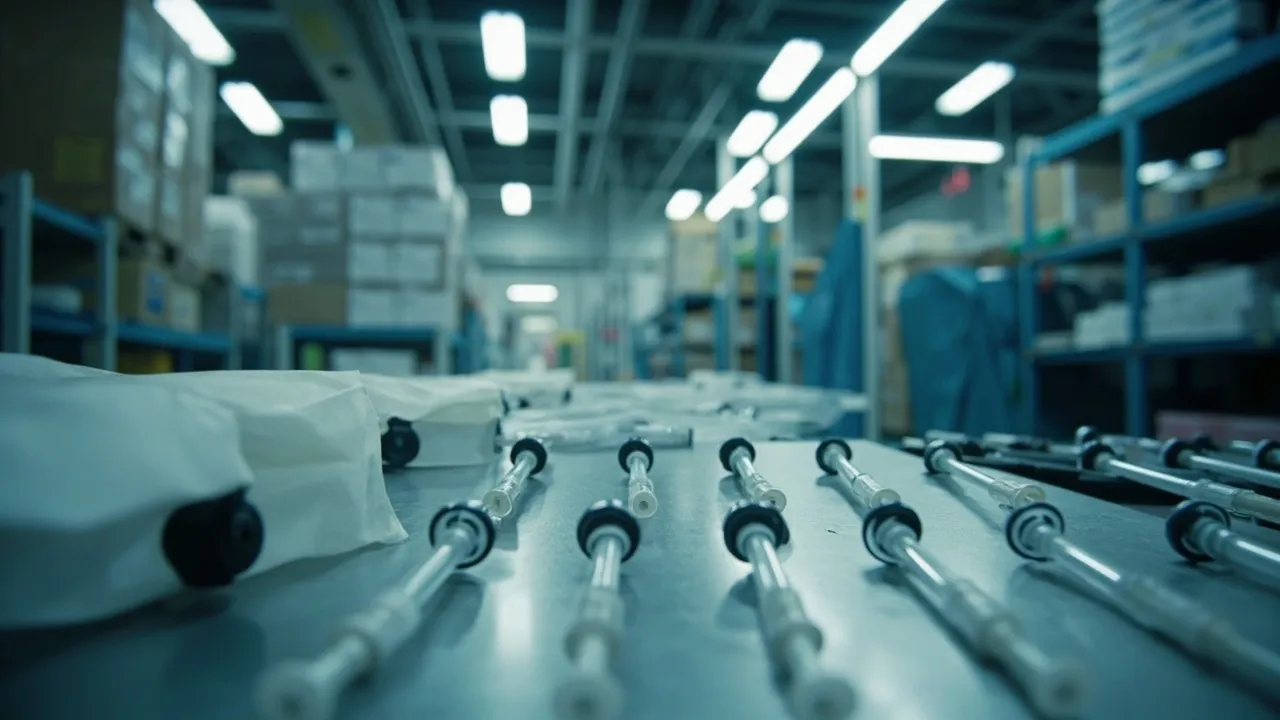
R-Mark Rack Decking Certification: Turn Warehouse Structure Data Into a Safety Control

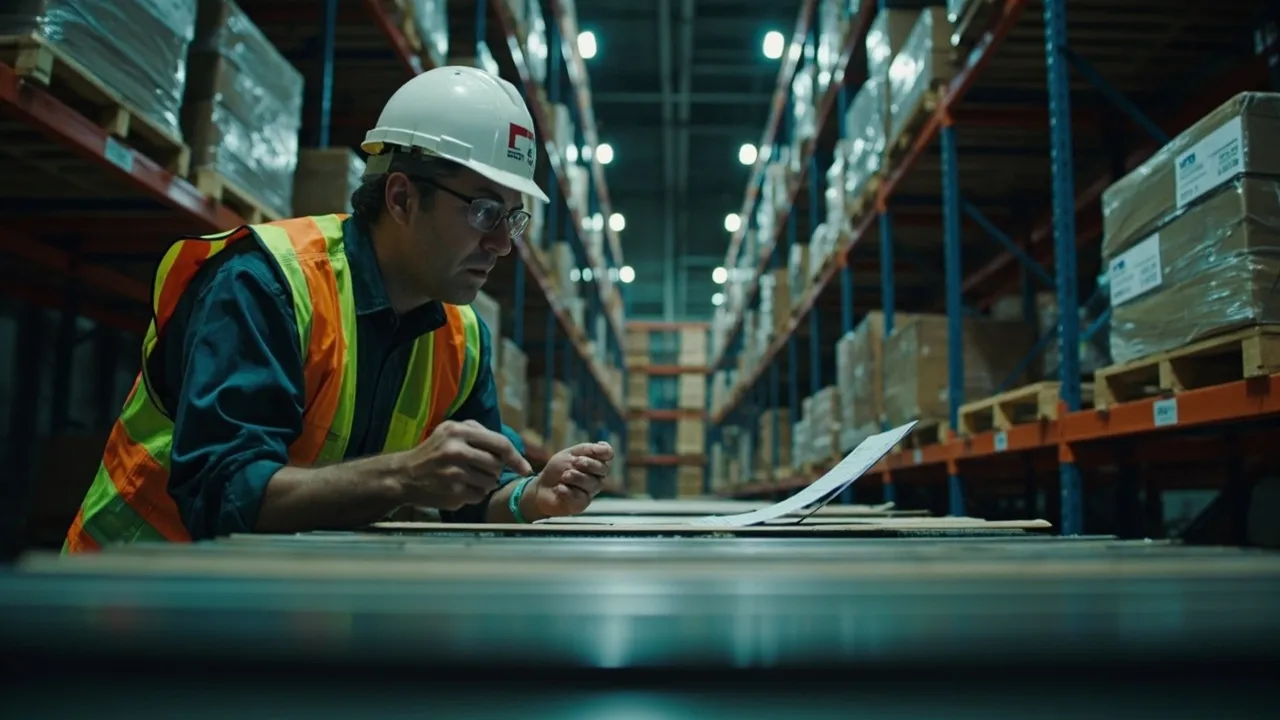
Rack decking certification can look like a procurement detail: verify the mark, file the submittal, and move on. In a working warehouse, that is not enough. The conditions under which decking was designed and tested must remain connected to the pallets, products, inspections, and storage decisions made every day.
That makes R-Mark evidence more than an installation document. Properly structured, it becomes a safety control that helps prevent the warehouse management system (WMS) from assigning inventory to a location under conditions the decking was never approved to support.
The timing is relevant because DACS recently announced R-Mark certification for its rack decking. Modern Materials Handling describes R-Mark as a voluntary Rack Manufacturers Institute program used to determine whether rack or rack-decking systems and components adhere to applicable American National Standards Institute standards. Certification is a meaningful signal, but operators still need to preserve the engineering context behind it.
What the mark does—and does not—tell you
The applicable technical framework is specific. MHI lists ANSI MH16.1-2023 for the design, testing, and utilization of industrial storage racks and ANSI MH26.2-2023 for industrial storage rack decking. The decking standard covers not only uniformly distributed loads but also concentrated and partially distributed loading conditions commonly found in storage applications.
That distinction matters. A deck rated for a stated uniformly distributed load is not automatically suitable for every pallet of the same total weight. Pallet dimensions, runner orientation, foot geometry, damaged boards, and product concentration can change where force reaches the deck. Two 2,000-pound loads can impose very different stresses if one spreads weight across a sound pallet and the other concentrates it at a few points.
Certification therefore should not be interpreted as an unlimited approval for a product family or rack bay. It shows conformance within defined designs, tests, components, and use conditions. The warehouse must keep actual use inside those boundaries.
Build a usable structural record
A certificate stored as a PDF cannot make a real-time storage decision. Convert its relevant details, along with the approved engineering documents, into a controlled record tied to rack assets and WMS locations.
At minimum, capture:
- Manufacturer, product, model, deck dimensions, and component identifiers
- Applicable standard and certification status
- Rated load and the load pattern or distribution assumption
- Supported pallet dimensions, orientation, and contact conditions
- Rack beam spacing and other required installation conditions
- Engineering drawings, calculations, approvals, and revision dates
- Installation date, inspection history, damage status, and repair records
Give each rack bay, level, and deck position a durable asset ID. Map those asset IDs to WMS location codes rather than relying on aisle signs or informal descriptions. A location master can then inherit the lowest safe limit created by the rack frame, beams, decking, anchors, and approved configuration.
Version control is essential. If a beam elevation changes, a different deck is installed, or pallet geometry changes, the old approval should not remain silently active. The record needs an effective date, superseded status, approver, and link to the replacement analysis.
Connect load limits to inventory reality
The control becomes useful when structural data meets item and handling-unit data. For every storage candidate, the WMS should know gross pallet weight—not just product net weight—plus pallet dimensions, support geometry, product density, and any unusual point-load characteristic.
Three checks should occur before assignment:
- Capacity: Is the handling unit's gross weight within the approved location limit, including the applicable operational safety policy?
- Geometry: Do pallet length, width, runner direction, and contact points match the certified or engineered condition?
- Status: Is the rack position available, inspected, and free of an unresolved damage hold or configuration-change hold?
Passing only the weight test is insufficient. Dense components, machinery, drums, totes with feet, and irregular loads deserve explicit load-shape classifications. If the master data is incomplete, the system should route the unit to a known conservative location or an engineering review queue—not guess.
Make inspections change system behavior
MHI's Rack Manufacturers Institute treats installation and safety inspection as core parts of rack safety. The operational implication is simple: an inspection finding must affect location eligibility.
Use a mobile inspection workflow to record the asset ID, defect type, severity, photographs, reporter, and time. A serious finding should immediately place the affected position—or a larger engineered exclusion zone—on hold in the WMS. Operators should see a clear reason code such as DECK_DAMAGE, BEAM_IMPACT, or ENGINEERING_REVIEW, rather than a vague unavailable status.
The same discipline applies to repairs. Closing a work order should not automatically release capacity. Require documentation of the approved repair method, parts used, installer, post-repair inspection, and authorized sign-off. The audit trail should show who restored the location, on what evidence, and under which load limit.
Control configuration changes before they reach the aisle
Warehouse slotting evolves constantly. New SKUs arrive, packaging changes, teams pursue denser storage, and operations reprofile locations. Each change can invalidate an old structural assumption.
Create a change-review trigger when any of these fields move outside approved bounds: pallet weight, pallet dimensions, product density, support pattern, rack elevation, beam spacing, decking type, or stored-unit orientation. The workflow should compare the proposed condition with the controlled structural record and require engineering approval when there is no exact match.
This need not slow routine work. Preapproved condition sets can support fast decisions. For example, a location may permit several pallet profiles, each with its own maximum gross weight. The WMS evaluates the incoming handling unit against those profiles and blocks only the exceptions.
Measure whether the control works
Track more than completed inspections. Useful measures include the percentage of rack locations linked to current engineering records, percentage of inventory with verified gross weight and dimensions, blocked unsafe assignments, open damage holds by age, unauthorized configuration changes, and time from defect discovery to controlled release.
Also review overrides. A high override rate may reveal poor master data, impractical rules, or unsafe pressure to maintain throughput. Every override should identify the person, reason, temporary controls, and expiration time. Permanent exceptions belong in an approved engineering revision, not an endless sequence of supervisor approvals.
R-Mark certification establishes credible evidence about a rack-decking product. The larger safety gain comes from carrying that evidence into daily execution. When engineering conditions, asset inspections, inventory attributes, and WMS assignment rules share one control model, the warehouse can prevent unsafe storage choices before a forklift reaches the aisle.
Ready to connect warehouse constraints with transportation and inventory execution? Request a CXTMS demo to see how governed operational data can support safer, more reliable logistics workflows.