Puma Opens Automated Distribution Centers to Third Parties: Price Shared Capacity Correctly

Puma is turning unused capacity in three highly automated U.S. distribution centers into a service for other brands. The arrangement can improve asset utilization, but it also exposes a hard truth about shared fulfillment: empty storage locations do not automatically equal sellable capacity.
An automated facility can have room in its grid and still be constrained at receiving, pick stations, packing lines, docks, labor shifts, or carrier cutoff times. Operators therefore need to price the bottleneck that a new customer will consume—not simply the square footage or number of bins occupied.
The right commercial model combines a base capacity charge with transaction fees, congestion premiums, and explicit service protections for the anchor shipper. That turns spare infrastructure into durable revenue without gambling with peak-season performance.
What Puma and Maersk are sharing
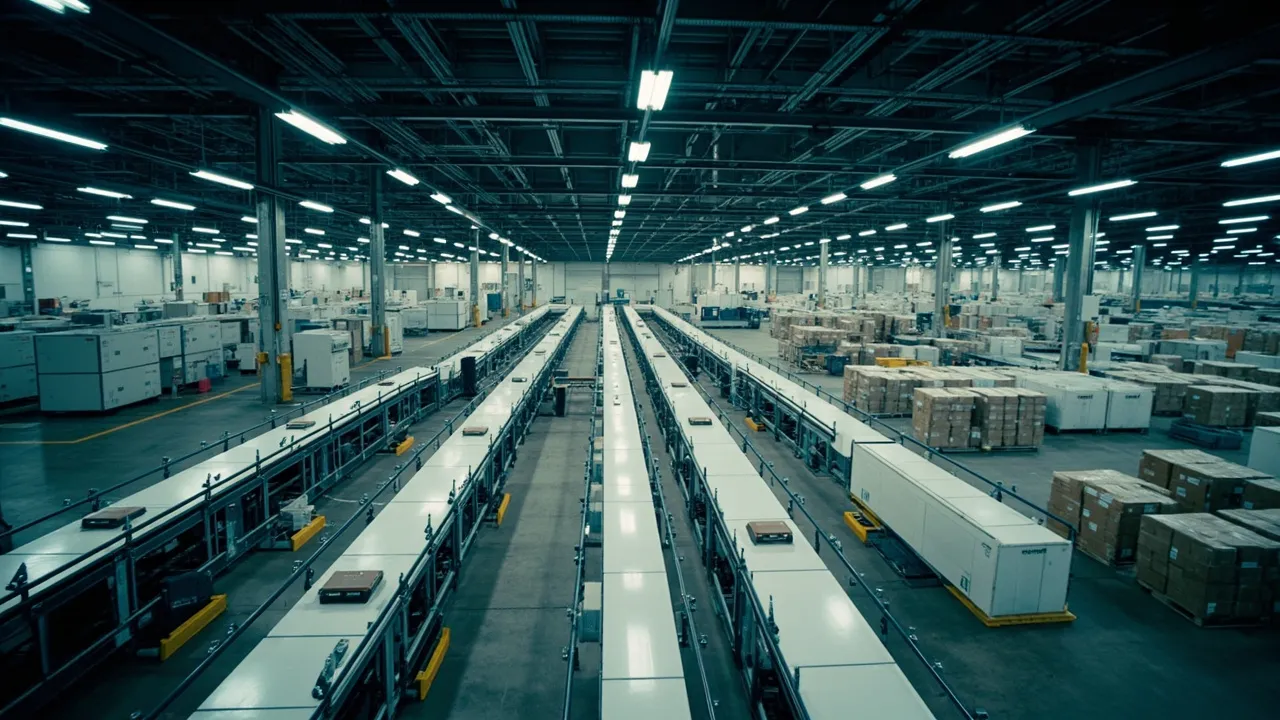
FreightWaves reports that Maersk has taken over management of Puma distribution centers in Torrance, California; Phoenix; and Whitestown, Indiana. Together, the three facilities cover about 2.3 million square feet and use AutoStore robotic storage and retrieval systems.
The agreement lets Maersk offer unused capacity to outside customers while continuing to serve Puma's retail, wholesale, and ecommerce channels. Torrance is expected to become Maersk's first North American AutoStore site supporting multiple clients. Beginning in 2027, the facility is expected to have capacity available for additional brands and be capable of handling roughly 20 million units annually.
This is not just a real-estate sublease. New clients will share automation, software integrations, workstations, labor, staging areas, docks, and operating attention. Maersk brings scale to that task: FreightWaves says it operates more than 70 North American warehouses totaling about 22.5 million square feet, plus more than 500 warehouses globally.
The broader market makes flexible space attractive. Inbound Logistics notes that the U.S. industrial vacancy rate reached 7.1% in the second quarter of 2025, while facilities below 100,000 square feet remained much tighter at 4.4%. Shared automated capacity offers brands an alternative to leasing and equipping a dedicated building, but only if its economics reflect actual operating complexity.
Measure capacity at every constraint
Before promising volume, map capacity across the complete order path. Storage is only one dimension. The operator should establish practical hourly and daily limits for:
- inbound appointments, unloading, inspection, and putaway;
- grid locations, robot availability, and workstation presentation rates;
- picking, packing, labeling, value-added services, and returns;
- staging positions, dock doors, trailer dwell, and carrier collections;
- labor by skill, shift, and peak-period availability;
- systems throughput, integrations, and recovery during an outage.
Each measure needs a utilization threshold below the theoretical maximum. Running a critical station at 100% leaves no buffer for an equipment fault, late inbound trailer, promotion, or unexpected order mix. Sellable capacity should equal tested capacity minus the anchor customer's protected reservation, operating buffer, and already committed client demand.
Order profiles matter just as much as unit volume. Twenty thousand single-line apparel orders do not consume the same resources as 20,000 multi-line orders requiring gift packaging, serial capture, or retailer-specific labeling. Pricing every unit identically would reward the customer creating the most congestion and penalize the one whose work moves cleanly through the system.
Protect the anchor shipper first
Puma funded and designed this network around its own demand. Any shared-capacity agreement should therefore encode priority instead of leaving it to supervisors during a peak.
Start with a rolling capacity forecast and a firm reservation window. Puma's protected baseline could vary by week, sales event, and channel. Other clients receive committed volumes outside that reservation, plus flexible capacity that can be curtailed with agreed notice. The contract should define what happens when actual demand exceeds forecast: which orders retain priority, what overflow options activate, and who pays incremental labor or transport.
Service-level agreements should be specific enough to operate. Measure order-release-to-ship time, on-time carrier handoff, inventory accuracy, receiving cycle time, and return disposition. Set separate targets by client and service tier. A shared facility also needs physical and digital inventory segregation, role-based access, auditable adjustments, and documented procedures for damaged or misrouted stock.
Build a price around cost and congestion
A defensible rate card has four layers.
Reserved capacity: Charge a recurring fee for storage, workstation time, or throughput held available whether the customer uses it or not. This compensates the operator for turning away competing demand.
Activity: Apply transaction rates to receiving, putaway, storage, picks, packing, returns, and value-added services. Use order-profile bands so complex work does not hide inside an average per-unit price.
Congestion: Add premiums when demand falls in scarce windows, such as holiday peaks, late order waves, or heavily booked dock periods. Congestion pricing should be rule-based and visible—not an improvised surcharge after the fact.
Separation and service: Recover dedicated inventory controls, customer-specific integrations, packaging, reporting, security, and higher service commitments. Minimum monthly revenue and implementation fees can cover fixed onboarding costs.
For example, suppose a client reserves 100,000 unit positions, forecasts 12,000 daily picks, and requests a 3 p.m. same-day cutoff. Its price should reflect all three commitments. If it sends 18,000 picks on a peak day, the excess should draw a pre-agreed flex rate or move to the next service window. That is clearer and safer than pretending one storage rate covers everything.
Manage the network with shared facts
The commercial model only works when planning, warehouse execution, inventory, orders, and transportation data agree. A weekly capacity view should show reserved, forecast, actual, and available volume by client and constraint. Daily control should flag exceptions early enough to add labor, change waves, redirect inbound freight, or adjust carrier pickups.
CXTMS connects order and shipment execution with dock, carrier, cost, and service data so operators can see how warehouse decisions affect outbound performance. That shared view helps teams protect the anchor account while converting genuinely available capacity into profitable work.
Request a CXTMS demo to build capacity-aware fulfillment and transportation workflows for your multi-client logistics network.