Pressed-Wood Pallets: A Qualification Scorecard for Cost, Damage, and Export Moves

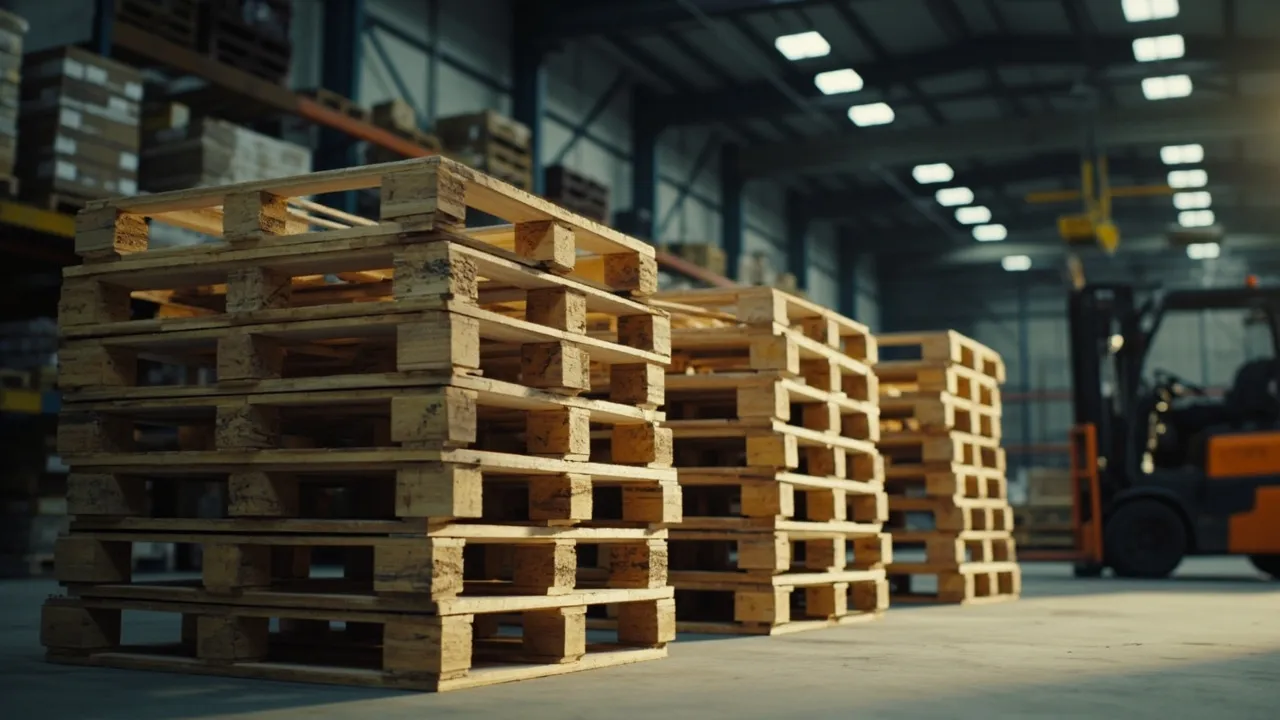
The cheapest pallet on a purchase order is not necessarily the lowest-cost platform in a freight network. A pallet that saves a few dollars but creates crushed cartons, conveyor faults, rack instability, or rejected export loads can erase that saving quickly. Pressed-wood pallets deserve a more disciplined evaluation because their manufacturing process and operating profile differ materially from conventional nailed timber platforms.
Pressed-wood pallets are molded as one piece from recovered pallets, sawmill chips, and other wood fiber. The material is ground, dried, and compressed under high heat and several hundred tons of pressure. According to Modern Materials Handling, that process produces consistent dimensions, eliminates nails, reduces mold and mildew concerns, and creates pallets that can nest tightly for storage and repositioning.
Those advantages are real, but they do not make pressed wood a universal substitute. The right question is whether a specific pallet design passes the requirements of a specific product, facility, handling system, and lane.
Understand the operating differences
A conventional stringer pallet is assembled from separate boards and fasteners. It can often be repaired by replacing a damaged component, but board thickness, fastener position, moisture content, and deck gaps can vary. Pressed wood is molded, so its deck height, feet, and weight tend to be more consistent. It has no protruding nails or splinters to puncture bags, scrape floors, or catch corrugated displays.
Nesting is the most visible logistics advantage. Modern Materials Handling reports that a typical truck may carry about 500 to 540 conventional pallets, versus nearly 1,100 nested pressed-wood pallets. That is roughly double the empty-pallet density and can reduce storage footprint and repositioning miles.
Weight also matters. A separate Modern Materials Handling report cited molded pallets as 35% lighter and said nesting could reduce retrieval cost by more than half compared with conventional pallets. Treat those figures as hypotheses to verify with the exact size and design under consideration—not guarantees for every supplier or load.
The tradeoffs deserve equal attention. Molded pallets are generally designed for limited reuse and are not readily repairable. Moisture resistance is not the same as outdoor durability; suppliers commonly recommend indoor storage. In racks, molded feet must receive the support specified for the design. A pallet that performs well on a floor may behave differently across open rack beams.
Build a four-part qualification test
Procurement should qualify the pallet with operations, safety, quality, and transportation teams. Run a representative sample through four gates before approving a lane.
1. Load and handling gate
Test the lightest, average, and heaviest shipping units, including concentrated and uneven loads. Measure deck deflection after loading and after a realistic dwell period. Run forklift and pallet-jack entries from every direction workers will use. Check whether molded feet chip, fork openings cause contact, or stretch wrap loses containment after repeated handling.
Include impact events that mirror the operation: abrupt stops, dock-plate transitions, trailer vibration, and two or three warehouse transfers. Record product shift, corner crush, punctures, broken feet, and any load requiring rework.
2. Rack and conveyor gate
Test the actual rack geometry rather than relying only on a static load rating. Confirm that all required feet are supported and measure loaded deflection at the intended dwell time. If the network uses push-back, flow, drive-in, or automated storage equipment, obtain explicit engineering approval for that configuration.
Then run pallets through every powered and gravity conveyor transition. Watch photo-eye detection, stops, turntables, transfers, and pallet dispensers. Consistent molded dimensions can help automation, but foot geometry may interact differently with rollers and chains than a stringer pallet does. Count jams per 1,000 moves and note every manual intervention.
3. Environment and export gate
Condition samples at the highest expected humidity and expose a separate group to realistic incidental moisture. Recheck mass, stiffness, dimensions, bonding, and surface condition. Do not use a brief splash test as proof that a pallet can live outdoors.
For international lanes, validate acceptance with the pallet supplier, customs broker, destination facility, and current country requirements. The high-heat molding process sanitizes the wood fiber, and the cited industry reporting describes molded pallets as meeting export phytosanitary requirements. Still, document product specifications and required markings before tendering freight. “Processed wood” should be a verified compliance attribute, not an assumption made at the dock.
4. End-of-life gate
Map what happens after delivery. Can the consignee reuse the platform, return it economically, recycle it locally, or send it into an approved wood-recovery stream? A low purchase price becomes less attractive if destinations charge disposal fees or lack a practical recovery route. Include those costs and any reverse-logistics miles in the lane decision.
Score total cost, not pallet price
Use a 100-point scorecard tailored to the risk of the lane:
- Load integrity and product protection: 25 points
- Rack and material-handling compatibility: 20 points
- Conveyor and automation performance: 15 points
- Export and destination acceptance: 15 points
- Empty storage and transport efficiency: 10 points
- Moisture and environmental performance: 5 points
- End-of-life economics: 5 points
- Purchase price: 5 points
Making unit price only 5% of the decision is deliberate. As Inbound Logistics notes, pallets are the first line of defense for product condition; better choices can reduce damage and contamination while supporting safer, denser shipments.
Track results by pallet type, product family, facility, and lane. Useful measures include damage claims per 1,000 shipments, pallet failures per 1,000 moves, conveyor interventions, repacking labor, product write-offs, empty-pallet storage positions, repositioning cost, disposal fees, and export exceptions. Calculate total packaging cost per successful delivery rather than cost per pallet purchased.
Pressed wood is most compelling when one-way or export moves value consistent dimensions, low tare weight, dense empty storage, and a nail-free surface. Conventional timber may remain preferable in repairable pools, demanding rack configurations, wet environments, or loops with many turns. A controlled trial makes that distinction visible before the network pays to learn it at scale.
Turn pallet qualification into a repeatable decision
CXTMS helps logistics teams connect packaging standards with shipment lanes, facilities, carriers, exceptions, damage records, and landed cost. Instead of treating pallet selection as an isolated purchasing choice, teams can compare performance where it actually matters: at delivery.
Request a CXTMS demo to build lane-level controls and scorecards for packaging, freight performance, and total transportation cost.