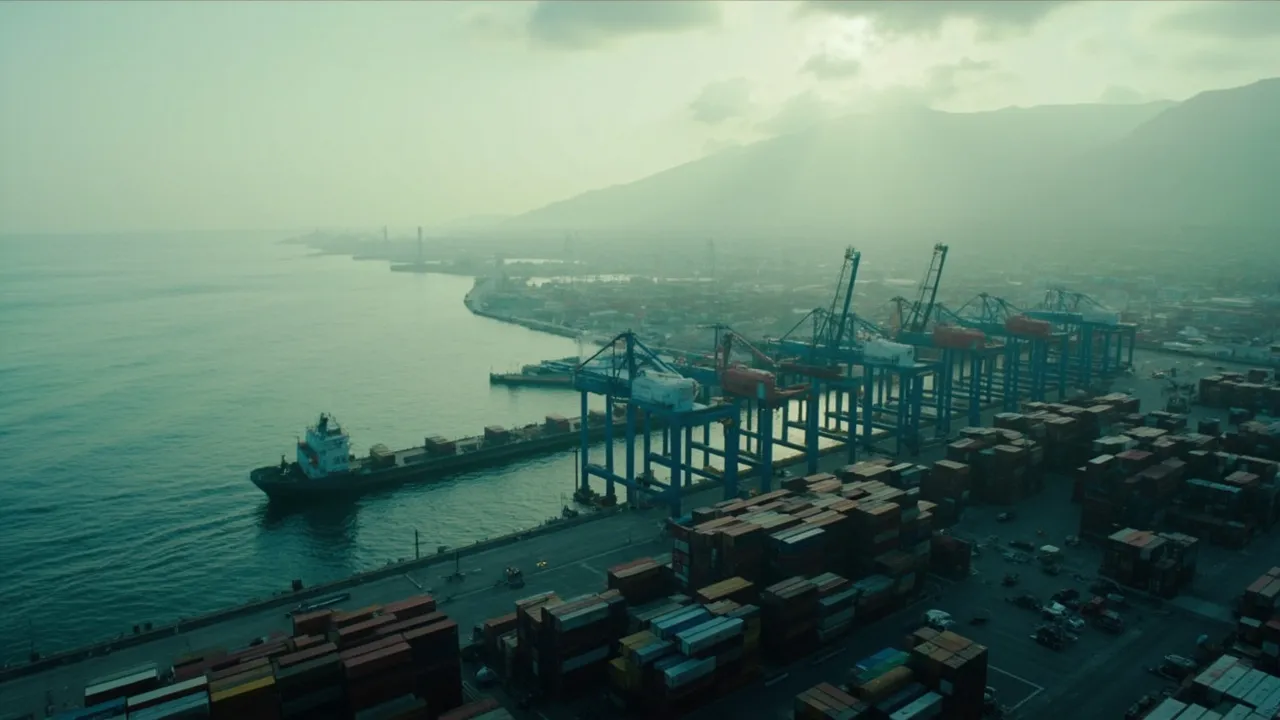
Port NOLA's New Deepwater Terminal Changes Gulf Gateway Scenario Planning


Federal authorization for the Louisiana International Terminal moves Port NOLA's long-planned deepwater container project from aspiration toward execution. It does not, however, create usable freight capacity overnight. For importers evaluating Gulf gateways, the announcement should trigger structured scenario planning—not an immediate shift based on projected nameplate throughput.
SupplyChainBrain reports that the U.S. Army Corps of Engineers has authorized construction of the terminal in Violet, Louisiana. The strategic attraction is clear: a location downriver from New Orleans can receive larger ships without the bridge-height constraints affecting existing container facilities farther upriver.
That changes the long-term map. Yet the operational value of any new terminal depends on the entire chain connecting the berth to the consignee: channel access, cranes, yard systems, chassis, drayage, highways, rail slots, barge services, warehouses, labor, and customs capacity. Shippers should model those dependencies explicitly before treating announced capacity as available capacity.
Authorization removes one gate, not every gate
The permit is an important milestone because a deepwater terminal cannot advance without federal review of navigation and environmental impacts. But authorization is one point in a sequence that still includes financing, final design, procurement, site preparation, construction, equipment commissioning, carrier commitments, and operational ramp-up.
Published plans also show why expectations need careful version control. FreightWaves reported in 2023 that the completed facility was designed to handle 2 million twenty-foot-equivalent units annually and ultra-large container vessels, with an expected 2028 completion at that time. A 2024 SupplyChainBrain update described an initial opening target of 2028 with capacity of 280,000 containers a year. Those figures are not necessarily contradictory: one can describe ultimate buildout while the other reflects an initial phase. They do show why procurement teams must attach a date, phase, and source to every capacity assumption.
Create at least three scenarios. The conservative case assumes milestone slippage and a slow carrier ramp. The base case uses the latest funded construction sequence and phased capacity. The accelerated case assumes timely commissioning plus firm service commitments. No scenario should unlock a routing change merely because a permit was issued.
Usable capacity is a multimodal equation
A terminal's practical throughput is the lowest sustainable capacity across its connected systems. Two million TEUs at full buildout has limited value if import boxes encounter scarce appointments, insufficient chassis, constrained rail departures, or warehouse congestion.
Truck and highway capacity. Measure gate hours, appointment availability, dual-transaction rules, average turn time, chassis supply, and driver coverage by day. Map the route from Violet to major distribution nodes and identify single points of failure. Model ordinary traffic separately from weather closures and peak-season surges.
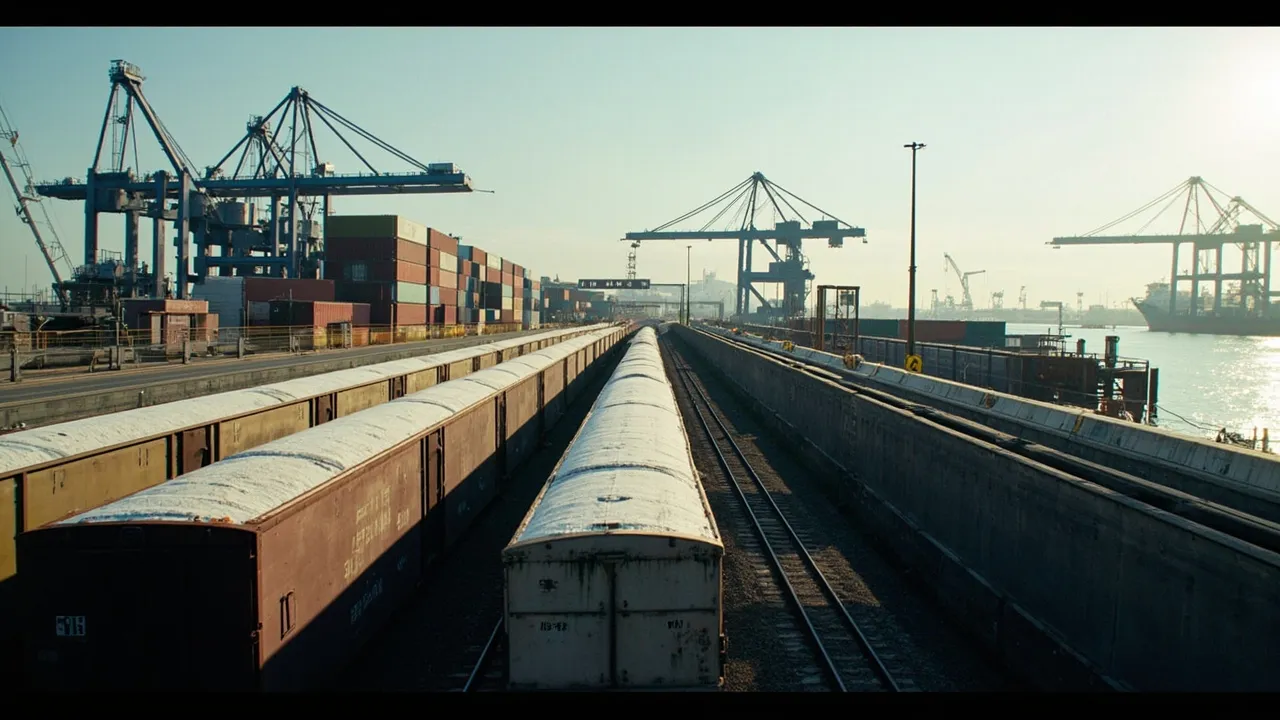
Rail connectivity. Confirm whether services are on-dock or require drayage, which Class I networks can be reached, expected departure frequency, train cutoff rules, and available lift capacity. A theoretical rail connection is not the same as a dependable scheduled service with equipment and destination slots.
Barge optionality. The Mississippi system gives New Orleans a distinctive inland-waterway proposition. FreightWaves noted in 2025 that project plans could support intermodal and container-on-barge services across a network reaching 14,500 miles of inland waterways in 31 states and more than 30 potential hubs. That reach is strategically valuable, but a shipper still needs published schedules, equipment availability, transfer cutoffs, water-level contingencies, and total transit distributions before counting barge capacity in a service promise.
Warehouse readiness. Track available square footage, transload doors, bonded capacity, refrigerated plugs, operating hours, and labor. The relevant question is not how much warehouse space exists in the region, but how much qualified capacity can accept the shipper's freight during its peak weeks.
Compare gateways by end-to-end variability
Port comparisons often stop at ocean rate and scheduled port-to-port transit. That hides the costs most likely to erase a Gulf-routing advantage. Importers should compare New Orleans with Houston, Mobile, Savannah, and other realistic alternatives using the same door-to-door clock.
Start that clock at the origin cargo cutoff and stop it at confirmed warehouse receipt. Capture sailing frequency, transshipment risk, vessel arrival variance, anchorage time, discharge-to-availability time, customs holds, terminal dwell, appointment delay, drayage transit, rail or barge connection time, and final receiving delay.
Report the median, 80th percentile, and 95th percentile—not just the average. A gateway with a slightly longer median can be the better inventory choice if its tail is shorter and recovery capacity is stronger. Convert variability into money by calculating safety-stock requirements, detention and demurrage exposure, premium transport risk, and lost-sales consequences.
The comparison should also distinguish structural performance from temporary conditions. A new terminal's early months may show low congestion because volume is light, while commissioning issues can create unusual variability. Use rolling cohorts and tag every shipment by terminal phase, carrier service, inland mode, and exception cause.
Use milestone-based routing triggers
A disciplined gateway plan links volume commitments to evidence. Build a milestone register with an owner, target date, verification source, and routing consequence for each event:
- Federal and state permits remain valid, with material conditions recorded.
- Financing closes and major construction packages are awarded.
- Berth, channel, crane, yard, gate, and technology commissioning dates are confirmed.
- Ocean carriers publish services and executable first-receiving dates.
- Rail, truck, barge, and warehouse providers commit capacity and service levels.
- Pilot shipments meet dwell, damage, customs, and end-to-end transit thresholds.
- Performance remains within tolerance through a defined peak period.
Procurement can then stage commitments: maintain the terminal as a monitored option, request indicative rates, reserve limited pilot capacity, allocate a controlled share of volume, and scale only after measured performance clears each gate. Contracts should include ramp schedules, minimum-service conditions, data requirements, and exit rights if dependencies slip.
Turn infrastructure news into an executable plan
Port NOLA's deepwater authorization expands the future Gulf gateway set. Its eventual 2-million-TEU vision, access to larger vessels, and Mississippi River location could give shippers another powerful route into the central United States. The opportunity is real—but it is phased, conditional, and network-dependent.
CXTMS helps logistics teams compare gateway scenarios, monitor shipment milestones, measure dwell and variability, and keep carrier, terminal, and inland-mode evidence connected to each routing decision. Contact CXTMS to build a measurable Gulf gateway strategy before new capacity comes online.