Port of Los Angeles Blocked 120 Million Cyberattacks in a Month: Prioritize Freight System Access by Operational Impact

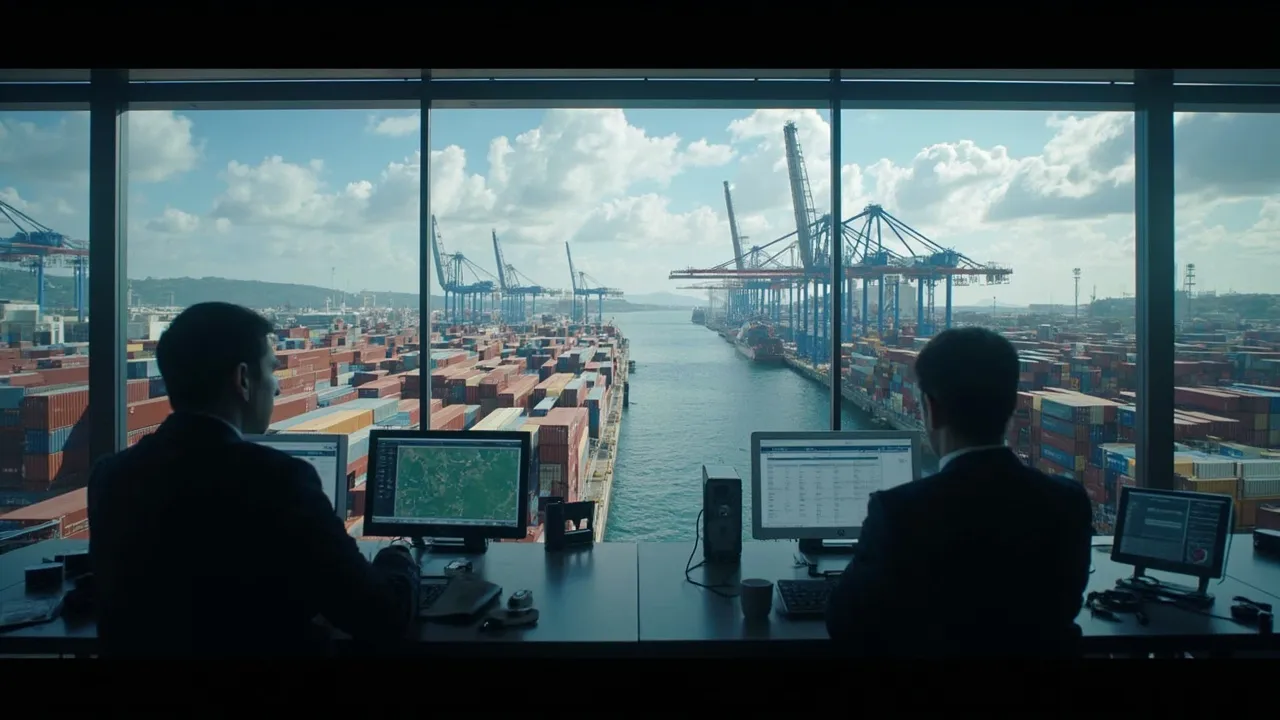
The Port of Los Angeles reportedly blocked more than 120 million cyberattack attempts in August 2026. That number is arresting, but freight leaders should resist treating it as a standalone risk score. A blocked scan, a credential-harvesting attempt, and malware reaching an operational system are not equivalent events. The useful question is not merely how many attempts occurred. It is which connections could interrupt cargo flow, corrupt shipment data, or create unsafe decisions if compromised.
SupplyChainBrain reported that the attempts included intrusions, network exploitation, credential harvesting, and malware. The volume also sits within a longer pattern: the publication reported roughly 40 million monthly attacks in 2022 and 750 million cyber-intrusion attempts stopped in 2023. These figures establish sustained pressure, not a precise probability that any individual shipment will be delayed.
For shippers, forwarders, brokers, and carriers, the right response is to prioritize access according to operational impact.
Start With Blast Radius, Not Alert Volume
A freight technology estate is a network of dependencies. Port-community systems exchange vessel, manifest, release, and availability data. Terminal systems control inventory status and pickup processes. Customs connections carry declarations and release messages. Appointment platforms govern scarce gate slots. Carrier integrations exchange tenders, status events, and proof of delivery.
Rank each connection by what happens when its confidentiality, integrity, or availability fails:
- Tier 1 — cargo-stop systems: Customs release, terminal operating, port-community, and gate-control connections belong here when failure can stop legal or physical movement. A false release is an integrity crisis; an unavailable release feed is a continuity crisis.
- Tier 2 — capacity-allocation systems: Appointment, drayage dispatch, rail reservation, and equipment-control links can strand cargo or waste scarce labor and chassis capacity. Hours matter even when the port remains open.
- Tier 3 — visibility and commercial systems: Carrier tracking, customer portals, rating, invoicing, and analytics may not stop a container immediately, but compromised data can trigger bad decisions and financial loss.
The classification should follow the business process rather than the vendor name. The same application may be Tier 1 for import-release messages and Tier 3 for a historical analytics feed.
Apply Least Privilege to Every Freight Connection
Many logistics integrations accumulate access over time. A service account created for status updates later receives booking permissions, document access, or broad administrative rights because expanding the existing credential is convenient. That convenience expands the blast radius.
Create an access register for every external connection. Record the owner, purpose, systems reached, data read, actions permitted, credential type, last rotation, and operational tier. Then remove permissions that the actual workflow does not require.
A carrier status feed should not be able to alter a customs release. An appointment connector should manage slots only for authorized facilities and accounts. A customer portal should expose the minimum shipment fields required for that customer. Administrative access should be separate from machine-to-machine credentials, protected with multifactor authentication, and used only for defined support work.
Rotation rules should reflect impact. Rotate Tier 1 secrets frequently and immediately after personnel, vendor, or incident changes. Prefer short-lived tokens, certificate-based authentication, and centrally managed secrets over passwords embedded in scripts. Log both successful and failed authentication, but also monitor what an authenticated identity does. A valid credential performing an unusual bulk download or changing release data is still dangerous.
Build Manual Continuity Before an Incident
Cyber resilience is an operating capability, not just a security control. Each Tier 1 and Tier 2 connection needs a documented fallback that staff can execute while systems are degraded.
For customs and terminal releases, define the authoritative alternate source, the people allowed to verify status, and the evidence required before movement. For gate appointments, identify how existing slots will be honored, how new requests will be queued, and how drivers will receive instructions. For carrier dispatch, maintain controlled offline contact lists and tender records. Never let a continuity procedure become a shortcut around identity checks or cargo-release controls.
Run tabletop exercises with operations, security, compliance, and customer service. Test a realistic sequence: the terminal feed becomes unavailable, cached availability data conflicts with a broker message, appointments continue to expire, and customers ask for delivery estimates. Measure the time to detect the conflict, declare the fallback, validate a release, communicate with drivers, and restore reconciled data.
Add Cyber Checks to Shipment Exception Management
Traditional exception queues assume that incoming events are trustworthy. During a cyber incident, both missing events and incorrect events matter. Transportation workflows should distinguish among four conditions:
- Source unavailable: no current event can be obtained.
- Source stale: an event exists but exceeds its freshness threshold.
- Source conflict: two authoritative systems disagree.
- Source integrity suspect: activity or incident intelligence indicates the data may have been altered.
Each condition needs a different response. An unavailable feed may justify a temporary manual check. Conflicting release data should stop execution until an authorized party resolves it. Suspected integrity failure should preserve logs, credentials, messages, and decision records for investigation.
Track cyber availability alongside operational milestones: last successful authentication, last validated event, source freshness, reconciliation status, and fallback mode. For high-impact loads, suppress automated customer promises when the underlying source is stale or disputed. A clear “verification in progress” status is safer than a precise but unsupported delivery time.
Measure Resilience in Freight Terms
Security teams will continue counting blocked attempts, but operations leaders need measures tied to cargo flow. Useful metrics include time to revoke a compromised credential, percentage of Tier 1 connections using short-lived authentication, time to enter manual mode, shipments exposed to stale data, recovery time, and the share of restored records successfully reconciled.
The Port of Los Angeles figures show why persistent defense is necessary. They do not tell an individual company where its greatest exposure lies. That requires mapping digital access to physical freight consequences, limiting every identity to its job, and rehearsing how cargo moves when a trusted connection cannot be trusted.
Want to make cyber-aware exceptions part of daily transportation execution? Request a CXTMS demo to see how centralized shipment workflows can improve control, visibility, and response.