Physical AI for Truck Fuel Control: Separate Driver Coaching From Route and Asset Waste

Fuel scorecards often start with a useful number—miles per gallon—and end with the wrong conclusion. A truck underperforms, so the driver gets coached. Yet the same fuel result could come from congestion, a mountain grade, excess payload, a dragging brake, poor tire pressure, an appointment that forces hours of idling, or a route plan that adds empty miles.
Physical AI gives fleets a better way to investigate. By combining onboard sensors, engine data, location, road context, load information, and operating history, it can distinguish what happened in the physical world before assigning responsibility. The result should not be a more aggressive driver leaderboard. It should be a cause-and-owner workflow that sends each loss to the person who can actually correct it.
MPG Is an Outcome, Not a Diagnosis
A low-MPG event is only the beginning of an analysis. Speed and harsh acceleration may be within a driver's control. Stop-and-go traffic, headwinds, terrain, gross vehicle weight, or a customer detention event are not. Mechanical drag may look like poor driving until the same tractor consumes more fuel across several drivers and comparable lanes.
This distinction matters because fuel waste is material. FreightWaves reports that a truck burning 0.8 gallons per idle hour can spend $4.48 per hour at the cited fuel price. It also cites an estimate that chronic idling can waste $4,000 to $6,000 per truck annually. Across 100 tractors, even the low end becomes a $400,000 opportunity—but only if the fleet knows why the engines were running.
That "why" changes the response. A driver warming a cab longer than policy permits needs coaching. A tractor powering jobsite equipment is performing useful work. A driver idling through three hours of dock detention needs a customer, appointment, or network intervention. Treating all three events alike creates bad incentives and weakens confidence in every score the fleet publishes.
Build a Cause Model From Physical Signals
The practical model starts by separating fuel loss into four categories.
Driver-controllable waste includes sustained speeding, unnecessary harsh acceleration, poor anticipation, excessive personal-comfort idling, and operation outside an efficient gear or engine-load range. These events should be normalized for road grade, traffic, load, weather, and equipment before coaching begins.
Route and dispatch waste includes congestion exposure, avoidable out-of-route miles, poor stop sequencing, empty repositioning, and schedules that create early arrival or detention. Location history, planned-versus-actual routes, appointment timestamps, and traffic context reveal whether the operating plan made efficient driving possible.
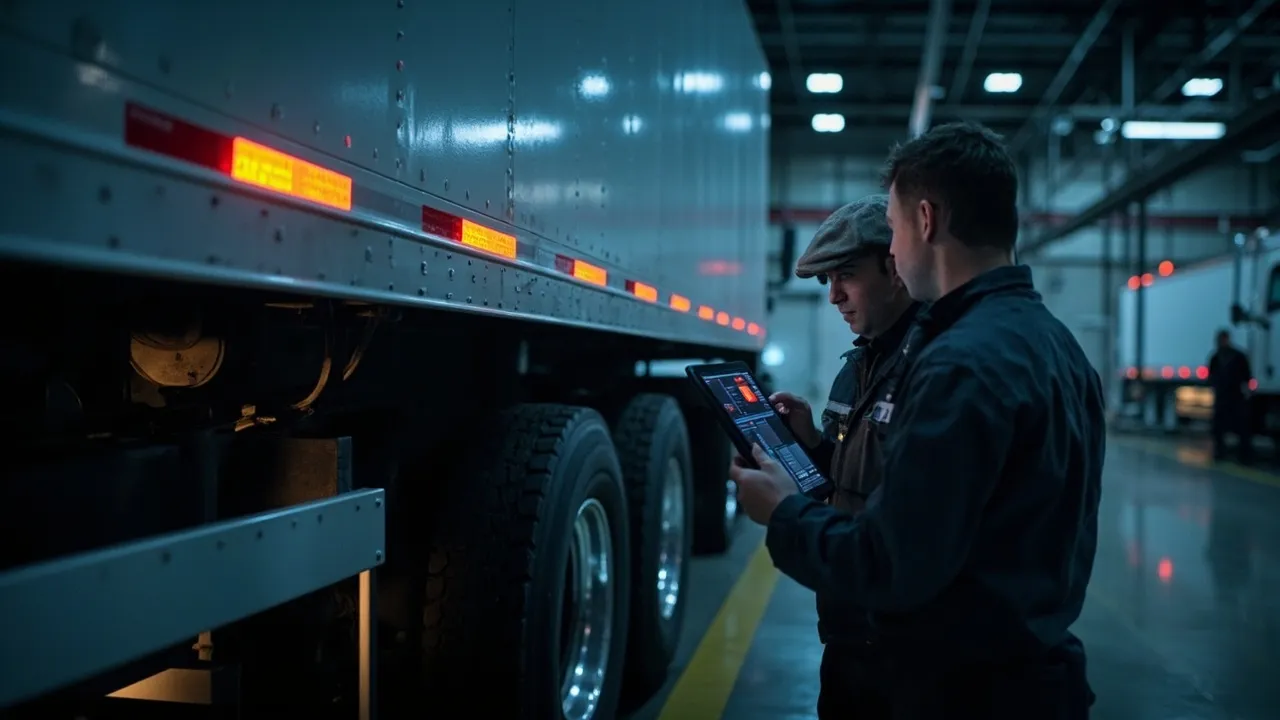
Asset waste includes tire problems, clogged filters, alignment issues, aerodynamic damage, engine faults, and brake drag. A persistent variance by tractor—especially when different drivers produce the same result—is a strong maintenance signal. Inbound Logistics recommends combining GPS and live route data with checks on tire inflation and filters to reduce detours, idling, and fuel usage.
Network and load waste includes imbalanced lanes, low cube utilization, unnecessary deadhead, excess payload, and facilities that repeatedly generate queues. These problems belong with network planning, procurement, customers, or warehouse operations—not in a driver's performance review.
Physical AI links those signals over time. One event rarely proves a cause. Repeated patterns across comparable trips, tractors, drivers, and conditions do.
Route Each Exception to the Correct Owner
Once the model assigns a likely cause, the system should create a specific action rather than another dashboard alert.
- Send verified speeding, acceleration, and avoidable idle patterns to a driver coach with trip context and a recommended behavior.
- Send congestion, detour, stop-sequence, and appointment issues to dispatch or route planning.
- Send tractor-specific MPG deterioration and sensor anomalies to maintenance with a diagnostic priority.
- Send recurring detention, empty-mile, or payload problems to the customer, facility, procurement, or network owner.
Use confidence thresholds. High-confidence, repeated patterns can trigger a work queue automatically. Ambiguous cases should be reviewed before anyone is scored. Fleets should also let drivers add context—such as weather, safety, jobsite power needs, or a customer's instruction—and preserve that explanation with the event.
The principle is simple: accountability must follow control. A fleet that penalizes drivers for dispatch decisions or equipment defects will teach people to distrust the data. A fleet that uses evidence to remove obstacles can make drivers active participants in the savings program.
Measure Savings Without Creating New Risk
Fuel reduction is not a sufficient success metric. Aggressive MPG targets can encourage slower driving that harms service, engine shutdowns that compromise comfort or job requirements, or operating choices that trade fuel for safety.
Track fuel saved alongside preventable safety events, on-time delivery, detention, maintenance cost, roadside failures, and driver acceptance. Compare performance within fair peer groups: similar equipment, payload, terrain, season, and duty cycle. FreightWaves' fleet guidance similarly recommends tracking MPG, idle percentage, harsh events, speeding, fuel cost per mile, and maintenance-related MPG variance by unit rather than relying on one fleetwide average.
A useful pilot begins with several representative lanes and a baseline period. Classify the largest fuel-loss events, assign owners, complete interventions, and then measure whether the same cause recurs. Report savings only after accounting for changes in fuel price, miles, load, and operating conditions.
The best result is not simply a higher MPG number. It is a closed-loop operating system in which coaching improves controllable behavior, dispatch removes avoidable route waste, maintenance catches inefficient assets earlier, and network teams redesign structural problems. That is where physical AI becomes operationally valuable: it turns fuel data into fair, targeted action.
Want to connect transportation planning, execution, and performance data in one workflow? Request a CXTMS demo and see how your team can manage exceptions with clearer ownership.