Peak Season Has Six Fewer Buffer Days: Put Weather Into Order-Promise Governance

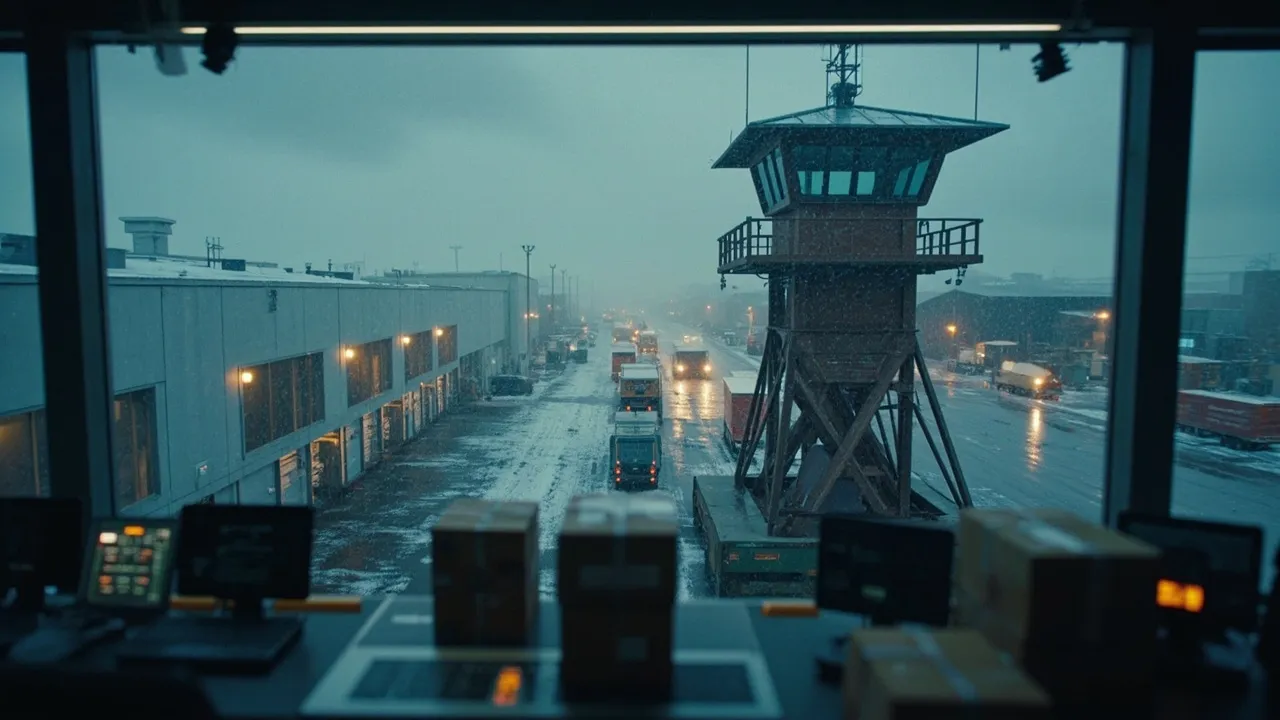
Peak-season planning has less room for error in 2026. Shippers are entering the season with roughly six fewer inventory-buffer days than in 2025 while moving 8.8% more units, according to Supply Chain Dive. At the same time, some carrier surcharges are up as much as 23% year over year.
That combination changes the role of weather intelligence. A storm alert on a dashboard is not enough. With less stock available to absorb delays and more volume competing for capacity, weather must become an input to the order promise: which node should release the order, when should it leave, which mode should carry it, and what delivery date can the business responsibly offer?
The buffer has moved from inventory to decision time
Traditional peak planning relies on physical cushions: extra inventory, earlier inbound orders, overflow labor, and reserved transportation capacity. Those safeguards still matter, but each is expensive. Holding more stock ties up working capital. Releasing every order early clogs staging areas. Upgrading every shipment to premium service destroys margin. Buying capacity after a disruption means paying into the tightest market.
The reported six-day reduction in inventory buffer makes blanket policies especially risky. A network cannot assume that every fulfillment node has the same exposure or that every customer promise deserves the same intervention. The better buffer is decision time—the hours or days gained by identifying a threatened order before a carrier misses pickup or a hub shuts down.
Recent events show how quickly transportation conditions can change. FreightWaves reported that two major winter storms in the first quarter of 2026 caused terminal closures and operational delays. Once terminals close, planners are no longer choosing among economical options; they are managing a recovery queue.
Convert forecasts into order-level exposure
Generic weather alerts create noise because they describe geography, not business impact. An actionable model joins forecast severity and timing to four operational dimensions:
- Origin: Is the releasing warehouse, supplier, port, or cross-dock inside the affected area?
- Lane: Will the shipment cross a threatened highway corridor, rail ramp, airport, sort hub, or last-mile region?
- Carrier and service: Does the selected network have an exposed terminal or a cutoff that will pass before conditions improve?
- Promise date: How much slack exists between the latest safe ship time and the customer's committed delivery date?
The result should be an exposure score attached to each order or shipment, not a colored weather map that planners must interpret manually. An order with four days of slack may need monitoring. An order with eight hours of slack, a storm-exposed hub, and a high-priority customer needs action.
This approach also prevents overreaction. Weather outside a lane's actual path should not trigger an upgrade. A predicted event after the delivery date should not alter today's promise. Precision protects service and cost at the same time.
Establish thresholds before the storm
Teams make inconsistent decisions when escalation rules live in inboxes or depend on whoever is on shift. Define thresholds in advance and connect each one to a permitted response.
Earlier release: Release an order ahead of its normal wave when forecast disruption overlaps the planned pickup window and inventory is available. Include warehouse capacity in the rule so early releases do not overwhelm docks or displace more urgent work.
Alternate fulfillment node: Re-source when another node can avoid the affected corridor and still meet the promise at an acceptable landed cost. The comparison must include inventory availability, transfer commitments, labor constraints, parcel zones, and split-shipment risk.
Carrier or mode change: Move to an alternate carrier, air service, team transit, or expedited ground only when the expected cost of lateness exceeds the incremental freight cost. Re-rate before tender and preserve the reason code for the upgrade.
Temporary promise-date change: If no operational response can reliably protect the original date, change the promise shown to new buyers in the affected market. This is better than accepting orders against an impossible service level and apologizing later. Existing orders should receive proactive, order-specific communication rather than a generic disruption banner.
Inbound Logistics describes constant shock as a new operating baseline and highlights the need for clearer end-to-end inventory tracking and agile logistics partners. Its recent analysis notes that some companies are standing up facilities in six to nine months, sometimes faster. That kind of network agility is useful, but daily promise governance is what turns network options into customer outcomes.
Measure avoided failures, not alert volume
A weather program should not be judged by forecasts consumed or alerts sent. Measure whether interventions protected orders economically.
Start with the number of exposed orders, orders acted upon, and late deliveries avoided. Then compare those benefits with the cost of earlier inventory deployment, split fulfillment, premium freight, carrier surcharges, and canceled warehouse work. Track false positives—orders upgraded or released early that would likely have arrived on time without intervention—and false negatives that were flagged too late.
Review results by origin, lane, carrier, service level, and disruption type. If a specific parcel hub repeatedly generates late orders during winter weather, the answer may be a routing rule rather than another alert. If premium upgrades rarely improve delivery performance on a lane, stop authorizing them automatically. If a node cannot process early releases without creating congestion, adjust wave capacity before the next event.
The crucial metric is cost per protected promise. It lets operations compare a $20 upgrade with the commercial value of avoiding a late order, refund, lost customer, or service penalty. It also makes clear when accepting a revised date is more rational than buying expensive capacity.
Make the promise a governed record
Peak season exposes the weakness of disconnected systems. Inventory, orders, transportation plans, weather signals, and customer commitments often sit in separate tools. Planners then reconcile them manually at exactly the moment speed matters most.
CXTMS brings shipment execution, milestones, costs, exceptions, and decision history into one operating record. Teams can connect weather exposure to affected loads, assign owners, document reroutes and upgrades, and measure whether each intervention protected the customer promise.
Request a CXTMS demo to see how governed transportation workflows can turn weather risk into faster, more consistent peak-season decisions.