Parallel Systems Raises $100 Million: Set Commercialization Gates Before Routing Freight

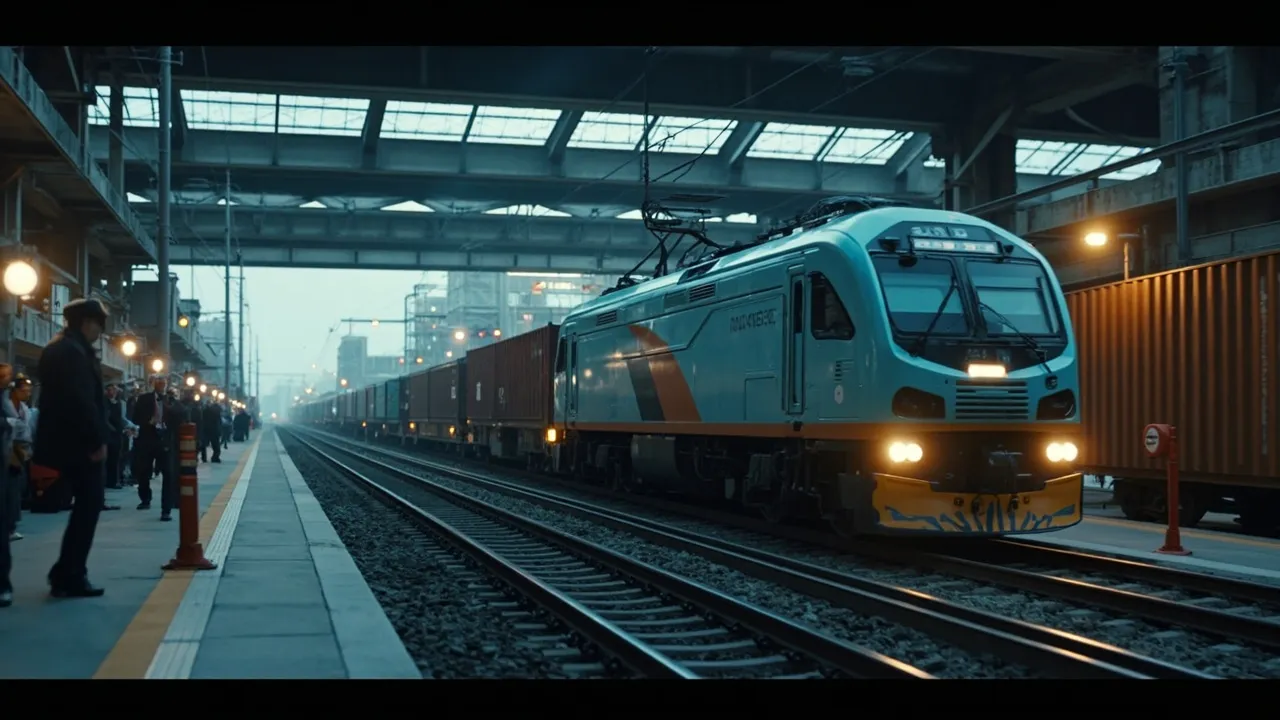
Parallel Systems' $100 million Series C is a serious vote of confidence in battery-electric autonomous freight rail. It is not, by itself, a reason for a shipper to place production freight on the technology.
The distinction matters. Investment can accelerate manufacturing, testing, and deployment, but a transportation buyer still needs proof that a new service can protect cargo, connect with terminals, recover from disruptions, and meet its delivery promise. The practical response is neither to dismiss autonomous rail nor to treat funding as operational validation. It is to define commercialization gates now, before enthusiasm starts influencing routing decisions.
Funding moves the question from possibility to readiness
Parallel announced $100 million in new Series C capital on October 7, 2026, bringing its reported total funding above $200 million. The company intends to scale production and commercial deployment of its autonomous, battery-electric rail vehicles. That creates a credible path from prototypes toward repeatable service.
Yet the operating evidence is still developing. FreightWaves reported in April 2025 that testing was organized as a seven-phase program, beginning with short-distance trials and progressing to longer, multi-vehicle operations. Commercial operations were anticipated for 2026, subject to the results of that work and regulatory approval.
That progression is exactly how shippers should evaluate the opportunity: as a sequence of earned permissions. A successful controlled test should authorize the next test, not automatically qualify a customer lane.
The market case is real. Logistics Management found that U.S. rail carloads were up 2.5% year over year through May 2025, while May intermodal volume increased 0.6%. Its more recent rail roundtable described carload volume at a three-year high, although results varied by commodity. Autonomous short-haul rail could open additional lanes, but commercial readiness must be measured separately from market demand.
Gate 1: prove the technology under lane conditions
Start with the physical operating profile, not a broad claim that the vehicle works. A lane should qualify only after testing covers its actual grades, curves, crossings, signal environment, weather, track class, communications coverage, and terminal approaches.
The evidence package should document braking performance at expected weights, obstacle response, vehicle-to-vehicle coordination, remote supervision, cybersecurity, state-of-charge margins, and safe behavior after a sensor or communications failure. Testing also needs representative cargo configurations. A lightly loaded trial on a simple segment does not validate a heavy container move through a congested interchange.
Set numerical thresholds before reviewing results: successful trips, intervention rate, maximum unplanned stop time, energy reserve, and mean time between service-affecting failures. This prevents a promising demonstration from being interpreted as proof after the fact.
Gate 2: verify regulatory authority and accountability
Technical capability does not substitute for permission to operate. The railroad, technology provider, and shipper should identify every applicable federal, state, local, and railroad-specific approval for the intended service. The scope must match the proposed lane, cargo, operating method, and phase of deployment.
Responsibility also needs to be explicit. Who has movement authority? Who monitors the vehicles? Who stops operations when conditions leave the approved envelope? Who records and reports an incident? A pilot should not advance until the operating parties can answer those questions in writing and show that procedures have been exercised.
Hazardous materials, temperature-controlled goods, high-value cargo, and time-critical components may require additional controls or may remain outside the initial service scope. Commercial pressure is a poor reason to expand eligibility faster than the safety case.
Gate 3: demonstrate terminal and interchange interoperability
A rail vehicle can perform flawlessly and still create a weak freight service. The shipment must pass through gates, cranes, chassis pools, yards, railroads, and final-mile providers without losing visibility or priority.
Qualification should therefore include terminal acceptance, equipment compatibility, loading and securement procedures, electronic event exchange, interchange rules, and exception ownership. Test whether arrival estimates flow into appointment planning and whether identifiers remain consistent from the original order through rail movement and final delivery.
Measure total terminal dwell, missed connections, handoff latency, and event completeness. If staff must reconcile spreadsheets or manually translate every status update, the technology has not yet delivered commercial interoperability.
Gate 4: validate shipper service with controlled freight
Begin production validation with forgiving cargo on a lane that has stable volume and accessible recovery options. Run a defined sample alongside the incumbent truck or conventional intermodal service. Compare door-to-door transit time, on-time performance, variability, damage, dwell, emissions, and fully allocated cost.
Average transit time alone is misleading. A service that is competitive on average but highly variable can force a shipper to carry extra inventory or miss customer windows. Require a minimum sample size and judge the distribution of outcomes, including the worst-performing moves.
Expand only when the autonomous option meets the agreed service threshold for consecutive review periods. Growth should move in steps by volume, cargo class, and network complexity rather than through a one-time launch decision.
Gate 5: secure insurance, recovery, and fallback capacity
Before tendering a load, confirm cargo liability, equipment liability, cyber coverage, claims handling, and insurance limits. Contracts should describe custody at every handoff and allocate responsibility for autonomous-system failures without ambiguity.
Then test the recovery plan. If a vehicle stops, determine who responds, how quickly track access can be restored, where the cargo can be transferred, and how customers receive updates. Define triggers for shifting freight to a conventional train or truck and reserve enough fallback capacity to make that promise credible.
A tabletop exercise is useful, but a live recovery drill is better. Time the response, record each handoff, and close gaps before increasing exposure.
Turn commercialization gates into routing rules
The transportation management system should make the qualification decision visible at the shipment level. For each autonomous rail lane, store approved origins and destinations, cargo exclusions, weight limits, service windows, insurance status, fallback providers, test maturity, and expiration dates for required approvals.
CXTMS can then compare the qualified autonomous option with truck and conventional intermodal alternatives using consistent cost, transit, reliability, capacity, and emissions criteria. If a gate expires or live performance drops below its threshold, the system can remove the option from automated routing while preserving the audit trail.
That discipline turns a technology bet into a controlled transportation product. The $100 million funding round may accelerate the hardware. Shippers should let verified evidence—not the size of the investment—determine when freight follows.
Ready to evaluate emerging rail services without weakening routing control? Request a CXTMS demo to see how lane rules, comparative routing, and exception workflows can support a measured rollout.