Insights
Industry insights, integration guides, and product updates from the CXTMS team.

The Gordie Howe Bridge Turns Border Crossing Time Into a Network Design Variable
The Gordie Howe International Bridge gives Detroit-Windsor freight teams a second crossing, new capacity, and a reason to treat border time as structured network data.
 CXTMS InsightsJuly 14, 20266 min read
High-Altitude Freight Damage Needs Lane-Level Securement Rules
High-altitude routes can turn ordinary dunnage choices into freight damage claims. Shippers need lane-level securement rules tied to elevation, product crush profiles, and carrier instructions.
CXTMS InsightsJuly 14, 2026 · 6 min read
June's 71.1 LMI Reading Means Inventory Is Moving Before Capacity Is Ready
June's Logistics Managers' Index shows inventory rebuilding, tighter warehouse space, and elevated freight prices converging in the same planning cycle.
CXTMS InsightsJuly 14, 2026 · 6 min read
Mexico's Driver Shortage Makes Cross-Border Capacity a Workforce Problem
Mexico's commercial-driver shortage is turning cross-border capacity into a workforce-risk problem for shippers, carriers, and logistics teams.
CXTMS InsightsJuly 14, 2026 · 6 min read
Rhine Low Water Is a Reminder That Inland Shipping Needs Depth Triggers
Low water on the Rhine shows why inland waterway logistics needs gauge-based triggers for load factors, surcharges, modal shifts, and customer ETAs.
CXTMS InsightsJuly 14, 2026 · 6 min read
Truckload Pricing Power Is Back, but Demand Is Not the Whole Story
Truckload rates are rising again, but capacity reduction, enforcement, tariffs, fuel uncertainty, and carrier discipline matter as much as demand.
CXTMS InsightsJuly 14, 2026 · 6 min read
Warehouse Robotics Compress Pick Time, So the Constraint Moves to the Dock
Goods-to-person robotics can multiply pick throughput, but faster fulfillment pushes the next bottleneck toward docks, trailers, and carrier cutoffs.
CXTMS InsightsJuly 14, 2026 · 6 min read
AI Freight Fraud Turns Carrier Onboarding Into a Live Control
AI-enabled freight fraud is moving faster than static carrier onboarding, making continuous carrier validation a shipment-level control.
CXTMS InsightsJuly 13, 2026 · 6 min read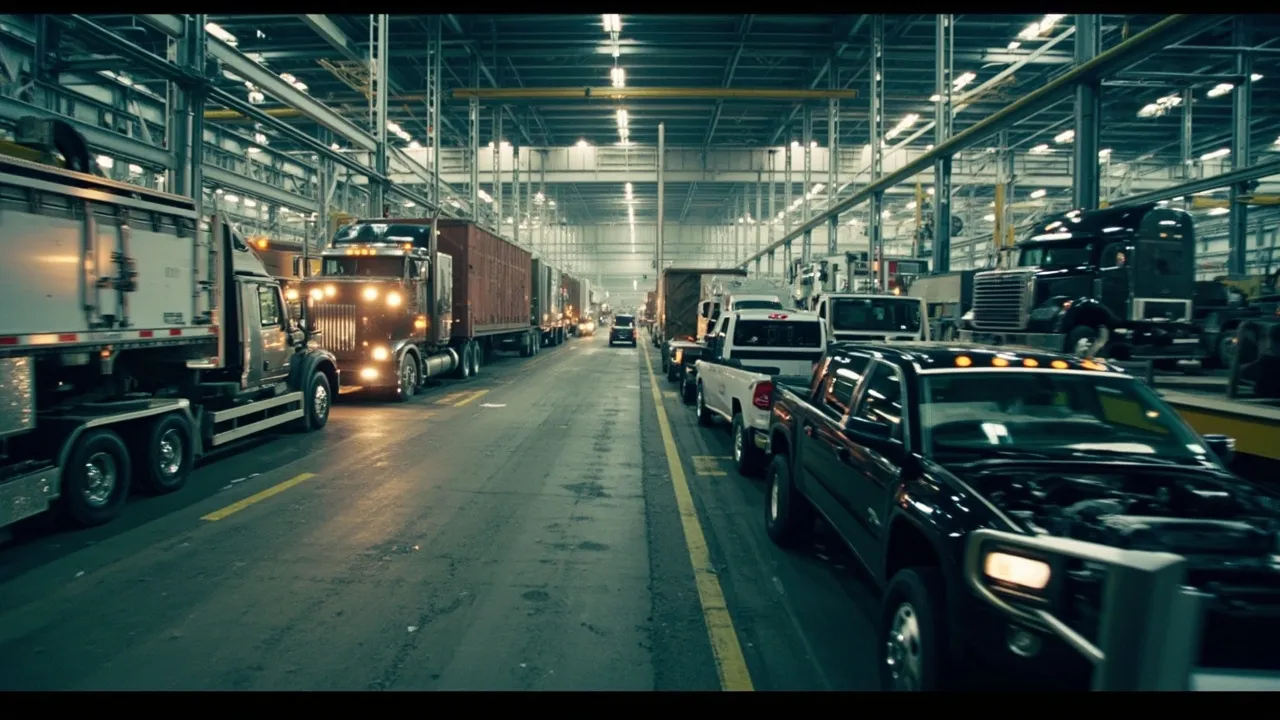
Automotive Plant Expansions Need Logistics Readiness Before the First Unit
Toyota's $3.6 billion San Antonio expansion shows why automotive production launches need inbound, packaging, yard, rail, and dealer logistics ready before the first unit.
CXTMS InsightsJuly 13, 2026 · 6 min read
Contract Freight Is Becoming a Fuel-Cost Hedge for Bulky Retail
Lovesac's use of contract freight shows why bulky retail shippers need lane-level fuel, cube, surcharge, and service evidence before spot volatility hits.
CXTMS InsightsJuly 13, 2026 · 6 min read