Insights
Industry insights, integration guides, and product updates from the CXTMS team.
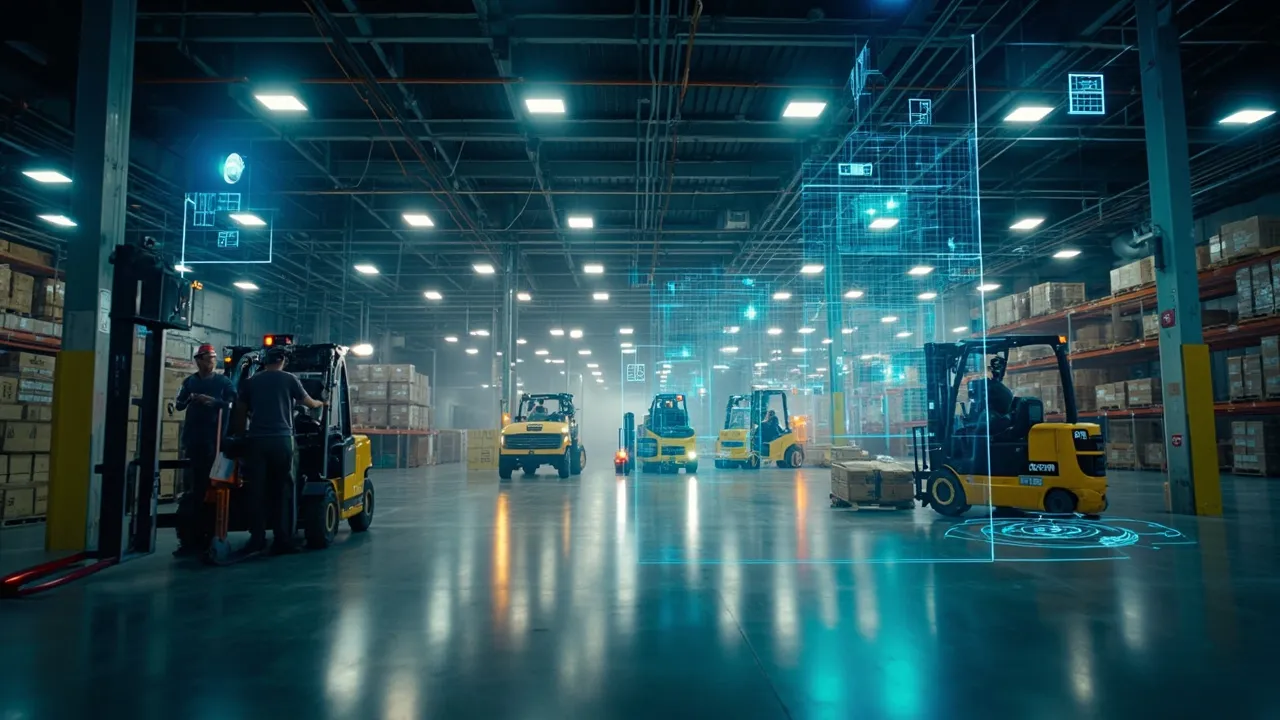
Warehouses Need Better Data at the Edge: Why Real-Time Capture Is Becoming the Next Productivity Layer
Real-time edge data capture is moving warehouses beyond delayed scans, giving operators sharper visibility, faster exception response, and better handoffs into transportation execution.
 CXTMS InsightsApril 12, 20266 min read

Transportation Infrastructure Is Getting Smarter, Not Just Bigger: Deloitte’s 2026 Signal for Logistics Leaders
Deloitte’s 2026 transportation outlook points to a freight network where digital twins, AI governance, and shared data matter as much as physical capacity expansion.
CXTMS InsightsApril 12, 2026 · 6 min read
UPS’s $100 Million Taiwan Hub Shows How Semiconductor Logistics Is Becoming a Premium Freight Discipline
UPS’s new Taiwan hub is more than a network expansion. It shows how semiconductor freight is turning into a premium logistics discipline built around speed, precision, and capacity control.
CXTMS InsightsApril 12, 2026 · 6 min read
Disaster Logistics Is Still Too Reactive. ALAN’s 2026 Survey Wants to Quantify the Gaps.
ALAN’s fourth annual Humanitarian Logistics Survey is a useful reality check for operators who still treat emergency freight planning as an afterthought instead of a core resilience discipline.
CXTMS InsightsApril 11, 2026 · 6 min read
China and South Korea Just Built a Supply Chain Hotline for Rare Earths, Batteries, and Chips
China and South Korea have agreed to activate direct communication channels during logistics delays or raw material shortages, a move with real implications for rare earths, batteries, and semiconductor supply chains.
CXTMS InsightsApril 11, 2026 · 7 min read
Hormel’s AI Planning Platform Spans 70 Sites. Food Shippers Should Steal the Playbook.
Hormel rolled out AI planning across more than 70 dry and refrigerated sites. The move says a lot about what modern food logistics now requires.
CXTMS InsightsApril 11, 2026 · 6 min read
McKinsey’s 2026 Geometry of Global Trade Update Shows Supply Chains Rewiring by Corridor, Not Country
McKinsey’s 2026 trade update makes a sharp point for logistics teams: global supply chains are not simply decoupling by country, they are being rebuilt corridor by corridor.
CXTMS InsightsApril 11, 2026 · 6 min read
NY Fed Supply Chain Pressure Index Hits 0.68. The Easy Normalization Story Is Over.
The New York Fed’s March 2026 supply chain pressure reading rose to 0.68, a sign that shippers should stop assuming disruption risk and inflation pressure are behind them.
CXTMS InsightsApril 11, 2026 · 6 min read
Ulta Scaled Ship-From-Store to 1,000 Locations. Beauty Logistics Just Got a Lot Faster.
Ulta’s jump from about 500 to more than 1,000 ship-from-store locations shows how AI-powered order management can unlock faster fulfillment without a major DC expansion.
CXTMS InsightsApril 11, 2026 · 7 min read
Union Pacific and Norfolk Southern Could Create a 50,000-Mile Rail Giant. Shippers Should Pay Attention.
A Union Pacific-Norfolk Southern tie-up would reshape U.S. rail competition, procurement leverage, and contingency planning for shippers across major freight corridors.
CXTMS InsightsApril 11, 2026 · 6 min read